







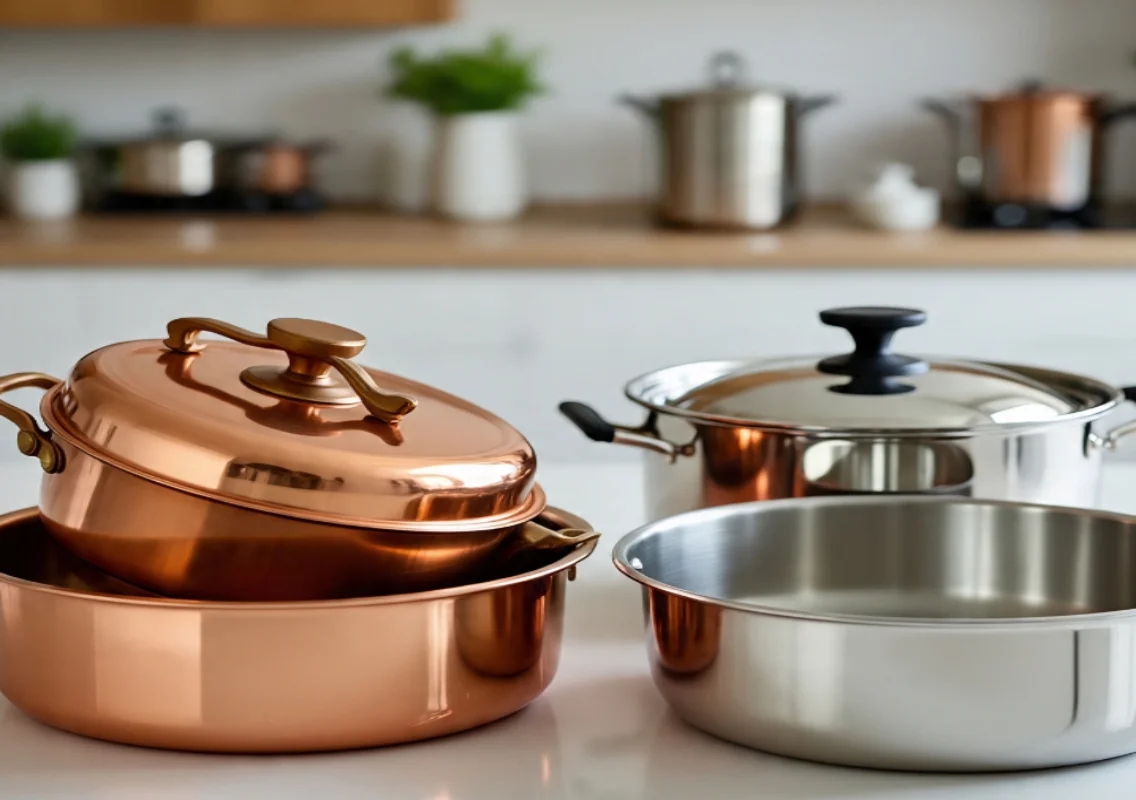


Kheer, our favorite biryani, and rich, slow-cooked curries are our most liked traditional dishes, but in the process of cooking these, the cookware plays a massive role. You must’ve heard about the long-standing debate between using copper or stainless steel for cooking. To end the confusion, in this post, we’ll discuss each metal’s charms, benefits, and quirks in the kitchen. Let’s begin and break it down in an easy-going style.
Why Copper Handi still reigns in traditional cooking
It’s the metal that has been in the manuscripts. It’s one of the best cookware sets for cooking. The following will provide you with some suitable reasons:
- Unmatched Heat Conductivity
Copper is often called the king of heat conduction, because, well, it truly is. Compared to stainless steel, copper distributes heat 5x more efficiently, allowing your dish to cook evenly from all sides.
But, how does it benefit you:
- No burning spots on the bottom
- No raw ingredients stuck in the middle
- Perfect temperature control throughout the cooking process
These are some of the main reasons many cooks, including professional cooks, use copper kitchenware.
- Enhances the authentic taste
Slow cooking is one of the best techniques in traditional cuisine. As you simmer your food in copper kitchenware, it cooks evenly and enhances the flavour; food reaches its full potential as the herbs and spices are cooked thoroughly.
The following dishes taste heavenly when cooked like this:
- Biryani
- Nihari
- Handi Chicken
- Lentil stews
- Desserts like payasam or rabri
Copper brings that old-world charm and depth of flavour many modern pots simply can’t replicate.
- Touch of Elegance
Copper isn’t just functional, it’s downright beautiful. Whether you’re serving guests or photographing food, copper handi instantly elevates the visual appeal. It looks luxurious, vintage, and undeniably striking.
Why Stainless Steel Still Rules Modern Kitchens
Over time, people began buying stainless steel for its basic advantages that would profit them in the short term. The following are some of the reasons:
- Super durable and Long-lasting
Stainless steel is practically a warrior as a kitchen accessories. It’s tough, non-reactive, scratch-resistant, and built to withstand daily use. You can fry, boil, saute, or steam without worrying about damage.
Compared to copper, which dents easily and needs r-tinning, stainless steel is maintenance-free and extremely reliable.
- Easy to clean and maintain
If cleaning pots isn’t your favourite part of cooking, stainless steel makes life easier. Due to some of its advantages, it is sometimes a choice over copper.
- Dishwasher-safe
- Rust-resistant
- Doesn’t require polishing
- Doesn’t need lining maintenance
Perfect for busy households and quick cooking routines
- Budget-friendly
Stainless steel is widely available and far more affordable than copper. If you’re building a kitchen setup on a moderate budget, stainless steel definitely wins.
Copper handi Vs. Stainless Steel: Side-by-side breakdown
| Feature | Copper Handi | Stainless Steel |
| Heat Conductivity | ★★★★★ | ★★★☆☆ |
| Flavor Impact | ★★★★★ | ★★★☆☆ |
| Durability | ★★★☆☆ | ★★★★★ |
| Maintenance | ★★☆☆☆ | ★★★★★ |
| Cost | High | Medium |
| Traditional Aesthetic | ★★★★★ | ★★★☆☆ |
| Ideal Use | Slow cooking, aromatic dishes | Everyday meals, fast cooking |
Health & safety: What you should know
The safety of cooking in a copper handi is a frequently asked question.
The truth is that acidic foods react with copper. For this reason, tin or stainless steel is nearly always used to line copper kitchenware used for cooking. Your copper handi is completely safe as long as it has a good lining.
However, it should be re-tinned, a procedure called kalai, if the lining wears out.
On the other hand, stainless steel is safe and non-reactive with any kind of material at any time.
Which one is better for Traditional cooking?
The clear winner when it comes to slow-cooked, authentic, and pure traditional cooking is:
Copper handi
Here’s why:
- It improves flavours
- Provides outstanding heat control
- Produces depth and richness
- Reflects cooking techniques that date back centuries.
However, stainless steel continues to be the best for:
- Fast meals
- Frequent use in the home
- Convenience and durability
What is the best setup, then?
Use a little bit of each.
Stainless steel for regular cooking and copper for large, traditional, flavourful dishes.
Wrapping up
Ultimately, your cooking style will determine whether you choose a stainless steel or copper handi. Copper is your best friend if tradition, taste, and style are most important. Stainless steel is the best option if your kitchen prioritises affordability, durability, and ease of use.
And hey, you’ve really unlocked kitchen greatness if you can own both!