







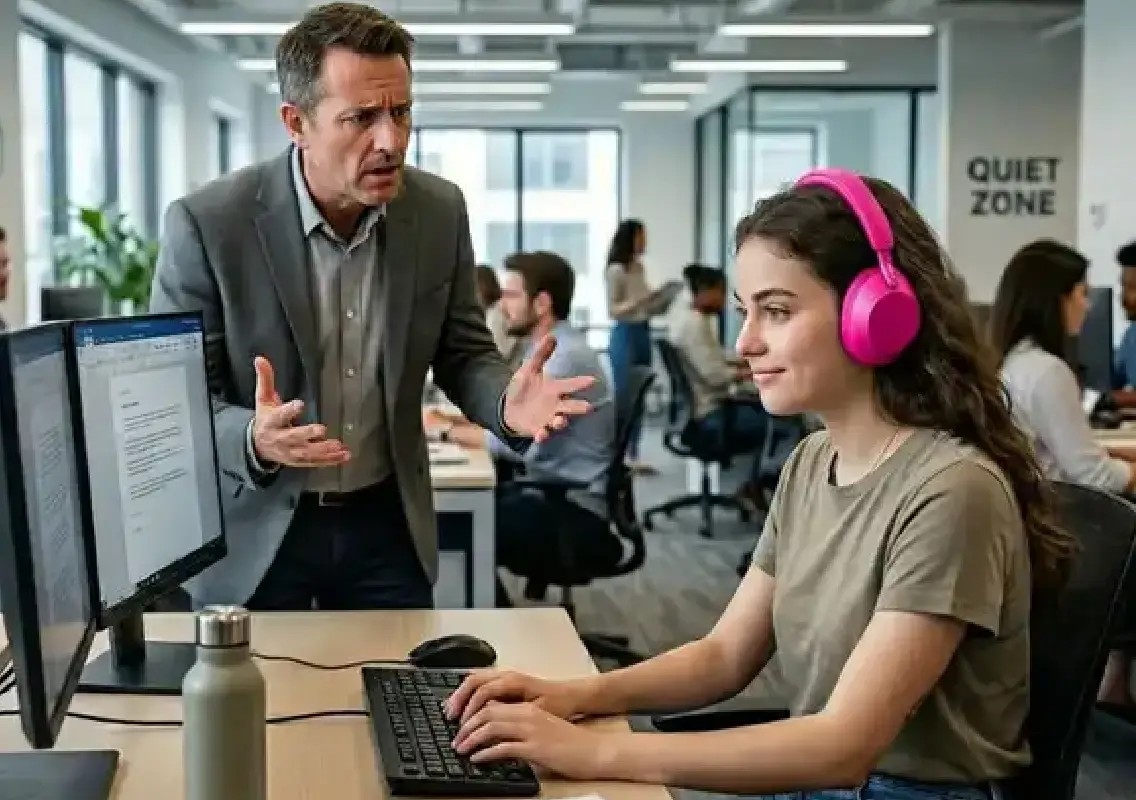


A workplace debate around productivity and office culture has gone viral after career coach Simon Ingari shared the story of a Gen Z employee who defended her decision to wear headphones throughout the workday.
The incident sparked discussions online about modern workplace expectations, sensory overload, and whether productivity should always be linked to constant social interaction.
Manager called headphones ‘antisocial’
According to the viral post shared on X, the issue began when a manager objected to a young employee continuously wearing headphones inside the office.
The manager reportedly argued that the behaviour appeared “antisocial” and gave the impression that the employee was disengaged from the team.
However, the employee explained that the headphones helped her manage distractions and improve concentration in a noisy office environment filled with conversations and interruptions.
Employee cites sensory overload
The employee reportedly told the manager that excessive noise caused sensory overload and reduced her ability to focus on work efficiently.
She maintained that different employees process distractions differently and that headphones were simply a practical productivity tool rather than an attempt to avoid colleagues.
The manager allegedly responded by saying that other employees worked without headphones and argued that allowing one person to do so might encourage others to follow.
Work-from-home request rejected
Attempting to find a compromise, the employee reportedly suggested working from home on tasks requiring deep focus and uninterrupted concentration.
However, the proposal was rejected, with the manager insisting that employees were expected to remain physically present in the office.
The employee eventually stood firm, stating that if remote work was not allowed, she would continue using headphones to maintain productivity.
Debate reflects changing work culture
The story has sparked widespread reactions online, particularly among younger professionals who argue that workplaces should become more flexible and understanding of different working styles.
Experts say the debate reflects larger conversations around mental well-being, workplace inclusivity, neurodiversity, and evolving office expectations in modern corporate culture