










Vice City: Grand Theft Auto (GTA) 6 has taken the gaming world by storm following its release on November 19, 2026. Developed by Rockstar Games, the highly anticipated title arrived after a 13-year wait, generating enormous excitement among gamers and even those who do not regularly play video games.
While the franchise is known for its crime-filled missions, car thefts, bank robberies, police chases and chaotic open-world gameplay, one unexpected aspect of the latest instalment has become a talking point. Some players are unhappy with the way the game portrays romance and everyday responsibilities in a relationship.
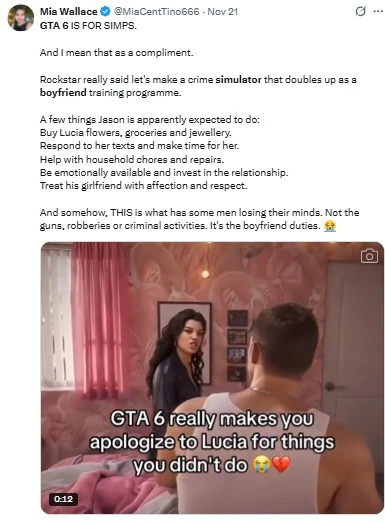
The controversy centres on male protagonist Jason Duval, who is shown being a caring and faithful boyfriend to Lucia, his partner in crime and romantic interest. His willingness to perform small gestures of affection, such as buying flowers, helping with groceries and taking care of household responsibilities, has prompted some gamers to label him a ‘simp’.
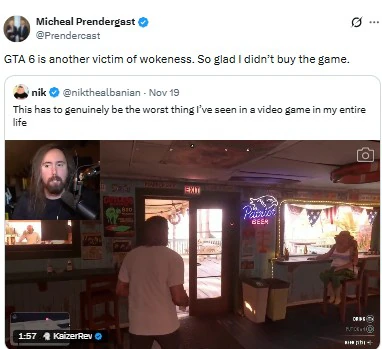

The criticism has also led to accusations that the game has become too ‘woke’ and has moved away from the identity that made the GTA franchise popular. However, the debate raises a larger question about changing ideas of masculinity and why a male character expressing affection has become controversial.
Why are some GTA 6 players criticising Jason?
The word ‘simp’, derived from ‘simpleton’, is commonly used online to describe someone who goes out of their way to please another person, sometimes at the expense of their own boundaries. In online gaming discussions, the term is often used mockingly against men who are perceived as overly attentive or submissive in romantic relationships.
For some GTA 6 players, Jason’s behaviour does not fit the image of a typical male protagonist in the franchise. Earlier games largely focused on criminal activities, aggressive behaviour and characters who were rarely defined by their emotional relationships.
In contrast, GTA 6 gives greater importance to the relationship between Jason and Lucia. Their interactions include ordinary romantic gestures and shared responsibilities, alongside the criminal activities that remain central to the game.
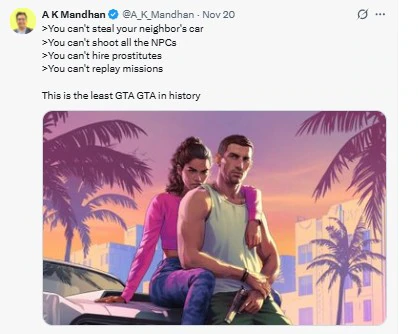
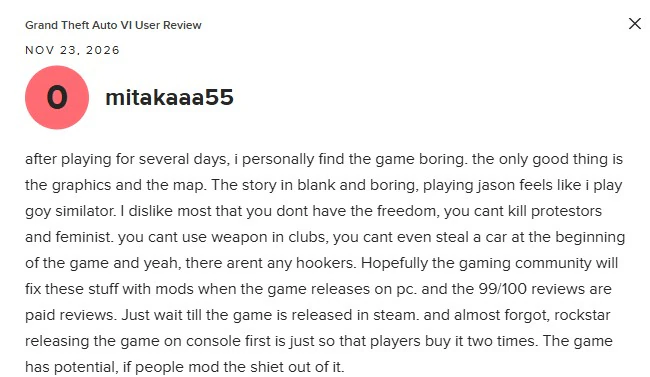
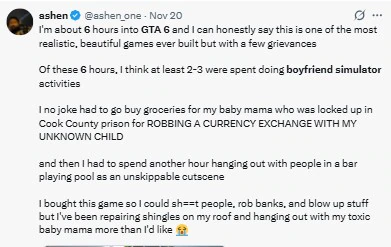
Some disgruntled players have described the title as the ‘least GTA GTA’ ever, ‘woke slop’ and a ‘boyfriend simulator’. Others have accused Rockstar Games of changing the franchise’s identity by introducing what they consider unnecessary relationship-focused activities.
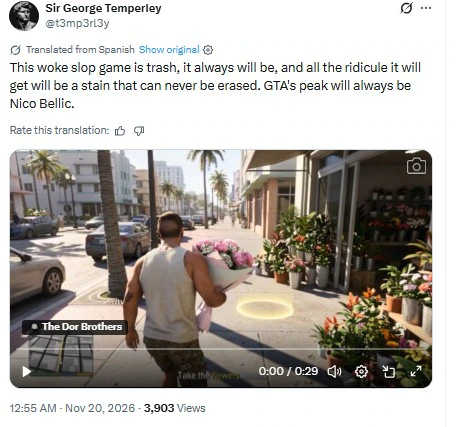
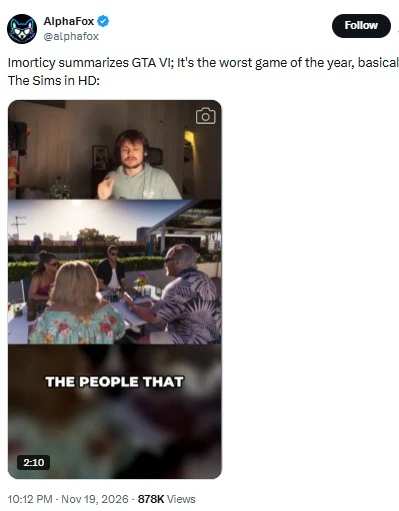
The criticism is not limited to Jason’s romantic behaviour. Some players have also expressed dissatisfaction with other changes, including the inability to hire sex workers, restrictions on stealing neighbours’ cars and the inability to be unfaithful to a partner.
Interestingly, many of the romantic activities are optional. Players can choose whether to participate in them, although those decisions may influence how the storyline develops and eventually concludes.
According to the figures cited by Metacritic in the source report, the game has a critics’ score of 99, while its user score stands at 5.7, reflecting a mixed response among players.
A shift towards more realistic storytelling
Saurabh Singh, Tech Editor and an avid GTA player, believes the backlash is largely connected to the changes Rockstar Games has introduced in the narrative and storytelling.
He explained that previous GTA titles were more arcade-style experiences, allowing players to move around the game world, commit crimes, rob people and escape from the police. The latest instalment, however, attempts to offer a more realistic experience, including a greater focus on relationships.
According to Singh, players have become accustomed to seeing masculinity portrayed through aggression and emotional distance in the franchise. Consequently, simple gestures such as buying flowers for a girlfriend or helping with household chores can appear unfamiliar to some sections of the audience.
Yashna Talwar, a gamer who plays first-person shooter (FPS) and role-playing games (RPGs), also believes that the reaction reflects expectations surrounding male characters in video games.
She pointed out that players are used to seeing male protagonists steal cars, fight opponents and commit crimes without showing much emotional vulnerability. When a character performs ordinary acts of affection, some players struggle to accept the change.

Certain critics have even described the storyline as feminist propaganda and claimed that the game has been written by women. Such reactions have further intensified discussions about gender representation in gaming.
However, portraying a male character as emotionally available does not necessarily take away from his strength or independence. Instead, it introduces another dimension to a character who is otherwise involved in a world of crime and violence.
What does the backlash say about masculinity?
The debate surrounding Jason’s behaviour extends beyond gaming. It also reflects long-standing social expectations about how men should behave in romantic relationships.
Delhi-based relationship expert Ruchi Ruh believes that traditional ideas of masculinity play an important role in shaping such reactions.
She explained that men are often brought up with narrow expectations about what it means to be masculine. Social conditioning encourages them to exercise emotional restraint, remain in control and avoid displaying vulnerability.
As a result, even small gestures of affection can sometimes be perceived as a threat to their masculine identity.
Ruh said that men are frequently conditioned from childhood to believe that expressing vulnerability could mean losing authority. This can make certain individuals uncomfortable with characters who openly demonstrate care and affection.
The influence of online culture can make the situation more complicated. Labels such as ‘simp’ can create pressure, particularly among men who are uncertain about their identities or concerned about how their peers perceive them.
Ruh explained that when men are mocked for being attentive to their partners, they may begin associating such behaviour with embarrassment. Over time, this can discourage them from expressing affection even in healthy relationships.
The GTA 6 controversy therefore highlights how online language can reinforce existing stereotypes about gender roles and relationships.
Gaming audiences are changing
The reaction to GTA 6 also comes at a time when the gaming audience is becoming more diverse.
A 2025 report by the All India Game Developers Forum, Coral Recruit and M-League found that women account for 44% of India’s gaming audience.
This changing demographic has encouraged conversations about representation, character development and the kinds of stories that video games should explore.
With Lucia sharing the spotlight with Jason, GTA 6 is also moving beyond the predominantly male-centred perspective associated with some earlier entries in the franchise.
The inclusion of a female protagonist and a relationship that plays a meaningful role in the storyline reflects a broader approach to storytelling. It does not necessarily mean that the game is abandoning its established elements.
Talwar believes that the relationship between Jason and Lucia adds depth to the narrative rather than taking away from the franchise’s identity.
She said GTA can continue to offer car chases, shootouts, outrageous missions, heists and dark humour while also presenting characters with emotional depth. According to her, toughness and tenderness can exist together.
Why Rockstar wants players to explore relationships
Rob Nelson, co-studio head of Rockstar North and one of GTA 6’s three creative leads, discussed the storytelling approach in an interview with The Guardian.
He explained that the relationship mechanics were introduced as part of the story Rockstar wanted to tell. The developers wanted to provide mechanisms that encouraged players to explore these aspects, particularly for those interested in doing so.
Nelson also emphasised that GTA 6 remains a game about crime and criminals. However, the intention is to encourage players to remain true to their characters rather than simply indulge in constant violence.
This distinction is important because the franchise’s identity has always been closely associated with its open-world freedom. The latest instalment appears to be expanding that experience by giving players additional ways to engage with the characters and their relationships.
For some gamers, this is a welcome development. They believe that a more layered storyline can make the fictional world feel more believable without sacrificing the entertainment that fans expect.
Can a macho man also be romantic?
For relationship expert Ruh, there is no contradiction between being masculine and being affectionate.
A man can be confident, independent and strong while also being emotionally available and considerate towards his partner. Showing affection does not automatically make someone submissive or weak.
Talwar shares a similar view, arguing that players should not have to choose between action-packed gameplay and emotionally developed characters.
Gamer Shawn Das, who said he was already around six hours into the game, believes the relationship elements could also offer young players a positive example of respecting women.
He described the addition as a welcome change from the relatively crass portrayal of relationships in earlier GTA titles. According to him, a good storyline does not need every moment to revolve around violence or intense action.
Das also pointed out that social media is already a hypermasculine space, making more relatable portrayals of relationships a positive addition to the gaming experience.
Of course, playing a video game is not a substitute for learning how to maintain a healthy relationship. Nor will a fictional character’s behaviour automatically change how players approach their personal lives.
However, normalising small gestures of affection and showing that partners can share responsibilities may help challenge the assumption that such behaviour is incompatible with masculinity.
A different kind of GTA experience
GTA 6 remains a game built around crime, criminals and the freedom to explore a fictional world. Its relationship mechanics do not erase those elements. Instead, they offer another dimension to the characters and the choices players make.
Not every gamer will want relationship-focused activities alongside car chases and shootouts, and players are free to approach optional elements according to their preferences.
Yet the backlash against Jason Duval reveals something beyond the game’s storyline. It shows how deeply certain expectations about masculinity remain embedded in popular culture.
A gangster can steal cars, take part in dangerous missions and challenge the law while still caring about his girlfriend. Being romantic does not have to make him less masculine.
Perhaps the most interesting question raised by GTA 6 is not whether Jason is a ‘simp’, but why buying flowers and helping with household chores are considered controversial in the first place.