





Positioning a floor lamp for wall washing starts with one goal: spreading light evenly across the wall instead of creating a narrow beam or bright patch. The best setup places the lamp close enough to soften shadows, yet far enough back to let the light expand smoothly. Angle, height, wall texture, and brightness all affect the final look. A matte wall usually produces a clean, balanced glow, while glossy or textured surfaces reveal glare and unevenness more easily. If you want a room to feel larger, calmer, or more layered, wall washing is one of the simplest lighting techniques to use. With a few placement adjustments, a floor lamp can highlight architecture, improve ambiance, and create a polished lighting effect in almost any room.
1. Choose the Right Distance Between Your Floor Lamp and Wall
Start With the Ideal Distance for an Even Wall-Washing Effect
For most rooms, place a floor lamp about 6 to 18 inches from the wall to create an even wall-washing effect. This range allows the light to spread upward and outward without forming a hard-edged hotspot. If the lamp sits too close, the wall may show a bright vertical streak. If it stands too far away, the light can spill into the room instead of washing the surface. Start at roughly 12 inches, turn the lamp on, and view the wall from different seating positions. Then slide the lamp slightly forward or backward until the glow looks smooth from top to bottom. This simple adjustment usually makes the biggest difference in achieving clean, balanced wall lighting.
Adjust Lamp Placement Based on Room Size and Wall Surface
Room dimensions and wall finish should guide your final lamp placement. In a small room, keep the floor nova lamp nearer the wall so the light stays controlled and does not dominate the space. In a larger room, moving it slightly farther out can help the wash look broader and more intentional. Smooth, matte-painted walls are the easiest surfaces to illuminate evenly because they diffuse light well. Textured plaster, brick, paneling, or glossy paint can emphasize shadows, streaks, and reflected glare. On those surfaces, reduce harshness by testing shorter distances and lower brightness. Corners also matter: placing the lamp near a corner can create a wider, layered glow that softens edges and adds depth.
2. Find the Best Angle and Height for Wall Washing
Position the Light Source to Create a Smooth, Balanced Glow
The best angle for wall washing is usually a gentle upward or slightly inward direction that lets the beam spread across the wall instead of striking one spot directly. Keep the light source aimed so the brightest part of the beam lands low enough to blend upward, creating a smooth vertical fade. If the lamp points straight at eye level, the wall often looks uneven and the fixture may feel visually harsh. A corner placement can improve coverage because it allows light to travel along two surfaces at once. Test small angle changes of just a few degrees. Minor adjustments often transform a sharp, focused beam into a soft, balanced wall glow.
Adjust Lamp Height and Direction to Avoid Hotspots and Glare
Lamp height plays a major role in preventing hotspots and glare. A taller floor lamp generally produces a more natural wall-washing effect because the light has more vertical surface to travel across before reaching eye level. If your lamp has an adjustable head or segmented output, aim the brightest section away from direct sightlines and toward the lower-middle part of the wall. The Nova Floor Lamp Pro, model 9180, stands 1376.8 mm high and uses triple-zone lighting to build a broader wash instead of a single concentrated beam. Its slim φ180 mm base suits corner placement, where wall washing often looks best. Set the lamp so seated viewers see the glow on the wall, not the source itself.
3. Fine-Tune Lighting Settings for Better Wall-Washing Results
Choose the Right Brightness and Color Temperature for Your Space
Once placement is correct, adjust brightness and color temperature to match the room’s purpose. For relaxing spaces such as bedrooms or living rooms, use warm white light around 2700K to 3000K for a softer, more comfortable wall wash. For work areas, a neutral or cooler setting between 3500K and 5000K can make the wall feel cleaner and more energetic. Avoid running the lamp at maximum brightness unless the wall is large or very dark. Moderate output usually looks smoother and more refined. A lamp with tunable white and strong output, such as 1200 lumens, gives you more control because you can brighten the wall without losing subtlety. Always dim to the point where the wall glows, not glares.
Use Adjustable Floor Lamp Features to Customize Wall Lighting
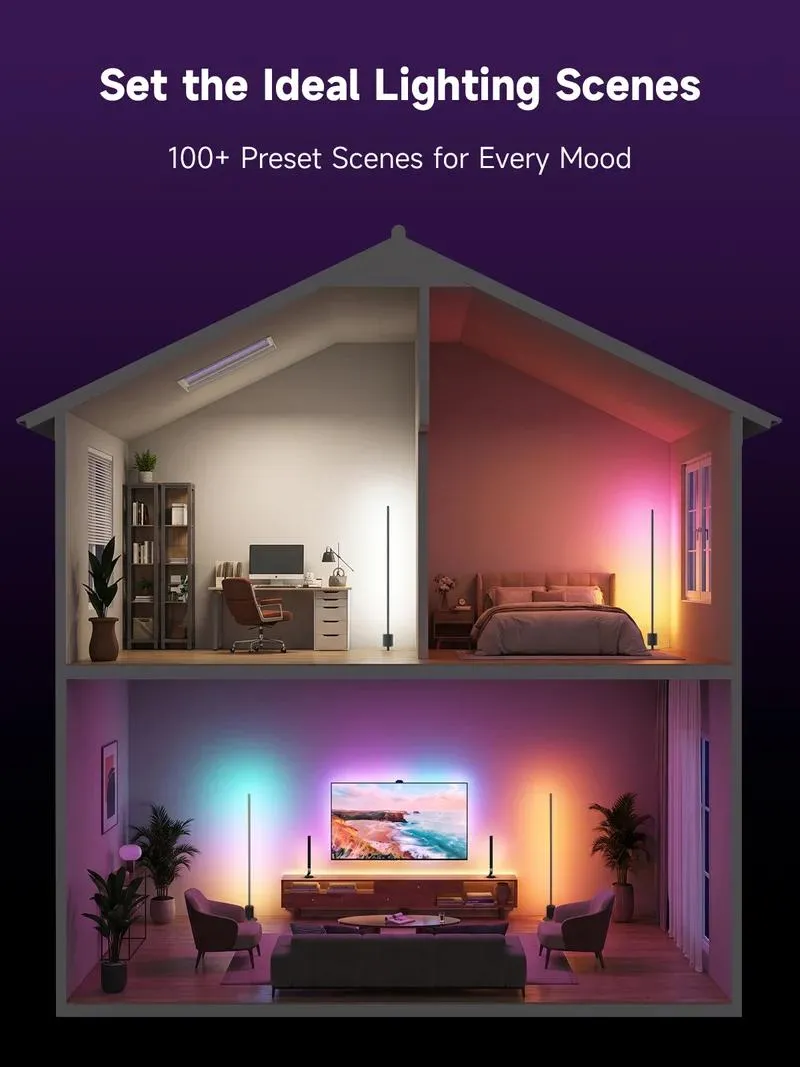
Adjustable features help you refine wall washing beyond simple lamp placement. Use dimming to soften bright areas, scene modes to match mood, and segmented lighting controls to shape the wash more precisely across the wall. Smart controls are especially useful when the room serves different purposes throughout the day. The Nova Floor Lamp Pro includes RGBWWIC lighting, 16 million colors, tunable white from 2700K to 6500K, 100+ scene modes, 10 music modes, and app connectivity through 2.4GHz Wi-Fi and Bluetooth. It also supports Alexa, Google Assistant, and Matter for voice control. These features let you test warm ambient washes, cooler task-oriented lighting, or colorful accent effects without moving the lamp each time.
Conclusion
To position a floor lamp for wall washing, place it close to the wall, start around 12 inches out, angle the light gently upward, and adjust height and brightness until the wall looks evenly illuminated. Focus on creating a soft spread of light rather than a bright focal point. Matte walls are easiest to wash, while textured or reflective surfaces need more careful tuning. Warm white light works well for relaxed ambiance, and cooler settings suit task-oriented rooms. Smart dimming and directional control make fine adjustments easier and more precise. When distance, angle, height, and settings work together, a floor lamp can turn an ordinary wall into a subtle design feature that adds depth, comfort, and a more polished atmosphere to the entire room.