


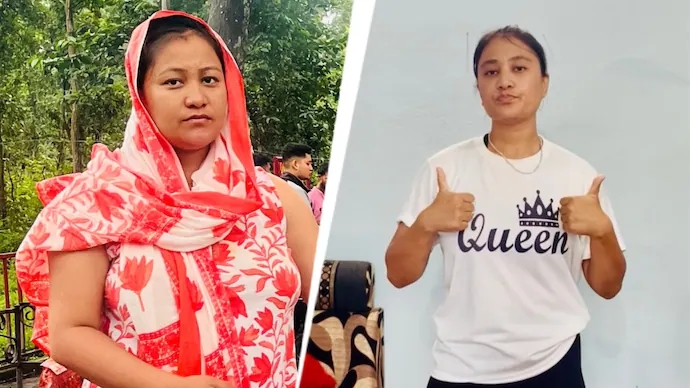


New Delhi: Social media content creator Punam Subba has shared details of her weight-loss journey after a C-section, revealing how she claims to have lost around 30 kg in approximately eight months by following home-cooked meals and exercising at home.
Subba regularly documents her fitness journey on social media, sharing details of her diet, workouts and lifestyle changes. According to her posts, she did not join a gym or follow an elaborate diet programme to achieve her weight-loss goal.
Instead, she focused on simple meals prepared at home and regular physical activity. Her approach has drawn attention from followers looking for practical ways to manage their weight while balancing the demands of motherhood.
In a recent post, Subba offered a glimpse of what she eats in a day. She also described her morning routine, which begins with hot water followed by an hour of exercise at home.
Punam Subba’s morning fitness routine
Subba’s day begins with a glass of hot water, followed by around an hour of home workouts.
Rather than relying on gym equipment or a specialised fitness facility, she says she exercises at home. This approach allows her to incorporate physical activity into her daily schedule without having to travel to a gym.
For new mothers, finding time for exercise can be challenging while caring for a baby and managing household responsibilities. Home workouts can offer flexibility, although the type and intensity of exercise need to be appropriate to an individual’s recovery after childbirth.
Subba’s experience highlights how she incorporated exercise into her routine. However, her schedule should not be viewed as a universal recommendation for women recovering from a C-section, as recovery times and medical needs vary.
Home-cooked food is central to her diet
A key feature of Subba’s approach is her reliance on ordinary home-cooked meals rather than a specialised or expensive diet plan.
She credits her eating habits alongside regular exercise for the weight loss she says she achieved. Her posts have attracted interest from people seeking manageable alternatives to restrictive diets and demanding gym routines.
Home-cooked meals can make it easier to plan portions and include a variety of foods. Depending on the ingredients and preparation methods, a balanced meal can include vegetables, whole grains, protein-rich foods and healthy fats.
However, the available account of Subba’s routine does not provide a complete, verified list of everything she eats throughout the day. It would therefore be inaccurate to present a detailed breakfast, lunch, dinner or snack schedule as her confirmed meal plan without further information from her posts.
Her broader message is that she relied on familiar foods and a routine she could follow consistently, rather than making expensive changes to her lifestyle.
How long did it take her to lose 30 kg?
Subba reportedly said she lost around 30 kg over approximately eight months.
The timeline emerged in response to a question in her social media comments. Her account has prompted interest because it describes a substantial change achieved without joining a gym.
However, weight loss varies considerably between individuals. Factors such as starting weight, nutrition, sleep, activity levels, hormonal changes and overall health can influence how quickly a person loses weight.
A result shared on social media should not be treated as a target that everyone can or should attempt to match. Nor does the amount of weight lost alone establish whether a particular approach is medically appropriate.
For women who have recently given birth, recovery and nutritional needs are especially important considerations.
Weight loss after a C-section requires care
Recovering from a C-section involves healing after major abdominal surgery. The timing of a return to exercise depends on the individual’s recovery, any complications and advice from their healthcare provider.
Although gentle movement may be appropriate for many women during recovery, strenuous workouts and abdominal exercises may need to be delayed until medical clearance is given.
Women who are breastfeeding may also have additional nutritional and hydration requirements. Aggressive calorie restriction can make it harder to meet those needs and may not be appropriate during recovery.
A gradual approach that prioritises adequate nutrition, rest and suitable physical activity is generally more appropriate than trying to reproduce another person’s weight-loss timeline.
Anyone experiencing persistent pain, unusual bleeding, wound problems or other concerning symptoms after a C-section should seek medical advice before increasing exercise.
Why simple routines can appeal to new mothers
Subba’s account has resonated with audiences interested in realistic approaches to fitness after pregnancy.
Home workouts can reduce the need for travel, while familiar meals may be easier to prepare alongside childcare and other responsibilities. Building a routine around activities and foods that fit into daily life can also make it easier to maintain consistency.
Nevertheless, convenience does not automatically make a particular diet or workout suitable for every person. Individual recovery, medical advice and nutritional requirements should guide decisions about postpartum exercise and weight management.
Subba’s experience provides one example of how she approached her own fitness goals. It does not establish that the same routine will produce identical results for other women.
What new mothers can take from her journey
Punam Subba attributes her reported 30 kg weight loss to a combination of home-cooked meals and home workouts over about eight months. Her morning routine includes hot water and an hour of exercise, according to the details she has shared.
Her story highlights the appeal of accessible fitness habits that do not depend on gym memberships or complicated meal plans. At the same time, postpartum weight management should be approached with care, particularly after a C-section.
The priority for new mothers is to recover safely, eat enough to meet their nutritional needs and resume physical activity at an appropriate pace. Subba’s experience may offer inspiration, but individual health needs and professional guidance remain more important than following another person’s routine exactly.