





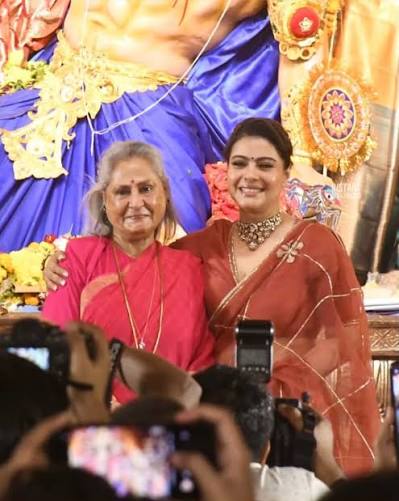
Mumbai: Actor Kajol embraced traditional elegance at the North Bombay Sarbojanin Durga Puja celebrations, wearing a handcrafted red-and-gold saree by designer label Anavila for Durga Ashtami. The actor, who has been associated with the annual festivities for years, chose the label’s Red Malar saree, combining intricate embroidery, a geometric pattern and a sheer organza pallu.
The celebrations hold special significance for Kajol and the Mukherjee family, which has been closely associated with the puja for generations. This year marked the 80th edition of the festival, bringing together devotees and members of the film fraternity to celebrate the occasion.
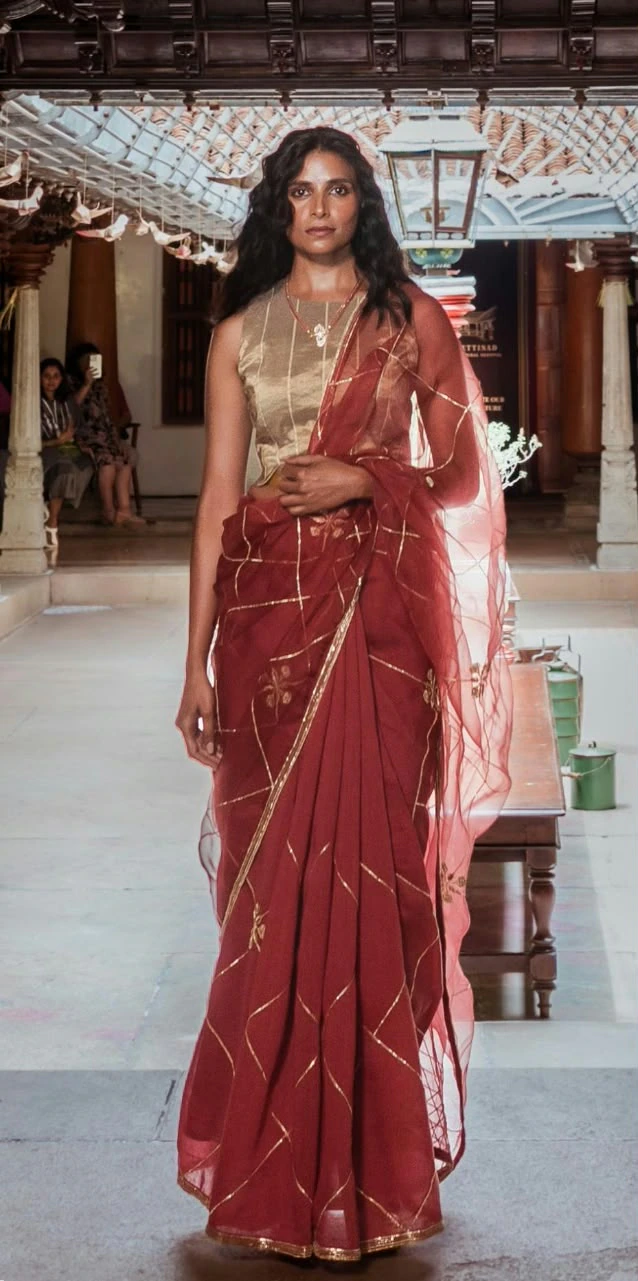
Kajol’s outfit stood out for its rich colour palette and traditional detailing. The red saree featured fine gold lines arranged in a geometric pattern, with delicate floral motifs embroidered at the intersections. Its lightweight organza pallu added an airy finish to the otherwise richly detailed drape.
Kajol’s Red Malar saree costs Rs 88,500
Kajol wore the Red Malar saree from Anavila’s Payanam collection, priced at Rs 88,500. The design draws inspiration from the traditional Athangudi tiles of Tamil Nadu, known for their distinctive patterns and vibrant colours.
The saree’s name also carries a floral association. ‘Malar’ means flower in Tamil, a reference reflected in the embroidered floral bouquets incorporated into the design.
The garment combines khadi silk patlis with a soft organza pallu, bringing together different textures to create a layered look. Its fine zari work, dabka embroidery and bead detailing add depth to the red base without overpowering the overall design.
The geometric gold lines provide structure, while the floral embroidery softens the pattern. The sheer pallu introduces contrast, allowing the saree to retain a light appearance despite its elaborate craftsmanship.
The combination of traditional textile elements and contemporary styling makes the saree suitable for festive occasions such as Durga Puja, where vibrant colours and intricate detailing often play an important role in celebratory dressing.
Kajol’s choice also highlights the continuing appeal of Indian handcraft traditions in festive fashion. Rather than relying on heavily embellished styling throughout, the saree uses a balance of pattern, embroidery and fabric to create its visual impact.
How Kajol styled her Durga Ashtami look
Kajol complemented the red-and-gold saree with traditional jewellery, choosing a statement choker necklace and matching earrings. The jewellery added definition to the neckline and worked with the saree’s gold detailing to create a coordinated festive appearance.
Her beauty look remained relatively understated. Defined eyes, a warm-toned lip colour and a bindi completed the ensemble, while her hair was pulled back to keep the focus on the saree and jewellery.
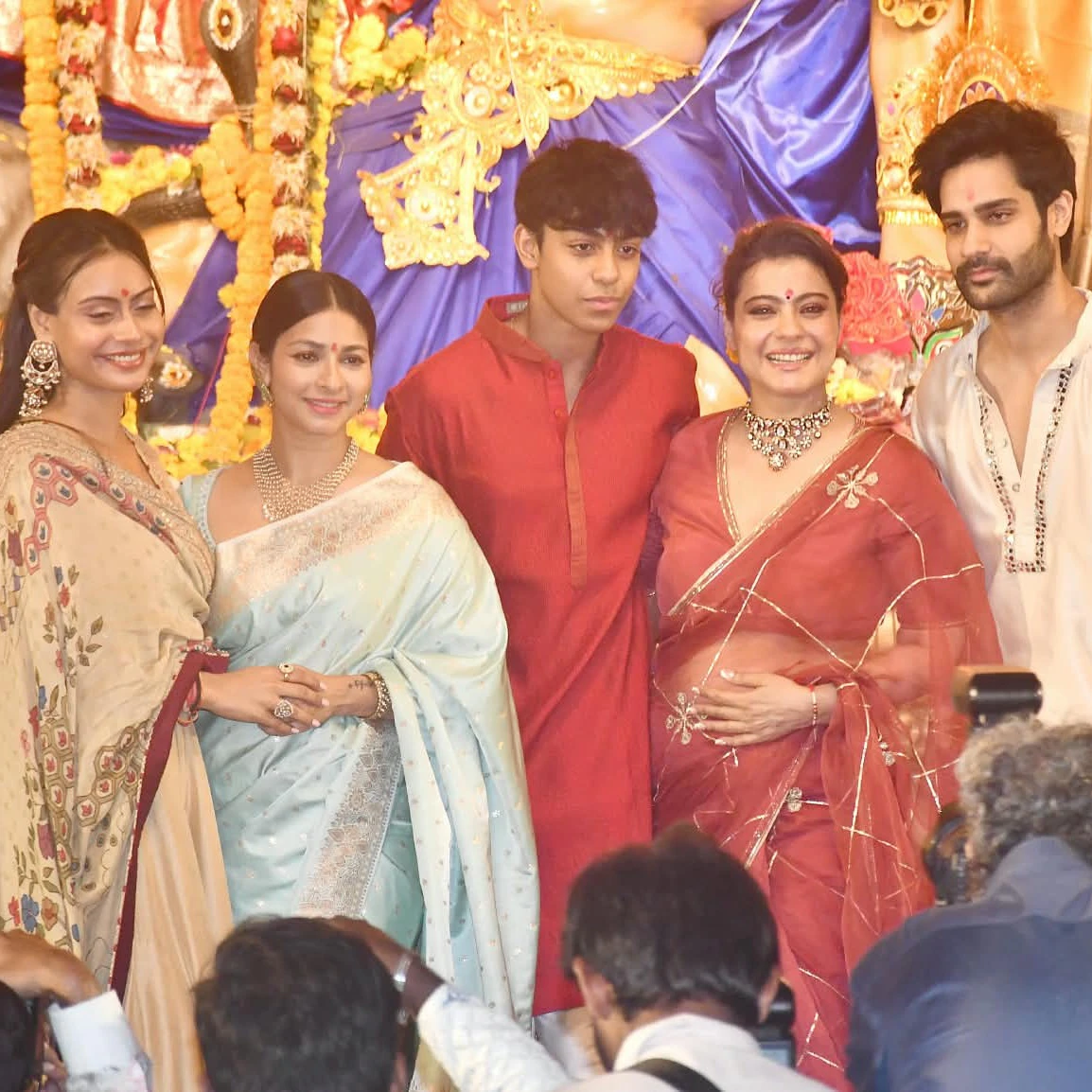
The styling allowed the garment’s embroidery and organza pallu to remain central to the look. The rich red shade provided a festive foundation, while the gold accents connected the outfit with the jewellery.
The overall appearance reflected a traditional approach to Durga Ashtami dressing, combining a statement saree with classic accessories and restrained makeup. It also demonstrated how detailed craftsmanship can take centre stage when the remaining elements of an outfit are kept simple.
Kajol has regularly attended the North Bombay Sarbojanin Durga Puja celebrations, making her festive appearances a familiar part of the annual event. Her choice of a red saree for this year’s Ashtami celebrations continued that association with traditional festive fashion.
Anavila’s Payanam collection celebrates textile craftsmanship
The Red Malar saree is part of Anavila’s Payanam collection. Its construction brings together khadi silk and organza, while zari, dabka and bead embroidery provide the decorative elements.
Each component contributes a different quality to the design. The khadi silk patlis provide structure, while the organza pallu creates a translucent finish. The embroidery adds texture and detail, with floral motifs placed within the geometric framework.
The Athangudi tile inspiration also gives the saree a distinctive visual identity. These traditional tiles are associated with patterned surfaces and carefully arranged designs, an aesthetic reflected in the saree’s structured gold lines.
The result is a garment that draws on traditional Indian design references while using contrasting materials to create a contemporary silhouette. For festive wear, this balance can offer an alternative to sarees dominated by dense embellishment.
At Rs 88,500, the Red Malar saree occupies the premium designer-wear segment. Its price reflects its positioning as a handcrafted fashion piece featuring multiple embroidery techniques and a combination of fabrics.
The Mukherjee family’s long association with Durga Puja
The North Bombay Sarbojanin Durga Puja has a history dating back to 1948. It was established by filmmaker Sashadhar Mukherjee, founder of Filmalaya Studio, his wife Satirani Mukerji, J M Bhadra and 26 other members.
The first celebrations were held at Sri Mandal Hall, also known as Poddar School, in Santacruz, Mumbai. Over the decades, the puja has continued as an annual gathering, maintaining its connection with the Mukherjee family and the wider Bengali community in the city.
Kajol’s participation reflects this longstanding family association. Her appearances during the festivities have become a familiar feature of the celebrations, where traditional rituals and community gatherings take place alongside visits from members of the film industry.
Veteran actor Deb Mukherjee, father of filmmaker Ayan Mukerji, was also closely associated with organising the puja until his death in 2025. His involvement formed part of the family’s continued contribution to the annual event.
The puja’s 80th edition therefore carried significance beyond the festival calendar, marking another milestone in a tradition that has continued across generations.
A festive look rooted in tradition
Kajol’s Durga Ashtami appearance brought together a handcrafted saree, traditional jewellery and understated beauty styling. The Red Malar design stood out through its red-and-gold palette, floral embroidery and organza pallu, while its inspiration from Athangudi tiles gave it a distinctive pattern.
Her choice was also closely connected to the occasion. The North Bombay Sarbojanin Durga Puja remains an important part of the Mukherjee family’s festive tradition, and Kajol’s regular participation has made her appearances a point of interest for fashion watchers.
With its combination of khadi silk, organza and detailed embroidery, the saree offered a contemporary interpretation of traditional festive dressing. The look underscored how Indian textile techniques and heritage-inspired designs continue to feature prominently in celebrity fashion during Durga Puja.