







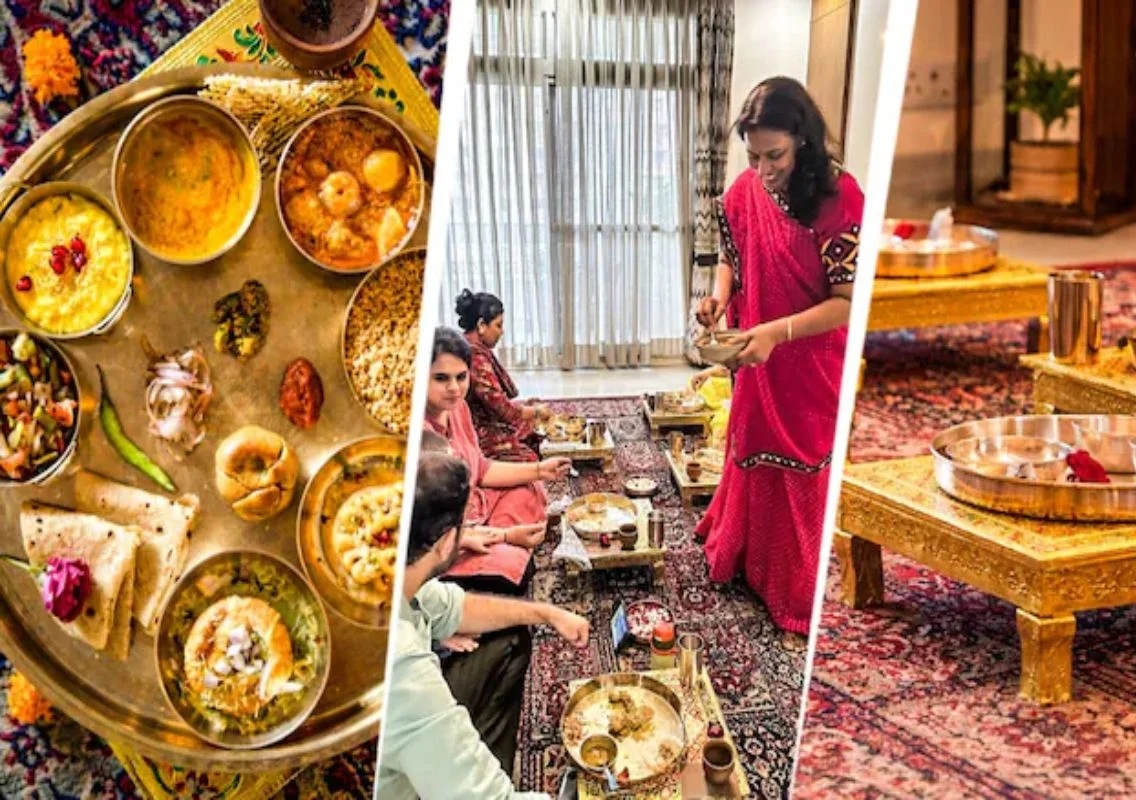


New Delhi: Supper clubs are having a moment across India. What began as a niche, community-led dining concept has now expanded into a widespread trend, with hosts emerging not just in metropolitan cities but also in smaller towns. While the format offers an intimate and curated culinary experience, questions are being raised about whether it is truly a profitable business model.
What are supper clubs?
At their core, supper clubs are private dining experiences hosted in homes or intimate venues, where guests pay to attend a pre-planned meal. Often described as a blend of a dinner party, pop-up restaurant, and social gathering, they prioritise experience over scale.
Guests are not just paying for food but for storytelling, connection, and exclusivity. The appeal lies in its informal yet curated nature — no crowded restaurants, no menu confusion, and no rushed service. Instead, diners share a table with strangers, engage in conversations, and become part of a shared culinary journey.
Over the past year, the concept has grown significantly, driven largely by social media platforms like Instagram, where visually rich dining experiences and curated menus attract attention.
A growing trend with business ambitions
The rise in popularity has led many to view supper clubs as a potential business opportunity. For some, it remains a side hustle; for others, it has evolved into a full-time pursuit. However, industry insiders suggest that the financial reality is more complex than it appears online.
Toonika Guha, founder of Toontooni’s Table in Gurugram, notes that while there is a growing perception that supper clubs are highly profitable, the actual returns are often modest.
According to her, the format in its purest form does not generate the kind of income that social media narratives suggest. While revenues can be improved by increasing the frequency of events, expanding guest capacity, or collaborating with brands and venues, profitability requires careful planning and scale.
Lower costs, but limited scalability
One of the biggest attractions of supper clubs is their relatively low entry barrier. Unlike traditional restaurants, they often avoid fixed costs such as high rent, large staff salaries, and utility expenses.
Kaushalya Patil, a Pune-based chef and founder of a supper club, highlights that hosting events at home allows organisers to maintain control over operations and manage costs effectively. With pre-booked guests, there is also less uncertainty compared to walk-in restaurant models.
However, this advantage comes with limitations. Hosting at home often restricts the number of guests, which directly impacts revenue potential. To address this, many organisers are now collaborating with cafés, restaurants, and event spaces to accommodate larger groups.
While such partnerships enhance the overall experience, they also introduce additional costs, including venue rentals and higher operational expenses.
The reality of earnings
Despite the buzz, many supper club hosts report slim profit margins. Costs related to premium ingredients, small-batch sourcing, décor, and marketing can add up quickly.
Guha points out that when expenses such as venue rentals and fair wages for staff are factored in, the margins become tight. For many hosts, the focus is currently on building a loyal community rather than maximising profits.
Patil adds that hosting regular events — for instance, four per month — can help cover basic costs. However, initial investments in items like tableware, glassware, and cutlery are unavoidable.
Contrary to viral claims on social media, most supper clubs are not generating revenues in lakhs per event. While a few large-scale operators hosting frequent, high-capacity events may see better returns, they remain exceptions rather than the norm.
Challenges behind the scenes
Running a supper club involves more than just cooking and hosting. Many organisers operate with small teams, often balancing multiple roles — from chef and host to marketer and operations manager.
Consistency is another major challenge. Delivering the same quality of food and experience across events requires meticulous planning. Additionally, last-minute cancellations or no-shows can disrupt finances and logistics.
Sourcing high-quality ingredients in smaller quantities can also be more expensive compared to bulk purchasing by restaurants. Moreover, there is constant pressure to innovate, with hosts needing to regularly introduce new menus and concepts to keep guests engaged.
Burnout is a growing concern as well. Since many supper clubs are passion-driven ventures run alongside full-time jobs, the physical and mental demands can be significant.
Future potential
Despite the challenges, many believe that supper clubs have long-term potential in India. The concept is still in its early stages, and as awareness grows, it may evolve into a more structured and scalable business model.
Industry observers suggest that success in this space will depend on consistency, strong branding, and the ability to build a loyal customer base. Those who can regularly fill seats, manage costs efficiently, and offer unique experiences may eventually turn supper clubs into sustainable ventures.
Conclusion
Supper clubs may look like an easy and glamorous business on social media, but the reality is far more nuanced. While they offer flexibility, creativity, and community engagement, profitability is not guaranteed.
For now, most hosts are driven by passion rather than profit, focusing on creating memorable dining experiences. As the market matures, supper clubs could become a viable business opportunity — but only for those willing to invest time, effort, and patience.