







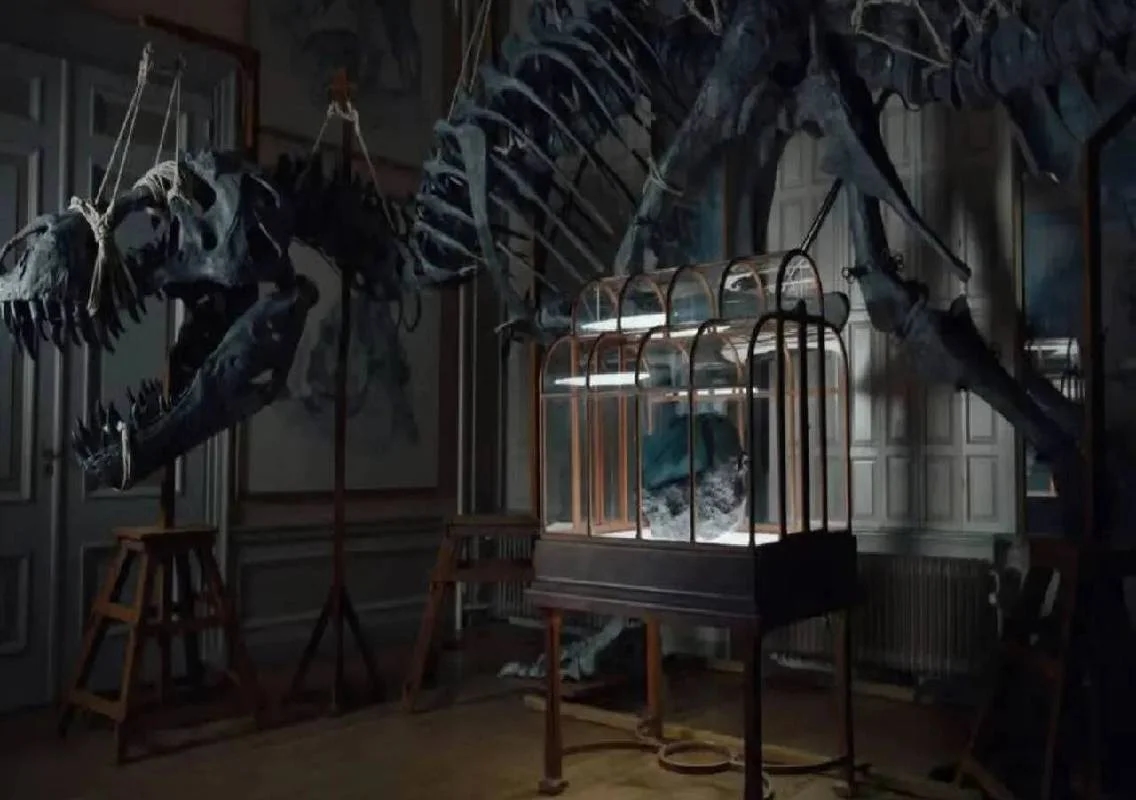


London: In a striking blend of science and luxury fashion, the world’s first Tyrannosaurus Rex leather handbag is set to go under the hammer for an estimated ₹5 crore, capturing global attention for its unusual origin and futuristic concept.
Far from being just a novelty item, the handbag represents a growing shift in the fashion industry, where innovation, sustainability and storytelling are redefining what luxury means.
A handbag inspired by prehistoric science
The bag has been created using lab-grown collagen derived from Tyrannosaurus rex fossils, making it a first-of-its-kind product in the world of fashion. Instead of sourcing leather from animal hides, scientists replicated the biological structure of collagen — the protein responsible for the strength and flexibility of leather.
Collagen forms the structural backbone of traditional leather, giving it durability while allowing it to remain supple. By recreating this collagen in a laboratory environment, researchers were able to produce a leather-like material that mimics the qualities of natural leather without involving animal extraction.
This breakthrough material was then crafted into a luxury handbag through a collaboration between scientists and fashion designers.
Science meets sustainability
What makes this innovation significant is its potential impact on sustainability in the fashion industry. Traditional leather production has long been criticised for its environmental footprint and ethical concerns.
By using lab-grown collagen, the process bypasses the need for animal farming and reduces associated environmental damage. The T-Rex leather handbag, therefore, represents not just an experimental design but a step towards more ethical alternatives in luxury manufacturing.
Experts believe that such materials could eventually transform the industry, offering high-quality products without the ethical dilemmas linked to exotic skins.
Redefining luxury and exclusivity
Luxury fashion has historically relied on rare and exotic materials to signal status. Products made from crocodile, alligator and ostrich leather have often been associated with exclusivity and high value.
For instance, brands like Hermès, Gucci and Louis Vuitton have long produced high-end items using such materials, with some pieces fetching record-breaking prices at auctions.
A diamond-studded Hermès Himalaya crocodile Birkin bag, for example, was sold for over ₹2.8 crore at auction, while other exotic leather products from leading brands continue to command premium prices.
However, the T-Rex leather handbag takes this concept further by combining rarity with scientific innovation. Its value lies not just in craftsmanship, but in the story behind its creation — a narrative that merges prehistoric history with cutting-edge biotechnology.
Market curiosity and future potential
The ₹5 crore price tag reflects both the exclusivity of the piece and the curiosity surrounding it. Collectors and luxury enthusiasts are expected to show strong interest, not only because of its uniqueness but also due to its symbolic value as a glimpse into the future of fashion.
Industry observers note that such experimental creations often pave the way for broader adoption. If lab-grown materials become commercially viable, they could reshape the supply chains of luxury brands and influence consumer preferences.
At the same time, questions remain about scalability, cost, and long-term durability of these materials. While the T-Rex leather handbag is currently a niche product, it signals a larger shift that could redefine industry standards in the coming years.
Conclusion
The world’s first T-Rex leather handbag is more than an extravagant collectible—it is a statement about the future of fashion. By merging science, sustainability and storytelling, it challenges traditional ideas of luxury and opens the door to innovative materials that could transform the industry.