







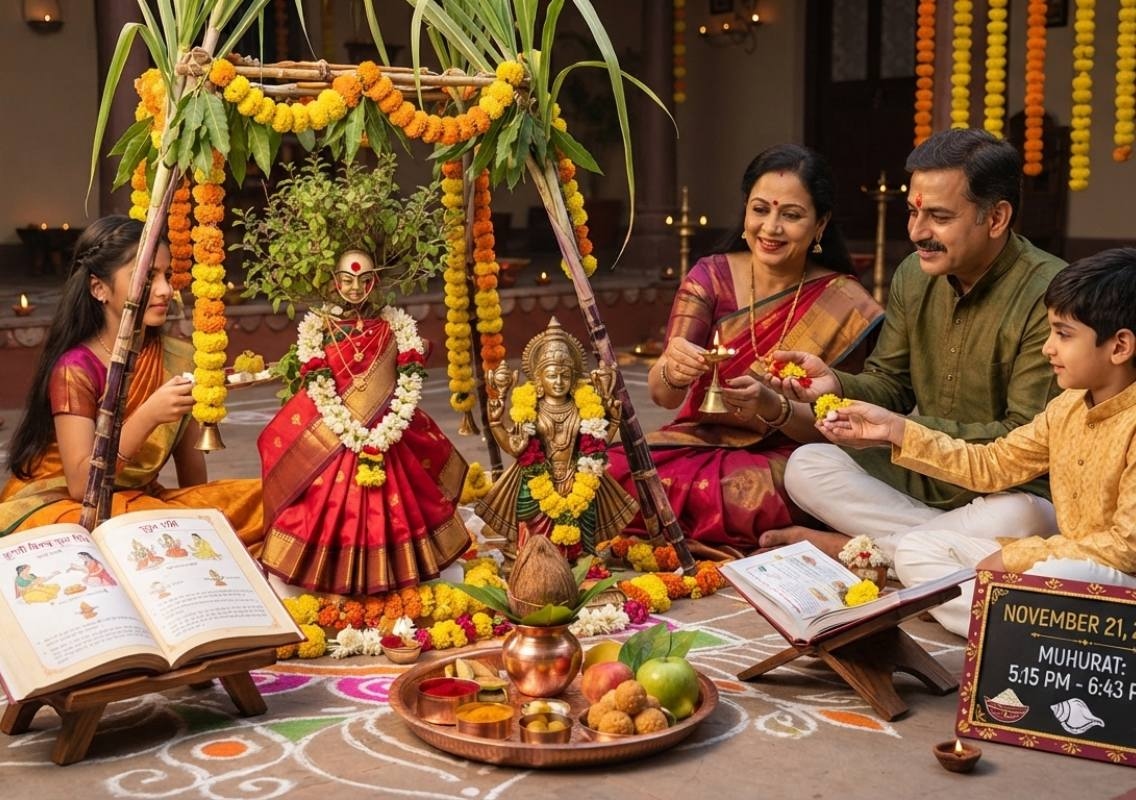


New Delhi: Tulsi Vivah, the ceremonial marriage of Goddess Tulsi to Lord Vishnu, will be celebrated on Saturday, November 21, 2026. Observed on Kartik Shukla Dwadashi, the Hindu festival holds special religious significance as it marks the beginning of the traditional Hindu wedding season after the four-month-long Chaturmas period.
The festival is celebrated in several parts of India with prayers and traditional wedding ceremonies. Goddess Tulsi is worshipped as the bride, while Lord Vishnu is represented by the sacred Shaligram Shila.
Devotees decorate Tulsi plants, prepare symbolic wedding mandaps and perform rituals associated with a traditional Hindu marriage. Although the customs may differ across regions and households, the central observance remains the ceremonial union of Goddess Tulsi and Lord Vishnu.
Tulsi Vivah 2026 date and shubh muhurat
Tulsi Vivah will be observed on November 21, 2026. According to the New Delhi Panchang, the Dwadashi Tithi begins at 6.31 am on November 21 and ends at 4.56 am on November 22.
The important timings for the festival are:
- Festival date: Saturday, November 21, 2026
- Dwadashi Tithi begins: 6.31 am on November 21
- Dwadashi Tithi ends: 4.56 am on November 22
- Godhuli Muhurat: 5.25 pm to 6.13 pm
- Pradosh Kaal: 5.25 pm to 7.49 pm
- Abhijit Muhurat: 11.42 am to 12.28 pm
The wedding ceremony is traditionally performed in the evening, particularly during Godhuli Vela, the auspicious period around sunset.
Devotees generally choose the evening muhurat for the symbolic wedding rituals. However, the precise timings may vary depending on the location and the regional Panchang followed by a family. Those performing the ceremony are advised to check the local timings before beginning the puja.
Religious significance of Tulsi Vivah
Tulsi Vivah marks the ceremonial marriage of Goddess Tulsi to Lord Vishnu. The sacred Tulsi plant is worshipped as the bride, while Lord Vishnu is represented by a Shaligram Shila or an idol of the deity.
The observance takes place during the Kartik month and is associated with the end of Chaturmas, a four-month period considered significant in Hindu religious traditions. The conclusion of this period marks the beginning of the traditional wedding season, when auspicious ceremonies such as marriages are generally undertaken.
For devotees, Tulsi Vivah is an occasion to offer prayers, seek divine blessings and celebrate the sacred bond between Goddess Tulsi and Lord Vishnu.
The ceremony is often conducted like a traditional wedding, complete with decorations, offerings, prayers and symbolic marriage rituals. Families may also invite relatives and neighbours to participate in the celebration.
Tulsi Vivah 2026 puja samagri
Devotees preparing to perform Tulsi Vivah at home can arrange the commonly used puja materials in advance.
The usual list of items includes:
- Tulsi plant
- Shaligram Shila or an idol of Lord Vishnu or Krishna
- Red or yellow chunari
- Flowers and garlands
- Haldi and kumkum
- Sandalwood paste
- Akshat (unbroken rice grains)
- Incense sticks and diya
- Fruits and sweets
- Coconut
- Sugarcane stalks
- Panchamrit
- Decorative cloth and other wedding accessories
The exact offerings and materials may differ according to regional customs and family traditions. Devotees generally follow the practices observed in their households.
How to perform Tulsi Vivah at home: Puja vidhi
Tulsi Vivah is performed as a symbolic Hindu wedding, with the Tulsi plant representing the bride and Lord Vishnu or Shaligram representing the groom.
The following steps outline a commonly followed way of conducting the ceremony at home.
1. Clean and decorate the puja area
Begin by cleaning the space around the Tulsi plant. Decorate the area with flowers, rangoli and traditional ornaments.
Place the Tulsi pot on a raised platform or chowki. Ensure that the space is arranged neatly so that the wedding rituals can be performed comfortably.
2. Prepare the wedding mandap
Create a small wedding mandap around the Tulsi plant using sugarcane stalks or decorative sticks. Decorate the structure with flowers, mango leaves and colourful cloth.
The mandap represents the ceremonial setting for the divine wedding. Families may add traditional decorations according to their customs.
3. Dress Goddess Tulsi as the bride
Decorate the Tulsi plant with a red or yellow chunari. Flowers, bangles and other traditional bridal accessories may also be used.
Apply haldi and kumkum as part of the symbolic bridal preparations. The decorations represent Goddess Tulsi’s role as the bride in the ceremony.
4. Prepare Lord Vishnu as the groom
Place a Shaligram Shila or an idol of Lord Vishnu or Krishna beside the Tulsi plant.
Decorate the deity with flowers, sandalwood paste and a garland. The arrangement symbolises the presence of the groom for the wedding ceremony.
5. Perform Ganesh Puja
Begin the wedding rituals by worshipping Lord Ganesha and seeking his blessings for an auspicious occasion.
Light a diya and incense sticks before proceeding with the remaining prayers. Ganesh Puja is traditionally performed at the beginning of important Hindu ceremonies.
6. Conduct the wedding rituals
Offer flowers, fruits and sweets to Goddess Tulsi and Lord Vishnu.
The symbolic Kanyadaan of Goddess Tulsi is performed as part of the wedding ceremony. Devotees may recite traditional wedding prayers or Mangalashtak while conducting the rituals.
7. Perform the pheras
Complete the symbolic wedding circumambulations around the mandap or sacred fire, according to family traditions.
The pheras represent the sacred bond between the divine couple. The exact procedure may vary depending on the customs followed by the household.
8. Perform the aarti and distribute prasad
Conclude the ceremony by performing the aarti of Goddess Tulsi and Lord Vishnu.
Offer prayers and distribute prasad among family members and devotees. This marks the completion of the symbolic wedding celebrations.
A celebration of faith and devotion
Tulsi Vivah is more than a ceremonial observance for devotees. It is a celebration of faith, devotion and the sacred bond between Goddess Tulsi and Lord Vishnu.
While the elaborate arrangements may differ across India, the central tradition remains the same: worshipping the Tulsi plant and celebrating its symbolic marriage to Lord Vishnu. For many households, the festival also marks the return of auspicious wedding ceremonies after Chaturmas.