







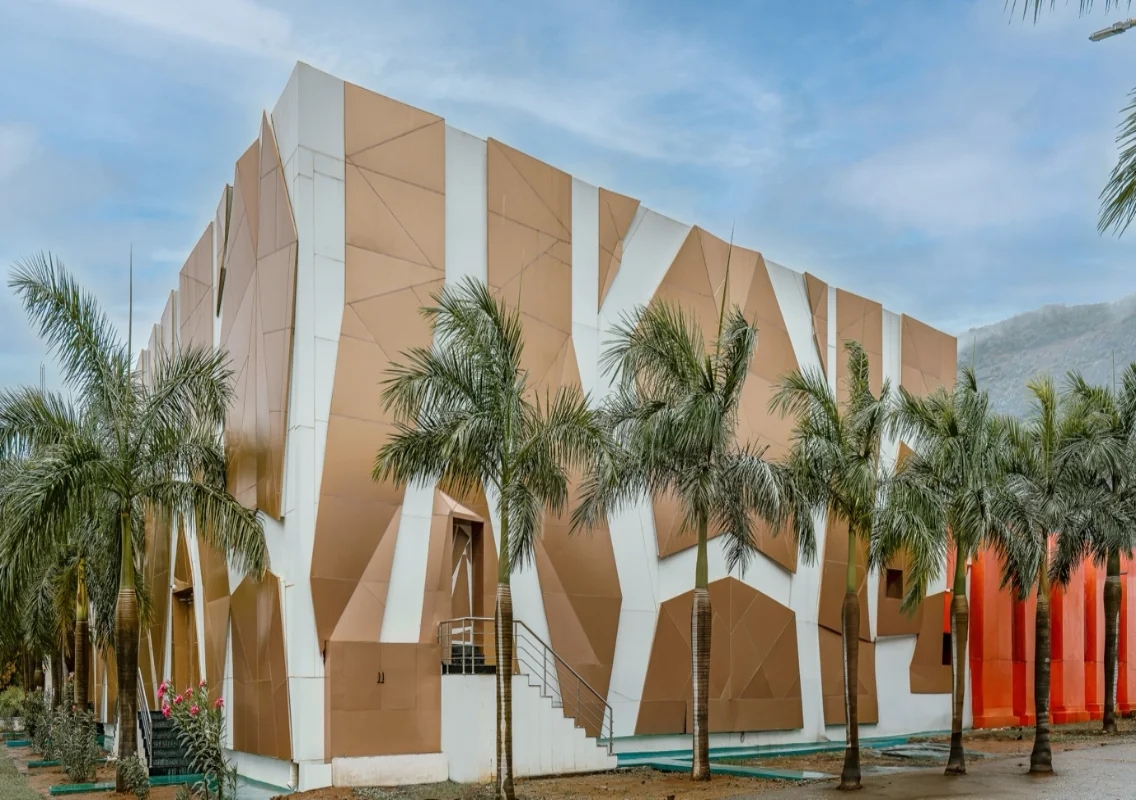


Climatic contrasts shape Karnataka’s built environment. Coastal towns experience high humidity and salt-laden winds. Interior regions face dry heat and dust. Hill stations deal with heavy rainfall and fluctuating temperatures. In such conditions, façade materials must perform consistently without frequent intervention. ACP sheets have emerged as a practical response to this diversity, balancing durability, stability, and design flexibility across the state.
Understanding Karnataka’s Climate and Its Impact on ACP Sheets
Karnataka can broadly be divided into three climatic zones:
- Coastal Belt – Cities like Mangaluru, Udupi, and Karwar experience a humid climate with high exposure to saline air due to their proximity to the Arabian Sea.
- Deccan Plateau – Regions such as Bengaluru, Tumakuru, and Ballari have moderate to high temperatures along with seasonal rainfall, typical of plateau conditions.
- Western Ghats Region – Areas including Chikkamagaluru and Madikeri receive heavy monsoon rainfall and generally cooler temperatures because of their hilly terrain.
Each climatic zone places different stresses on exterior materials. Moisture penetration, corrosion, thermal expansion, and surface degradation are common challenges.
Composite façade panels are designed to withstand these conditions through layered construction, protective coatings, and precise manufacturing processes, ensuring durability and performance across varied environments.
Why These Panels Perform Reliably in Variable Weather Conditions
These panels consist of aluminium skins bonded to a core material. This composite structure offers dimensional stability and resistance to environmental stress. Aluminium does not rust, and when paired with suitable surface coatings, it withstands prolonged exposure to moisture and UV radiation.
In coastal Karnataka, corrosion resistance is critical. These panels with PVDF or FEVE coatings show improved resistance to salt spray and humidity. In inland cities like Bengaluru, thermal stability becomes more relevant. Such panels expand and contract predictably, reducing the risk of warping or joint failure when installed correctly.
ACP Sheets in Coastal Karnataka: Managing Humidity and Salinity
High humidity accelerates material fatigue if surfaces are unprotected. Salt particles in the air can further compromise untreated metals. Panels specified for coastal applications typically use higher-grade aluminium alloys and advanced coating systems.
processes.
Aludecor’s PVDF-coated ACP sheets, for instance, are designed to resist corrosion in high-salt coastal environments. Such specifications help maintain surface integrity and colour stability over long periods, reducing maintenance cycles in cities like Mangaluru and Udupi.
ACP sheet manufacturer Considerations for Inland Cities
Bengaluru and the surrounding regions experience moderate rainfall but significant temperature variation between seasons. Here, façade materials must handle heat, pollution, and occasional heavy showers. The role of an ACP sheet manufacturer becomes important in ensuring consistent bonding strength and coating thickness.
Uniform coating application reduces fading and surface chalking caused by UV exposure. Controlled core density helps maintain panel flatness over time. These factors collectively influence how aluminium composite façades age in urban environments.
Performance of ACP Sheets in High-Rainfall Regions
The Western Ghats receive some of the highest rainfall in the country. Continuous exposure to water can test sealants, joints, and surface finishes. ACP sheet, when installed with proper detailing, allow effective water shedding and minimise moisture ingress.
Surface smoothness prevents dirt accumulation, which is common in wet climates. This makes these panels suitable for hill towns like Madikeri and Chikkamagaluru, where façades are frequently exposed to rain and mist.
Comparable Climatic Regions Across India
The climatic challenges seen in Karnataka are not unique. Similar conditions exist in Goa, Kerala’s coastal cities, Mumbai, Chennai, and parts of Telangana. These regions also combine humidity, heat, and seasonal rainfall.
The widespread use of aluminium composite façade systems across these areas highlights their adaptability. Lessons from Karnataka’s applications often inform façade strategies in these comparable climates, reinforcing the material’s relevance beyond a single geography.
Sustainability and Longevity of ACP Sheets
Weather resistance also influences sustainability. Materials that degrade quickly require replacement, increasing resource consumption. ACP sheet offer long service life when specified and installed correctly.
Aluminium is recyclable, and many composite panel systems are designed with lifecycle performance in mind. Stable coatings reduce the need for repainting, while lightweight panels lower structural load. These attributes support responsible construction practices in climate-sensitive regions.
The Role of an Experienced ACP sheet Manufacturer
Consistency in performance depends on manufacturing standards. An experienced ACP sheet manufacturer focuses on alloy quality, coating formulation, and process control. Testing for peel strength, coating adhesion, and weather resistance helps validate real-world performance.
Aludecor, with its long-standing presence in the Indian façade industry, often references regional climatic factors during product development. This approach reflects an understanding of how composite aluminium panels are used across diverse environments like Karnataka.