







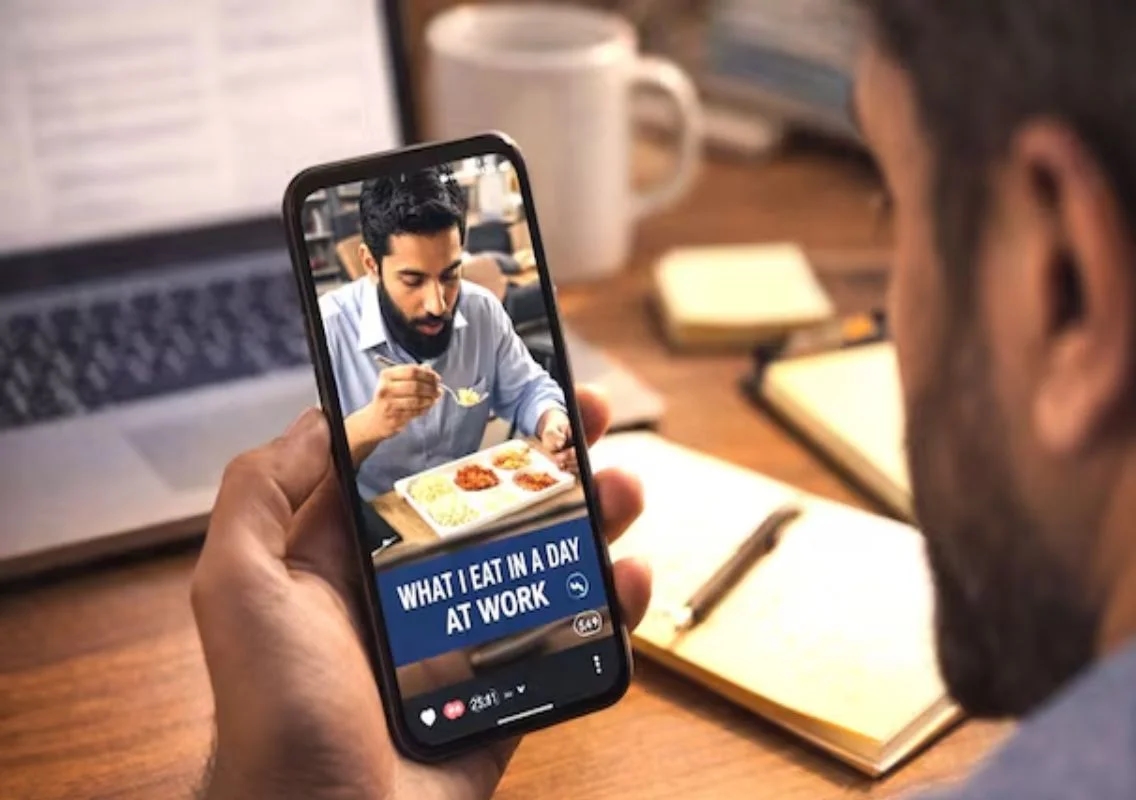


New Delhi: Scroll through Instagram or any short-video platform today, and you are likely to come across a familiar format — “what I eat in a day at work”. These seemingly simple clips, showing everyday meals from breakfast to evening snacks, have quietly become one of the most watched content trends online.
From office-goers carrying neatly packed dabbas to those surviving on coffee and canteen meals, millions are tuning in to watch how others eat during their workday. But the appeal of these videos goes far beyond food.
Relatability makes it irresistible
At the core of this trend is relatability. These videos reflect everyday routines that viewers instantly recognise — rushing in the morning, juggling deadlines, and squeezing in meals between meetings.
According to psychologists, this familiarity creates a sense of shared experience. Watching someone manage their meals alongside a 9-to-5 job feels like seeing a version of one’s own life on screen.
It is not just about food; it is about routine, discipline, and small daily choices. Whether it is neatly portioned snacks or a hurried chai break, viewers see fragments of their own habits mirrored back to them.
In a fast-paced world, such content feels authentic and comforting — a break from overly curated or aspirational social media posts.
Curiosity and comparison drive engagement
Human curiosity plays a major role in the popularity of these videos. People are naturally inclined to observe others’ behaviours — a trait linked to learning and adaptation.
Psychologically, this connects to social comparison. Viewers often compare their own routines with what they see on screen.
On hectic days when meals are skipped or poorly planned, watching someone maintain a balanced diet can feel aspirational. It may even encourage viewers to adopt healthier habits.
However, this comparison is not always positive. While some feel motivated, others may experience mild guilt or inadequacy if the routines shown seem difficult to replicate.
Comfort in routine and structure
Another reason these videos are so engaging is the sense of order they provide. In the middle of chaotic workdays, watching someone follow a structured routine — breakfast, snacks, lunch, and more — offers a calming effect.
It creates a sense of control and predictability, something many people seek in their own lives but may struggle to maintain.
Even without actively trying to change habits, viewers often find comfort in simply watching someone else stay organised.
Food as a universal connection
Food is one of the most universal aspects of human life. Regardless of profession, city, or culture, everyone eats — and that shared experience creates an instant connection.
These videos allow viewers to explore different cuisines and habits while still recognising familiar patterns. A home-cooked meal, a quick snack, or a cup of chai becomes a point of connection between strangers.
They also foster what psychologists call parasocial relationships — a sense of connection with someone you do not personally know. Over time, viewers begin to feel invested in the routines of the people they watch.
A mix of inspiration and emotion
“What I eat” videos are not just informative or entertaining — they are emotionally layered.
For some, they serve as gentle motivation to eat better or plan meals more effectively. For others, they provide reassurance that everyone struggles with maintaining balance during busy days.
The emotional response often depends on the viewer’s own lifestyle and mindset. A well-planned meal can either inspire or intimidate, depending on how achievable it feels.
Conclusion: More than just food videos
The popularity of “what I eat in a day at work” content highlights how people seek connection, routine, and relatability in digital spaces.
These videos may appear simple, but they tap into deeper psychological needs — curiosity, comparison, comfort, and belonging. In the middle of hectic work schedules, they serve as a quiet reminder that, despite different lives and routines, everyone is navigating similar daily challenges — just with different dabbas.