







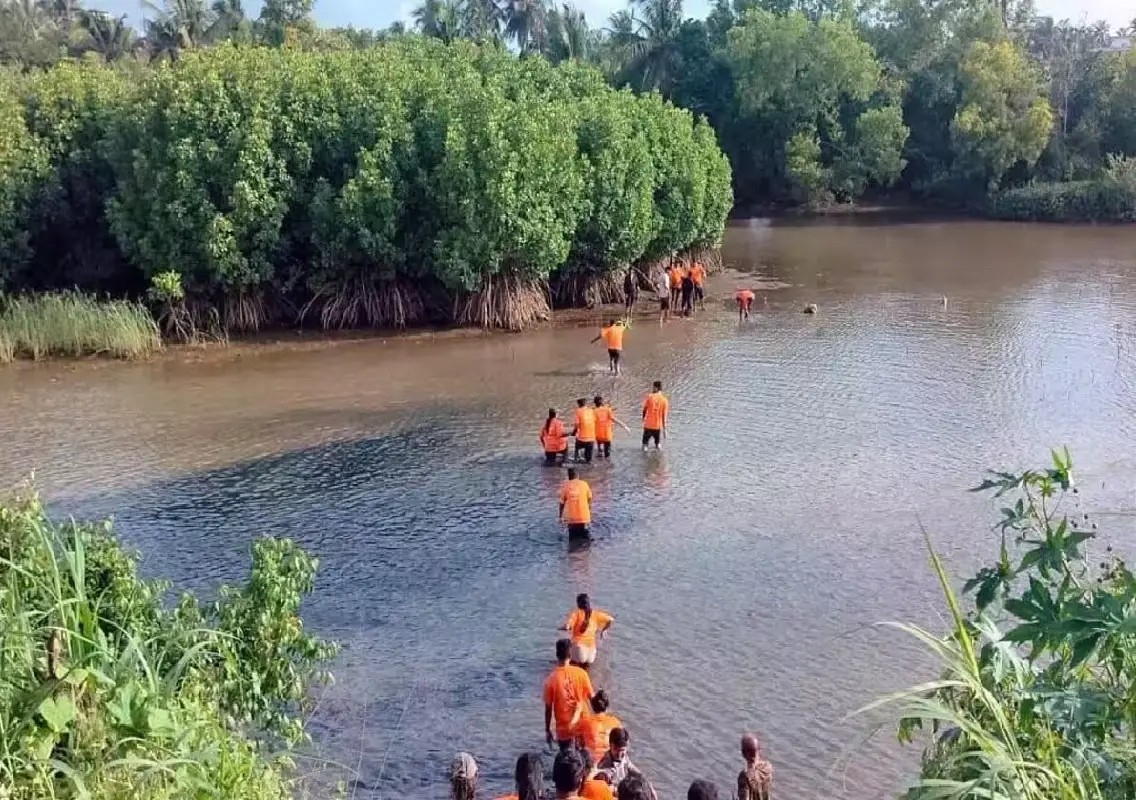


Mangaluru: Environmentalist and founder of Vana Charitable Trust Jeeth Milan Roche has launched a large-scale mangrove plantation drive along the banks of the Nethravathi River, aiming to restore the ecological balance of the river ecosystem.
As part of the initiative, Roche and his team, assisted by 41 volunteers, planted 3,000 mangrove saplings in a single day on Friday. The plantation marked the beginning of this year’s month-long drive, which is part of a larger three-year effort to expand and protect mangrove cover along the riverbanks.
Target of 40,000 saplings this year
Speaking to The Times of India, Jeeth Milan Roche said the team has set a target of planting 40,000 mangrove saplings this year.
The larger plan is to plant up to one lakh saplings in three phases as part of the ongoing ecological restoration efforts.
The plantation drive is focused on increasing mangrove cover along the Nethravathi River and strengthening the natural ecosystem along its banks. Mangroves play an important role in protecting riverbanks, supporting biodiversity and maintaining ecological stability in coastal areas.
The organisers are working to ensure that the plantation is not limited to planting saplings but also includes efforts to protect the young plants during their initial stages of growth.
1.2 lakh saplings planned over three years
The mangrove restoration project is being implemented over three years with support from CSR funding provided by the Biocon Indian Foundation.
Around Rs 10 lakh has been allocated for each phase of the project.
Under the plan, the organisers intend to plant approximately 40,000 saplings every year. If the target is achieved throughout the three-year period, the project will result in the planting of around 1.2 lakh mangrove saplings.
The initiative builds on the experience gained during last year’s plantation drive, when the team planted 40,000 saplings.
The organisers have also accounted for the possibility of losses among newly planted saplings. Young mangroves can be vulnerable to unpredictable weather conditions and accidental damage, particularly in areas where fishermen operate boats along the riverbanks.
Volunteers support plantation drive
The latest drive received support from 41 volunteers, who joined the Vana Charitable Trust team in planting 3,000 saplings in a single day.
The involvement of volunteers is an important component of the plantation programme, as large-scale ecological restoration requires sustained participation beyond the initial planting activity.
The month-long drive will focus on planting additional saplings at suitable locations along the Nethravathi River. The team will also work towards protecting the growing mangrove cover from potential damage.
According to the organisers, the objective is to create a stronger and more extensive mangrove ecosystem rather than simply increase the number of saplings planted.
Focus on protecting mangrove ecosystem
The Nethravathi River and its surrounding areas form an important ecological landscape in the coastal region. Mangrove vegetation along riverbanks can help stabilise soil and provide habitats for various forms of aquatic and terrestrial life.
The plantation programme is therefore aimed at improving the overall ecological health of the river ecosystem by expanding mangrove vegetation.
However, the survival of the saplings remains a key challenge. The organisers have identified unpredictable weather and accidental damage caused by boats as some of the factors that can affect young plants.
Fishermen navigating boats close to the riverbanks may unintentionally damage newly planted saplings, making protection and monitoring an important part of the project.
The organisers are consequently focusing on both plantation and conservation to ensure that the mangroves survive and develop into established vegetation.
Three-phase restoration programme
The long-term plan involves planting up to one lakh saplings in three phases, while the annual target under the three-year project stands at 40,000 saplings.
The organisers expect the phased approach to help them identify suitable locations, monitor the survival of planted mangroves and address challenges encountered during the restoration process.
The project is supported through CSR funding from the Biocon Indian Foundation, with approximately Rs 10 lakh allocated for each phase.
The initiative represents a sustained effort to increase mangrove cover along the Nethravathi and strengthen the river ecosystem through community participation and ecological restoration.
With 3,000 saplings already planted at the beginning of this year’s drive, the team will continue its month-long plantation programme towards the larger target of 40,000 saplings.
If successfully implemented and maintained, the three-year initiative could add around 1.2 lakh mangrove saplings to the riverbank landscape and contribute to the long-term conservation of the Nethravathi River ecosystem.