







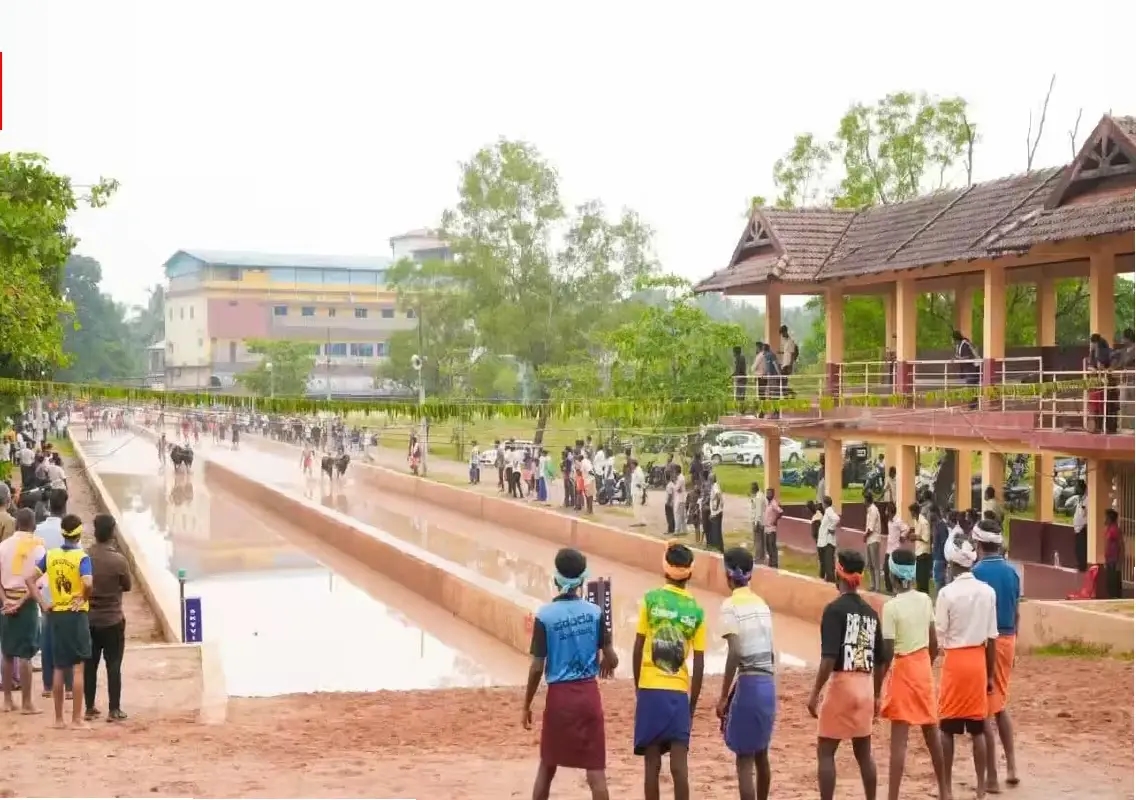


Mangaluru: Thirty-five of the 42 first-time Kambala runners trained by the Kambala Conservation, Management and Training Academy participated in a practical run at Moodubidire on Thursday, marking an important step towards entering the competitive circuit of the traditional buffalo race.
The 12-day training camp, which began on September 26 and was conducted free of cost, concluded with a competition on October 8. The event was designed exclusively for the newly trained runners, who were given an opportunity to handle and run the buffaloes as part of their practical training.
Academy president Gunapala Kadamba told The Times of India that this year’s batch had performed well, with trainees demonstrating physical fitness, enthusiasm and the basic skills required to participate in Kambala.
Two trainees suffered minor injuries during the training programme, he said.
123 applicants shortlisted through fitness tests
The academy received 123 applications for the training programme. Following medical examinations and physical fitness tests conducted by experts from Alva’s Education Foundation, 72 candidates were shortlisted.
The final batch comprised 42 newcomers from different educational and professional backgrounds. The trainees included graduates, postgraduates, ITI-qualified candidates and youngsters from agricultural families.
Participants came from Dakshina Kannada and Udupi districts, as well as Kasaragod, Bhatkal, Byndoor and other parts of Karnataka. Unlike programmes restricted to a particular locality, this year’s camp was open to applicants from all districts of the state.
The broad participation reflects the academy’s efforts to attract a new generation to Kambala, a traditional coastal Karnataka sport closely associated with rural life, farming communities and buffalo rearing.
Trainees learn buffalo handling before racing
The training programme combined practical lessons in buffalo care and handling with theoretical sessions and physical conditioning.
During the first five days, trainees were not permitted to run the buffaloes. Instead, they learnt how to bathe and groom the animals, handle ropes and prepare the buffaloes for competition.
They were also trained in handling and tying the mara, the wooden bar used in Kambala racing. According to Kadamba, the ability of the trainees to master this task within a short period was appreciated by experienced participants.
The camp also included yoga, physical exercises, nutrition guidance and personality development sessions. These activities were intended to help participants develop the stamina, coordination and discipline required for the demanding sport.
Kadamba said the trainees showed good physical fitness and a keen interest in learning. The concluding practical run gave them an opportunity to apply their skills in a controlled setting and gain initial experience with the buffaloes.
The academy considers such practical exposure an essential part of preparing newcomers for the challenges of competitive Kambala.
Academy focuses on long-term careers in Kambala
Kadamba said the academy’s objective was not merely to train youngsters to run buffaloes during a camp but to give them a foundation for continuing in the sport.
He noted that becoming a competitive Kambala runner requires sustained practice, experience and opportunities to work with buffalo owners. Newcomers need to progress gradually through junior and sub-junior races before moving towards senior-level competitions.
The academy is also working to connect trained runners with sponsors, buffalo owners and Kambala organisers. Some trainees from the latest batch have already received approaches to participate in events, but they require more exposure and continued support to establish themselves.
The transition from training to competition can be challenging, particularly for those without existing connections in the Kambala community. Access to suitable buffaloes, regular practice and opportunities to participate in races can determine whether a trainee continues in the sport.
The academy hopes that its network of experienced participants and organisers will help more newcomers make that transition.
Academy has trained up to 150 youngsters since 2011
Established in 2011 by a group of 11 Kambala enthusiasts, the Kambala Conservation, Management and Training Academy has trained around 100 to 150 youngsters over the years.
Of those trained, approximately 50 to 60 remain active in the sport, while 10 to 15 have progressed to running in senior events, according to Kadamba.
The latest programme was the academy’s seventh training camp. All the camps have been conducted free of cost, helping young people gain access to training without having to pay programme fees.
Former trainees now account for a significant share of leading Kambala runners, Kadamba said. Srinivasa Gowda of Mijar, one of the academy’s early trainees, later gained national attention for his performances in the traditional sport.
His progress illustrates how structured training can help newcomers develop their abilities and gain recognition beyond the coastal region.
However, not every trainee continues after completing the programme. Some leave Kambala to pursue education, employment or other career opportunities, highlighting the difficulty of retaining young talent in a sport that requires sustained commitment.
Next training camp planned for next year
The academy plans to organise its next training camp around Mahalaya next year. The programme is expected to continue its focus on identifying interested youngsters, assessing their fitness and introducing them to the practical skills needed for Kambala.
For the 35 trainees who took part in Thursday’s practical run at Moodubidire, the event marked the beginning of a longer journey rather than the end of their training.
Their future progress will depend on regular practice, access to buffaloes, participation in junior competitions and the support of owners, sponsors and organisers.
As Kambala continues to attract attention beyond its traditional coastal strongholds, initiatives such as the academy’s free training programme could play an important role in preserving the sport’s skills and ensuring that a new generation of runners carries the tradition forward.