







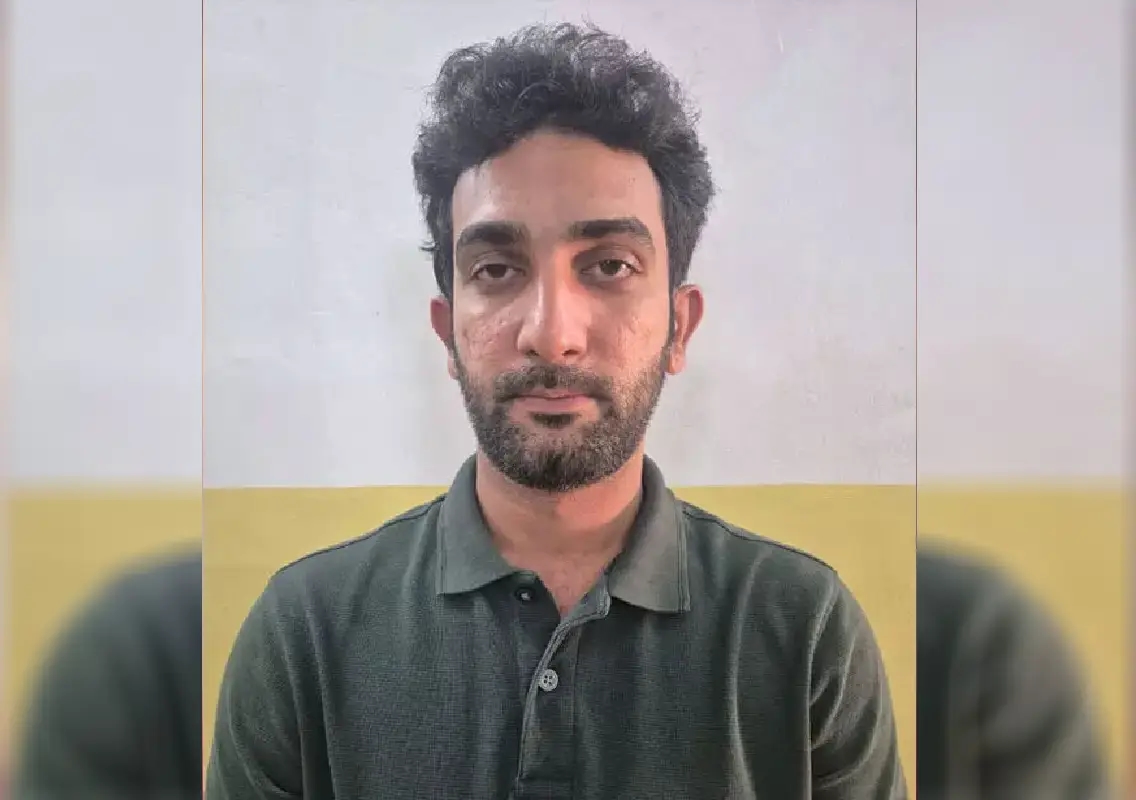


Mangaluru: In a significant breakthrough, Ullal police in Mangaluru have arrested a man who had been absconding for nearly 14 years after failing to appear before the court in connection with a ganja-related case. The accused, identified as Mohammed Sansheer, a resident of Mukacheri, had been evading arrest and court proceedings since the case was first registered against him.
According to police officials, the arrest was made after sustained tracking efforts based on a long-pending proclamation (LPC) warrant issued by the court. The accused was produced before the court on Wednesday, and further legal proceedings are now underway.
Long period of evasion
Police sources said the case dates back over a decade, when a ganja-related offence was registered against Sansheer under relevant provisions of the Narcotic Drugs and Psychotropic Substances (NDPS) Act. After the case was filed, he allegedly failed to respond to repeated court summons and did not appear for scheduled hearings.
Despite multiple attempts by law enforcement agencies over the years to trace him, the accused managed to remain out of reach. His continued absence from court led to delays in the trial process and forced authorities to escalate legal measures to secure his presence.
Officials stated that because of his persistent failure to appear, the court eventually declared him an absconder and issued a long-pending proclamation warrant — commonly referred to as an LPC warrant — authorising police to locate and arrest him wherever found.
Special effort by Ullal police
Mangaluru police said a renewed drive to execute old pending warrants helped revive the search for Sansheer. As part of this initiative, Ullal police reviewed records of absconding accused persons in unresolved and long-pending criminal cases, including NDPS matters.
A special team was assigned to gather fresh intelligence about his whereabouts. Through local inputs, background verification, and movement tracking, officers were able to trace him after years of concealment. He was apprehended without incident and taken into custody.
Police officials noted that such arrests are important not only for the specific case involved but also for reinforcing the credibility of the legal system. Executing long-pending warrants sends a message that accused persons cannot indefinitely avoid judicial process.
What an LPC warrant means
A long-pending proclamation warrant is typically issued when an accused repeatedly ignores court summons and non-bailable warrants. After due procedure, the court may declare the person a proclaimed offender and authorise police to arrest them at any time.
Legal experts say LPC warrants remain valid until executed or cancelled by the court. This means that even if several years pass, police retain the authority to arrest the accused once traced. Property attachment and public notices may also be used in some cases to compel appearance.
In NDPS-related cases, courts tend to treat non-appearance seriously because narcotics offences are considered grave and carry stringent punishment if proven.
Produced before court
Mangaluru police confirmed that after his arrest, Sansheer was produced before the jurisdictional court on Wednesday. The court will now decide the next course of action, including custody, bail considerations, and revival of trial proceedings in the original ganja case.
Officials added that documentation related to his earlier non-appearance and evasion has also been placed before the court. The prosecution is expected to press for continuation of the case based on available records and evidence.
Continued drive against absconders
Mangaluru police have been conducting periodic drives to trace absconding accused in criminal cases, including narcotics, theft, assault, and financial fraud matters. Senior officers say many such accused assume that old cases lose force over time, but legally that is not the case.
By reopening warrant lists and coordinating between stations, police units aim to reduce the number of pending proclamation cases across the district. Authorities believe that consistent enforcement improves conviction rates and deters repeat offences.
Further investigation and legal proceedings in the present case will continue as per court directions.