









Mangaluru: Several apartment complexes in the city are increasingly adopting sustainable waste management practices by converting household wet waste into organic compost, significantly reducing the volume of garbage sent to landfills while also generating modest revenue for resident welfare associations.
Shift towards in-house composting systems
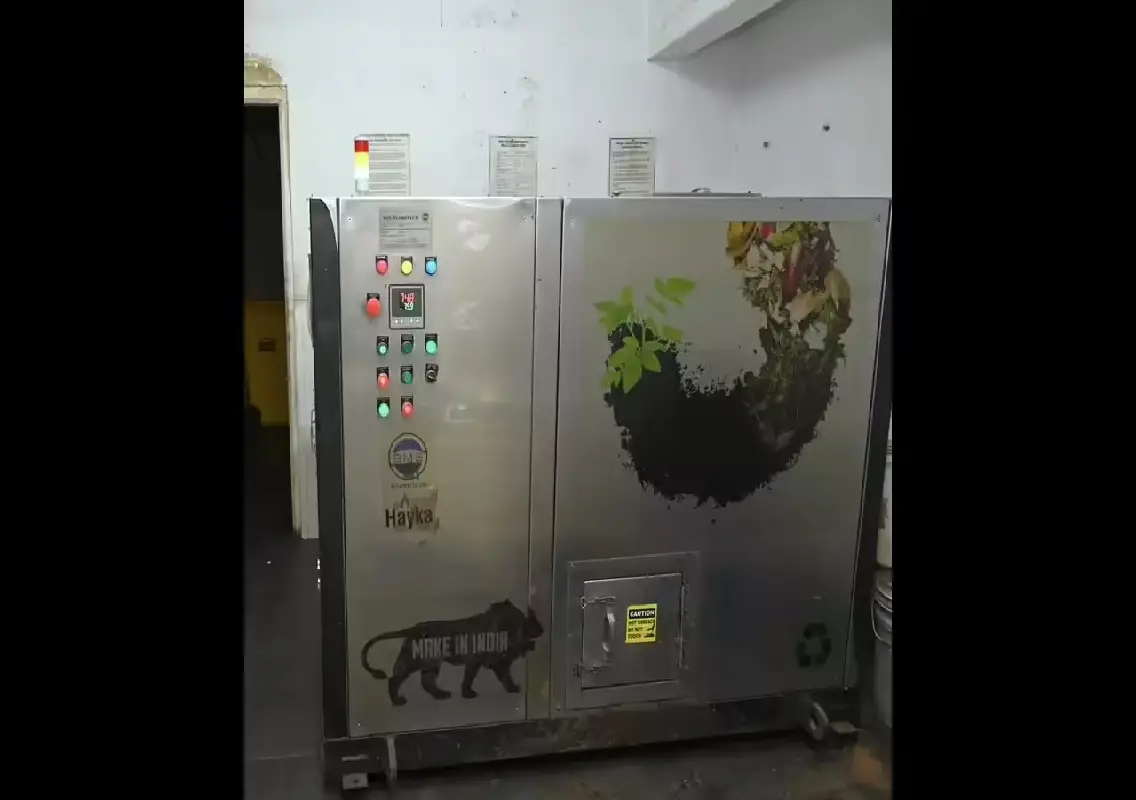
Across the city, many residential complexes are investing in organic waste composter (OWC) machines that can process wet waste into compost within a day. The compost generated is sold to residents and occasionally to external buyers, helping offset operational costs. While machine-based composting is gaining popularity due to its speed and efficiency, several apartments continue to rely on conventional vermicomposting methods, which take several weeks to produce compost.
Canopy apartments lead with machine-based composting
At Canopy, a luxury apartment complex with over 250 units near Ashoknagar, an in-house composting unit processes about 180 kg of wet waste every day and produces nearly 60 kg of manure. Umesh Rao, a committee member of the Canopy Apartment Association, said the decision to install the OWC machine was taken after visiting other apartment complexes in the city that had successfully implemented similar systems.
The machine was installed in July 2024, replacing an earlier black soldier fly composting model. Residents found the earlier system difficult to manage due to operational challenges, Rao said. The new technology, he added, converts the entire wet waste generated in the complex into high-quality compost within 24 hours.
Costs, manpower and revenue generation
Rao said the compost is sold at ₹3 per kg, even though the production cost ranges between ₹8 and ₹9 per kg. Despite the cost difference, the association considers the initiative worthwhile due to environmental benefits and reduced dependence on external waste disposal systems.
He pointed out that the machine consumes considerable electricity and requires dedicated manpower for daily operations. However, the benefits outweigh the challenges, especially in terms of waste reduction and cleanliness within the complex.
General secretary Shavina Soans said the initiative has gone beyond basic segregation at source and has resulted in tangible financial benefits for residents. She said the apartment complex now receives a 50% discount on waste collection tax for each resident. Compost testing has also confirmed the presence of essential nutrients, making it suitable for gardening and landscaping, she added.
Planet SKS adopts early, sees long-term benefits
Planet SKS, another luxury apartment complex with around 171 flats, has been using the same composting technology for the past four years. Apartment manager Omayya Poojary said the complex generates about 70–80 kg of wet waste daily, of which nearly half is converted into compost.
The compost produced is sold at ₹1 per kg. Poojary said Planet SKS was among the first apartment complexes in the city to adopt this technology and that many others followed suit after observing its effectiveness. He cited benefits such as reduced odour, fewer pest-related issues, faster waste processing and improved compost quality.
Vermicomposting still preferred by some complexes
Despite the growing popularity of machine-based composting, some apartment complexes continue to use traditional vermicomposting. Kevin Santosh Nazareth, a committee member of Fernhill Apartments in Nanthoor, said their 100-flat complex generates around 65–80 kg of wet waste daily.
Through vermicomposting, the complex produces approximately 1,300 kg of compost every month, though the process takes several weeks to complete. Nazareth said the method is cost-effective and environmentally friendly, but it requires more space and patience compared to OWC machines.
Concerns over dry waste disposal
Some apartment complexes have also installed incinerators to dispose of dry waste such as leaves and plant matter. However, residents pointed out that these incinerators have not received no-objection certificates from the pollution control board.
As a result, such dry waste has to be handed over to the municipal corporation for disposal. An apartment owner said regulatory clarity and approvals are needed if incinerators are to be used widely as part of decentralised waste management.
Conclusion
With landfill space shrinking and waste generation rising, decentralised composting initiatives by apartment complexes are emerging as a practical solution to urban waste challenges. While operational costs and regulatory issues remain, residents and associations say the long-term environmental benefits, cleaner surroundings and reduced burden on civic systems make sustainable waste management a worthwhile investment.