


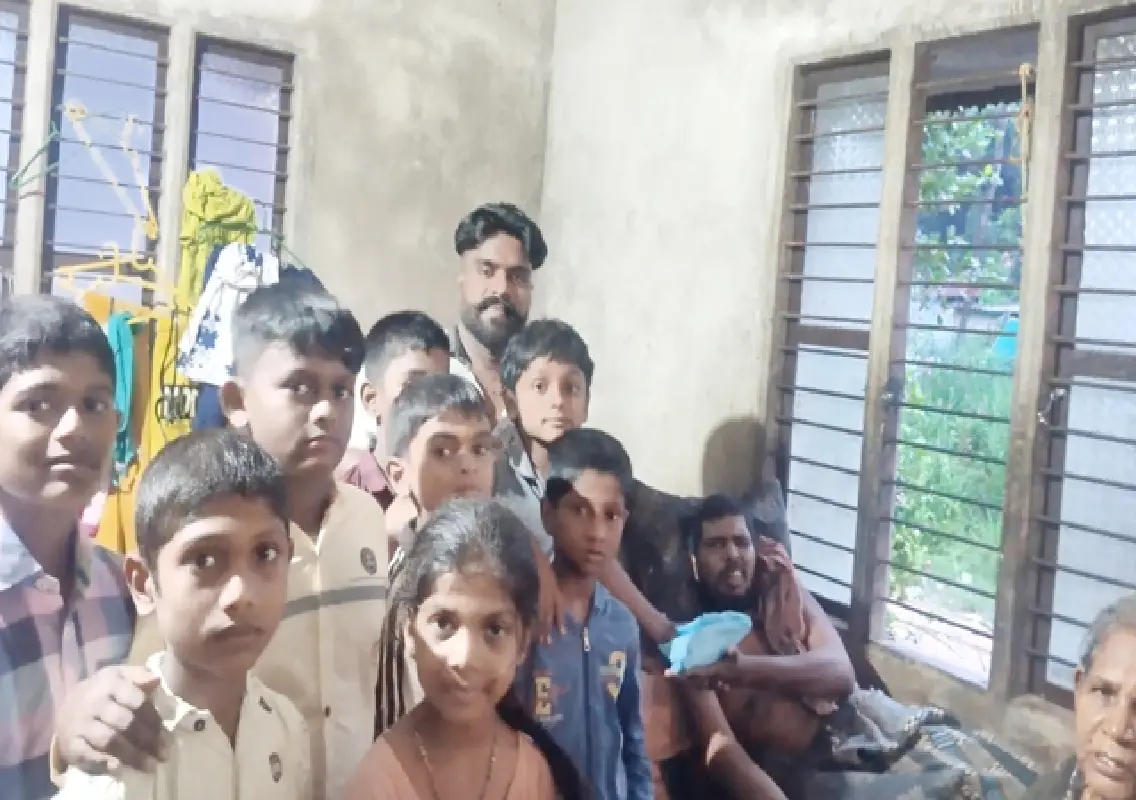


Bantwal: Seven children from Sajipanadu village in Bantwal taluk have turned their Dasara celebrations into an act of compassion by donating the money they collected through traditional tiger dance performances to help a young man who has been bedridden for the past five years following an accident.
Vaibhav, Hardik, Adheep, Shreyas, Satvik, Amogh and Ritesh, all primary school students from Sajipanadu, have been participating in the village’s Dasara festivities every year. Dressed as tiger dancers, the boys visit homes in the village and collect money from residents as part of the traditional celebrations.
While the children had previously used their collections to buy snacks and enjoy their holidays, they decided to do something different this year after learning about the prolonged suffering of a young man from their village.
Moved by his condition, the seven boys resolved to donate their earnings to help meet his medical needs. With the encouragement and support of villagers, they collected Rs 5,400 and handed over the entire amount to the youth.
From festive fun to an act of kindness
In previous years, the children would generally collect around Rs 600 through their tiger dance performances. The amount would usually be shared among themselves and spent on snacks and other small pleasures during the school holidays.
This year, however, the children chose to give their earnings a different purpose.
After learning about the young man who has remained bedridden for five years following an accident, the boys felt deeply saddened by his condition. They decided that the money collected during their traditional performances could be put to better use by helping someone facing a difficult situation.
Their collection grew to Rs 5,400 this year with the support of the villagers. Instead of dividing the money among themselves, the children handed over the entire amount to the young man.
The gesture reflects how a familiar village tradition can become an opportunity to support someone in need. For the children, what began as a festive activity turned into a meaningful effort to bring some assistance to a fellow villager.
Children kept their donation private
One of the children said they felt sad after learning about the young man’s condition and wanted to help him in whatever way they could.
The boys had kept the money collected during their performances in their helmets. They used only a small portion for their own expenses before deciding to donate the remaining amount.
The children initially chose not to tell anyone about their decision, as they did not want publicity for their act. Their intention was simply to help the young man rather than draw attention to themselves.
However, two days later, when people began asking about the money they had collected, the children disclosed what they had done.
Their decision to keep the donation private has further highlighted the sincerity behind their gesture. The children did not set out to gain recognition; they simply wanted to help someone whose suffering had touched them.
Villagers support their initiative
The children’s effort was also made possible by the support they received from people in Sajipanadu. The Rs 5,400 collection reflected the contributions gathered during their traditional Dasara visits to homes in the village.
The boys also took responsibility for preparing their performances. Two girls helped them with their makeup, while the boys arranged their costumes using materials available to them.
Despite the simple arrangements, they continued with the traditional tiger dance and used the opportunity to raise money for a cause they considered important.
Mamatha, the parent of one of the children, said the family members were happy and proud of the boys’ decision. She expressed hope that the children would continue the initiative in the coming years.
The response from their families and fellow villagers has encouraged appreciation for the children’s thoughtfulness. Their act has also drawn attention on social media, where people have praised the young donors for choosing to help someone in need.
Dasara tradition takes on a humanitarian meaning
Tiger dance, popularly known as Pilinalike in the coastal region, is a familiar feature of Dasara celebrations in Dakshina Kannada and neighbouring areas. Performers painted and dressed as tigers visit homes and neighbourhoods, adding colour and energy to the festivities while collecting contributions from residents.
For the seven children from Sajipanadu, the tradition became more than an annual celebration. By donating their earnings, they demonstrated how cultural practices can also create opportunities for community service.
Their contribution of Rs 5,400 may appear modest, but it represents a deliberate choice by children to set aside their own enjoyment to support another person. At an age when the money collected during festive performances might ordinarily be spent on treats and recreation, the boys chose to respond to the suffering of someone in their village.
Their decision also shows the role families and communities can play in encouraging children to recognise the needs of others and act with empathy.
The young man’s prolonged condition following the accident has clearly affected the children, prompting them to make a contribution within their means. Their effort does not end the challenges he faces, but it offers practical assistance and demonstrates that he has not been forgotten by his community.
As the Dasara festivities bring families and villages together, the children’s gesture from Sajipanadu offers a reminder that the value of a celebration lies not only in its rituals and traditions, but also in the kindness people extend to others.
By turning their tiger dance earnings into a donation, Vaibhav, Hardik, Adheep, Shreyas, Satvik, Amogh and Ritesh have given this year’s festivities a special significance. Their act shows that compassion does not depend on age or the amount of money one possesses, but on the willingness to share what one has with someone who needs help.