







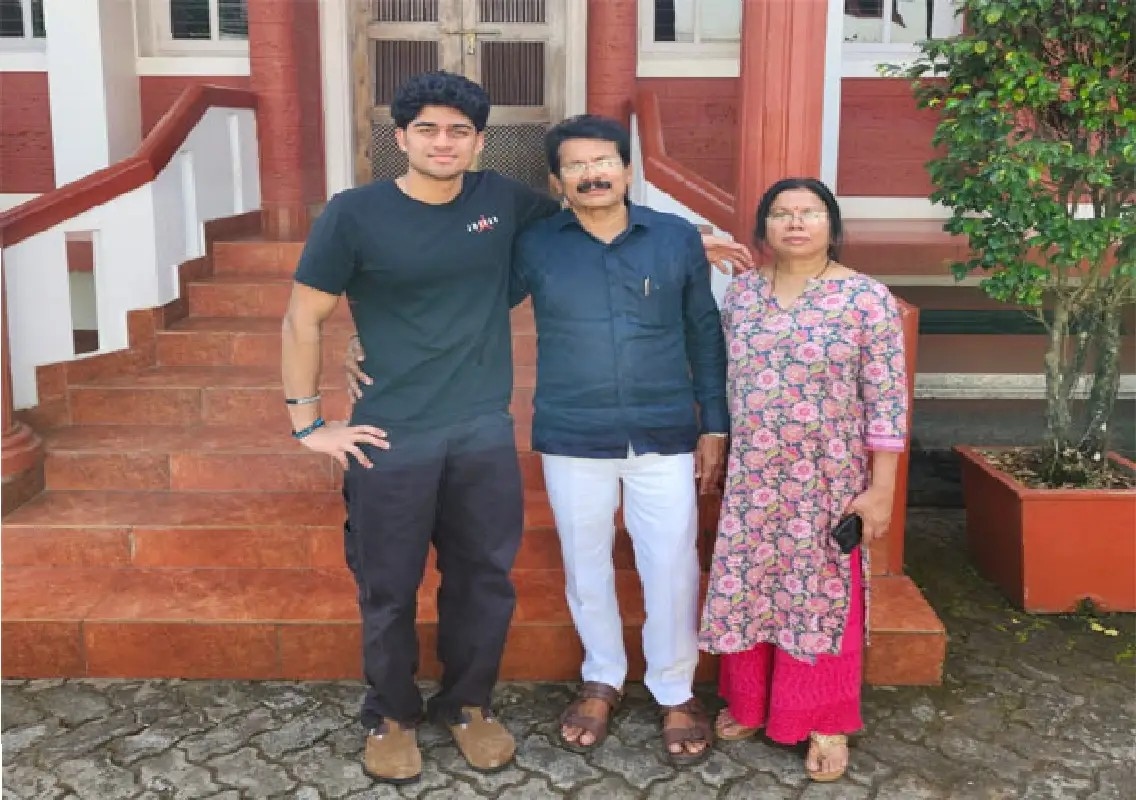


Mangaluru: A 17-year-old high school senior from California, whose parents hail from Mangaluru, is using digital storytelling, animation and museum experience to introduce the story of Rani Abbakka to a wider audience, particularly younger Indians and members of the Indian diaspora.
Arjun Shetty was inspired to undertake the project after visiting the Rani Abbakka Museum in Bantwal with his family last December. During the visit, he heard the story of Rani Abbakka from Dr Thukaram Poojary, founder and curator of the museum, and was deeply impressed by the account of her resistance against the Portuguese as well as Dr Poojary’s extensive work documenting and presenting her legacy.
The visit prompted Arjun to consider how modern digital tools could help make the story more accessible to younger generations.
Museum visit sparks the idea
During his visit to the museum, Arjun noticed that Dr Poojary personally conducted tours for visitors. Drawing on his own experience working as a museum docent in the United States, Arjun suggested creating a digital recording of Dr Poojary’s explanations.
The idea was to record Dr Poojary’s talks so visitors could access his knowledge even when he was unable to personally conduct a tour.
The digital presentation could also allow Dr Poojary to spend more time interacting with visitors and answering detailed questions rather than repeatedly explaining the basic information covered during regular tours.
Arjun and Dr Poojary subsequently discussed ways of making the presentation more engaging for younger audiences. They decided to enhance the recorded material with animations, maps and graphics to create a more immersive digital exhibit.
The project thus combines Dr Poojary’s historical research and knowledge of Rani Abbakka with Arjun’s experience in museum interpretation and digital presentation.
Experience at Reagan museum proves useful
Arjun’s interest in museum storytelling is supported by his experience as a trained docent at the Ronald Reagan Presidential Museum near Los Angeles, California.
The museum is described as the largest and most visited presidential museum in the United States. As a docent, Arjun explains Cold War history and Ronald Reagan’s contribution to the US winning the Cold War to visitors from different countries.
The experience has given him an understanding of how major museums combine storytelling with visual and digital technology to engage visitors.
He applied this experience to the Rani Abbakka project, seeking to present the history through a combination of narration, graphics, maps and animation rather than relying exclusively on conventional displays.
For Arjun, the project also became an opportunity to connect with the history of his parents’ homeland and present an important chapter of coastal Karnataka’s past to a younger audience.
Journey to Portugal adds another perspective
To better understand the historical circumstances surrounding Rani Abbakka’s resistance, Arjun followed Dr Poojary’s guidance and travelled to Lisbon, Portugal.
The trip was aimed at helping him understand the geopolitical environment surrounding the 16th-century spice trade and the Portuguese perspective on the conflicts associated with control of maritime trade routes.
During his visit, Arjun observed the prominent place given to Portuguese maritime pioneers such as Vasco da Gama in the country’s national monuments and historical narratives.
He was also struck by the importance of pepper from the Kanara coast to Portugal’s economic transformation during the 16th century.
The experience strengthened his determination to share the story of Rani Abbakka with a wider audience.
Social media campaign launched
As part of his efforts to increase awareness, Arjun has created a promotional video highlighting the significance of Rani Abbakka and is currently using social media to market the project.
The campaign is intended to take the story beyond visitors to the museum and reach younger audiences who may be more familiar with digital and social media formats.
By combining the museum’s historical material with contemporary storytelling methods, the project seeks to make the story more accessible to audiences in India and abroad.
The focus on the Indian diaspora is particularly relevant to Arjun, who grew up in California while having family roots in Mangaluru.
Raises Rs 1 lakh for museum
Arjun has also undertaken fundraising efforts in support of the Rani Abbakka Museum and has raised Rs 1 lakh.
The funds will be used to purchase a monitor for the digital exhibit and to print T-shirts featuring Rani Abbakka-themed graphics.
The fundraising effort forms another component of his involvement with the museum, extending beyond the creation and promotion of the digital presentation.
Dr Thukaram Poojary has appreciated Arjun’s contribution to the museum and his efforts to promote the story of Rani Abbakka.
“I have been extremely impressed by the digital exhibit created by Arjun. I also appreciate very much his fundraising for the museum and his marketing efforts to raise awareness about both Rani Abbakka and our museum,” Dr Poojary said.
Connecting history with a new generation
The project represents an effort to use contemporary museum techniques to introduce a historical figure to audiences who may not have encountered her story previously.
Arjun’s experience at the Ronald Reagan Presidential Museum, his visit to Portugal and his interaction with Dr Poojary have all contributed to the development of the digital exhibit.
With animations, maps, graphics and recorded narration forming part of the presentation, the initiative aims to complement the existing exhibits at the Rani Abbakka Museum in Bantwal.
Through the project, Arjun hopes to help more young Indians and members of the diaspora discover the story of Rani Abbakka and the historical significance of the coastal region.