







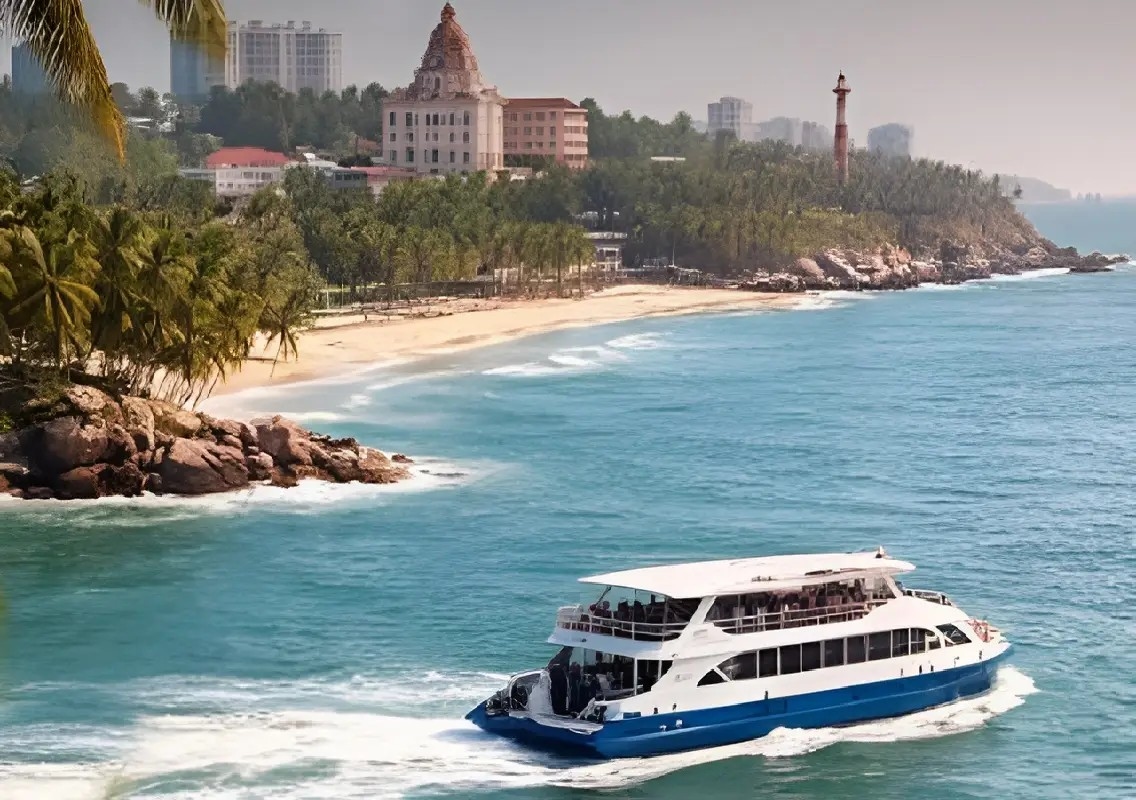


Mangaluru: In a setback to Karnataka’s plans to strengthen coastal connectivity and promote marine tourism, the Union government has declined to provide financial assistance under the Sagarmala scheme for the proposed Coastal Passenger Ferry Project between Mangaluru and Maravanthe in Udupi district. The decision has cast uncertainty over a project that was expected to provide an alternative transport corridor along the coast while boosting tourism and commercial activity.
Centre cites lack of funds under Sagarmala
The Union government’s decision was disclosed in the Lok Sabha by Union Minister for Ports, Shipping and Waterways Sarbananda Sonowal while replying to a written question raised by Udupi-Chikkamagaluru MP Kota Srinivas Poojary.
According to the minister, the Karnataka government had submitted a detailed feasibility report seeking financial support for the proposed Mangaluru-Maravanthe passenger ferry service under the Sagarmala programme. The state had also forwarded a pre-feasibility report for integrated coastal tourism and marina development with supporting infrastructure at Kota Padukere.
However, Sonowal informed Parliament that the proposals could not be considered because there is currently no financial provision available under the Sagarmala scheme to extend funding for such projects.
The clarification effectively rules out Central financial assistance for the ferry project under the existing scheme, leaving the future of the proposal uncertain.
Project aimed at transforming coastal transport
The proposed Coastal Passenger Ferry Project was envisioned as a major step towards developing water-based transport infrastructure along Karnataka’s coastline.
Earlier this year, the Karnataka Maritime Board submitted a proposal to establish a 110-km coastal ferry corridor connecting Mangaluru and Maravanthe at an estimated cost of Rs 37.8 crore.
Under the proposal, passenger ferry terminals were planned at five locations:
- Old Mangaluru Port
- Hejamadi
- Malpe
- Kota
- Maravanthe
The project was proposed to be implemented through a Public-Private Partnership (PPP) model with a concession period of 20 years, enabling private participation in developing and operating the ferry service.
Officials had hoped that the project would improve regional connectivity while offering a viable alternative to road travel on the busy National Highway-66 corridor.
Tourism and economic potential highlighted
The reports submitted by the Karnataka government highlighted the significant potential offered by the state’s 320-km coastline.
The coastline has been identified as suitable for expanding marine tourism, ferry transportation, water sports and marina-based recreational activities. Supporters of the proposal argued that introducing regular passenger ferry services would diversify tourism offerings while encouraging investments in hospitality, waterfront development and related commercial activities.
The ferry service was also expected to provide visitors with scenic coastal travel experiences, complementing Karnataka’s growing tourism sector.
Apart from tourism, the project was viewed as an environmentally sustainable transport option that could help reduce congestion on NH-66 by shifting a section of passenger movement to waterways.
Questions over commercial viability
Despite the optimism surrounding the proposal, concerns had also been raised regarding its commercial feasibility.
Yatish Baikampady, chairman of the Aviation, Airport and Tourism Sub-Committee of the Kanara Chamber of Commerce and Industry (KCCI), had expressed reservations about the project from its inception.
He questioned whether ferry services could realistically compete with road transport in terms of travel time and convenience, while also expressing doubts about attracting private investment for such a venture.
According to him, road transport would continue to remain faster for most passengers, making it difficult for ferry operations to achieve sustainable commercial returns.
Supporters back long-term benefits
Proponents of the project, however, maintain that the ferry service should not be assessed solely on travel time.
They argue that coastal passenger ferries can generate long-term economic and environmental benefits by encouraging tourism, supporting coastal businesses and creating a sustainable transport network.
The project was also expected to strengthen connectivity between important coastal destinations in Dakshina Kannada and Udupi districts while promoting water-based mobility as part of Karnataka’s broader maritime development strategy.
Supporters believe that integrated ferry services, marinas and tourism infrastructure could create new employment opportunities and stimulate investment across the coastal belt.
State may have to explore alternatives
With the Centre declining financial assistance under the Sagarmala scheme, attention is now likely to shift to the Karnataka government.
The state may explore alternative funding mechanisms, including financing the project through its own resources, revised PPP models or other infrastructure development schemes. Whether the ferry corridor progresses will largely depend on the availability of alternative financial support and investor interest.
For now, the proposed Mangaluru-Maravanthe Coastal Passenger Ferry Project remains on hold, dealing a setback to efforts aimed at expanding coastal tourism and developing water transport infrastructure along Karnataka’s western coast.