







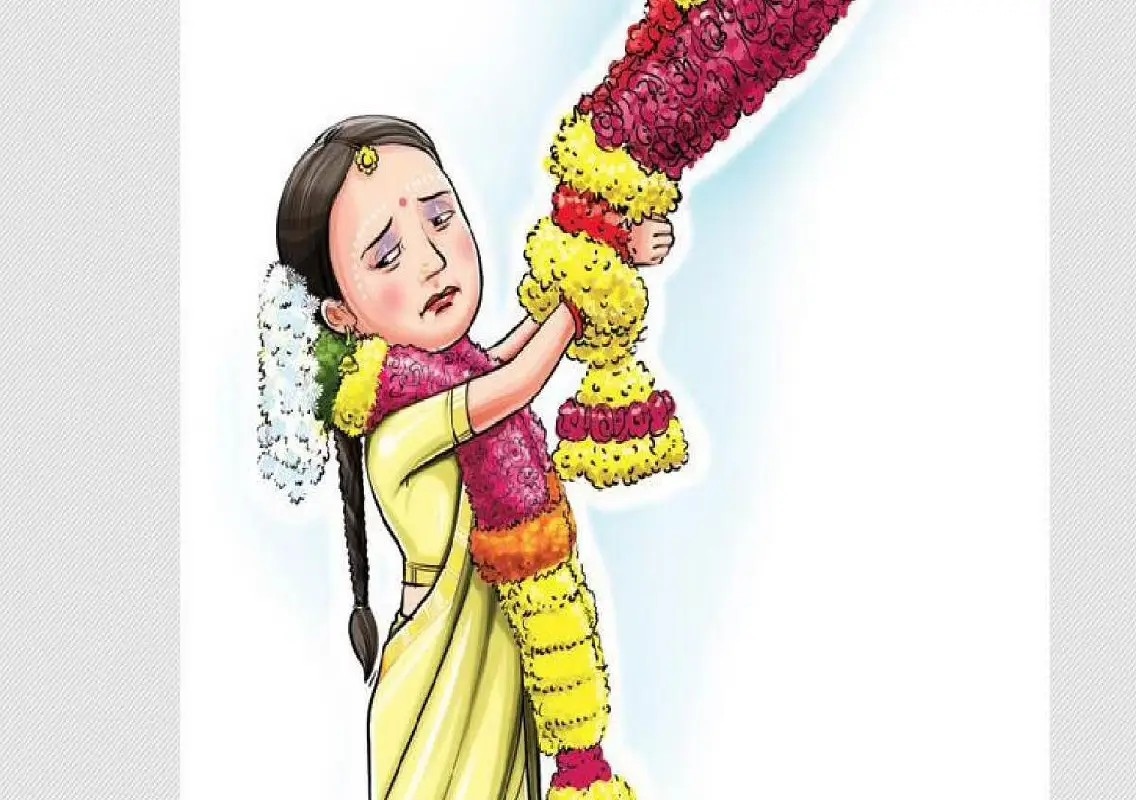


Mangaluru: Karnataka has witnessed a worrying rise in child marriage cases over the past five years, with the number of complaints increasing from 2,290 in 2020 to 3,127 in 2024. Despite a marginal decline in 2023, the overall trend has remained upward, prompting the state government to intensify efforts to curb the social menace.
The alarming increase in complaints has raised concerns among authorities, leading the government to initiate a detailed study of pre-Covid records from 2018 and 2019 alongside current factors contributing to the surge in child marriages.
State-level committee formed to address the issue
In a bid to strictly implement the directives of the Supreme Court and eradicate child marriage, the Karnataka government has constituted a state-level coordination and review committee.
The committee, chaired by the Additional Chief Secretary and Development Commissioner, recently held a crucial meeting to analyse child marriage statistics from the last five years. During the meeting, officials expressed grave concern over the sharp increase in complaints and emphasised the need for stronger intervention measures.
Officials believe that understanding the reasons behind the rising trend is essential to formulating effective strategies to prevent child marriages and protect minors.
Several districts report high number of complaints
According to official data, Mandya and Mysuru districts have reported more than 200 complaints each, making them among the worst-affected districts in the state.
Additionally, 11 other districts have registered over 100 complaints, indicating that the problem is widespread and not confined to specific regions.
Authorities have noted that socio-economic challenges, school dropouts, lack of awareness and certain traditional practices continue to contribute to the persistence of child marriages in several parts of Karnataka.
Karnataka has stringent laws against child marriage
Karnataka has enacted some of the country’s most progressive and stringent laws to combat child marriage through amendments to the central Prohibition of Child Marriage Act, 2006.
Under the law, organising an engagement or making preparations for the marriage of a minor is considered a punishable offence, and such engagements are declared illegal and void.
Parents, relatives and any individuals who encourage, arrange or perform child marriages face a minimum punishment of two years of rigorous imprisonment. Offenders can also be fined up to ₹1 lakh.
Importantly, child marriage offences are categorised as non-bailable and non-compoundable, reflecting the seriousness with which the state treats such violations.
Responsibility decentralised to prevent child marriages
To ensure early detection and prevention of child marriages, the government has decentralised responsibilities and created an extensive network of child marriage prohibition officers from the village to the district level.
Grama Panchayat Development Officers (PDOs), village administrative officers, school headmasters and anganwadi workers have all been designated as prohibition officers with specific legal responsibilities.
Under the guidelines, if a student remains absent from school for more than three consecutive days, headmasters and teachers are required to visit the child’s home and ascertain the reason for the absence.
Marriage venues, including kalyana mantapas, temples, churches and mosques, along with organisers of mass marriages, have been directed to compulsorily verify age proof documents before conducting ceremonies.
Direct criminal cases can be registered against venue owners, managers, wedding card printers, priests, khazis or religious leaders who facilitate child marriages. Their licences can also be cancelled.
Rescue and rehabilitation measures in place
The state has activated the 24-hour toll-free Childline helpline (1098) and women’s helpline (181) to encourage the public to report suspected child marriages.
Authorities have assured strict confidentiality for informants. Officials initially attempt to secure a written undertaking from the parents to halt the marriage. If parents refuse to cooperate, officials are empowered to obtain an emergency stay order from a First Class Judicial Magistrate to stop the marriage immediately.
Children rescued from such situations are provided shelter and support through government-run homes and Sakhi One-Stop Centres. These facilities offer safe accommodation, continued education, protection and expert psychological counselling.
Gap remains between complaints and prevention
Despite the robust legal framework and preventive measures, authorities have acknowledged a significant gap between the number of complaints received and the number of child marriages successfully prevented.
In 2024, of the 3,127 complaints registered across the state, officials managed to prevent 2,323 child marriages. However, 804 child marriages still took place, escaping the attention of authorities.
The figures have underlined the need for greater awareness, stronger community participation and more effective monitoring mechanisms to completely eliminate the practice of child marriage in Karnataka.