







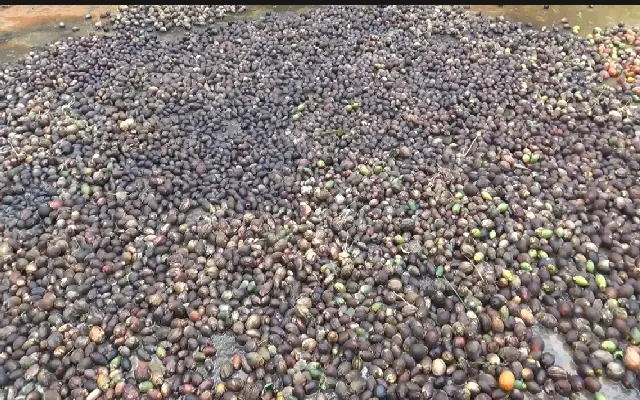


Mangaluru: The areca nut plantations across the coastal belt of Dakshina Kannada and Udupi are under threat once again, as excessive early monsoon rains have led to widespread areca nut rot and premature nut fall. Farmers across Bantwal, Sullia, Puttur, and Belthangady are reporting substantial losses, echoing last year’s devastation. This year, growers fear that over 60% of the areca crop could be lost.
In regions like Mani and Anantadi in Bantwal taluk, affected nuts are already being gathered and discarded. Farmers are also observing premature shedding of small nodules, an early sign of rot disease. Continuous downpours have disrupted the first phase of pesticide spraying, a critical stage in disease prevention.
In Puttur and Sullia, large-scale nut fall is being reported. Even plantations that managed to apply pesticides are not safe, as untreated neighboring gardens are spreading the infection. Reports suggest that seven out of ten gardens in certain villages are showing symptoms of the disease.
Ajnavar, Sampaje, and Gutthigaru in Sullia taluk are among the worst-hit. Experts say spraying can only resume once the rains ease. For now, the moist conditions are keeping plantations vulnerable.
Earlier this year, April’s extreme heatwave (38–40°C) had already impacted the crop. Now, moss-covered trees and slippery terrain from May’s early rains are making pesticide application difficult.
Areca nut is a key economic pillar of the coastal region. The dual blow of drought and disease threatens to ripple through the local economy in the coming months.