







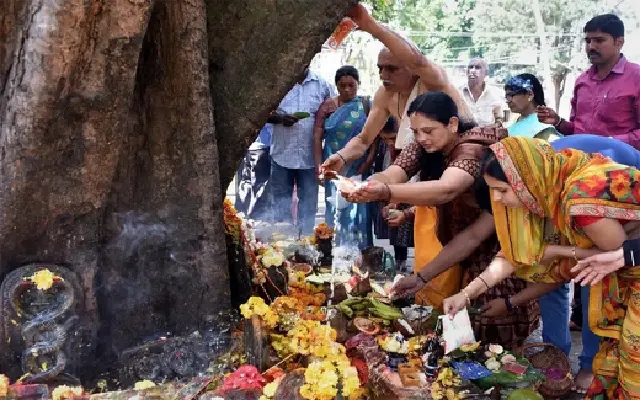


Naaga Panchami, the sacred Festival of Snakes, is observed with immense devotion and traditional fervour across coastal Karnataka. On this day, devotees throng ancient Naagabanas or Naagasthanas—sacred groves and shrines featuring stone-carved serpents—to perform rituals dedicated to the Naaga Devta (Serpent Deity).
Celebrated on the fifth day of the Hindu month of Shravan, this year’s Naaga Panchami falls on August 4. From early morning, worshippers bring offerings including rice, milk, coconuts, tender coconuts, bananas, turmeric (haldi), and fresh flowers. Priests at these shrines meticulously perform abhisheka by pouring coconut water and milk over the serpent idols. Portions of these offerings are later returned to devotees as prasad.
The origins of serpent worship in India trace back to pre-Aryan times and were eventually integrated into Hindu tradition. Mythological figures like Lord Vishnu, who rests upon the thousand-headed serpent Ananta, Lord Shiva, adorned with a snake, and Lord Krishna, known for subduing the serpent Kaliya, symbolize this divine association.
Legendary tales enrich the festival’s spiritual fabric. One story speaks of a farmer’s daughter whose unwavering faith in serpent worship saved her family after a tragic incident with young snakes. Another recounts young Krishna’s heroic dance on Kaliya’s heads, leading to the serpent’s surrender and forgiveness.
Naaga Panchami embodies both awe and reverence toward serpents—transforming primal fear into enduring respect through sacred ritual, ancestral stories, and communal devotion.