







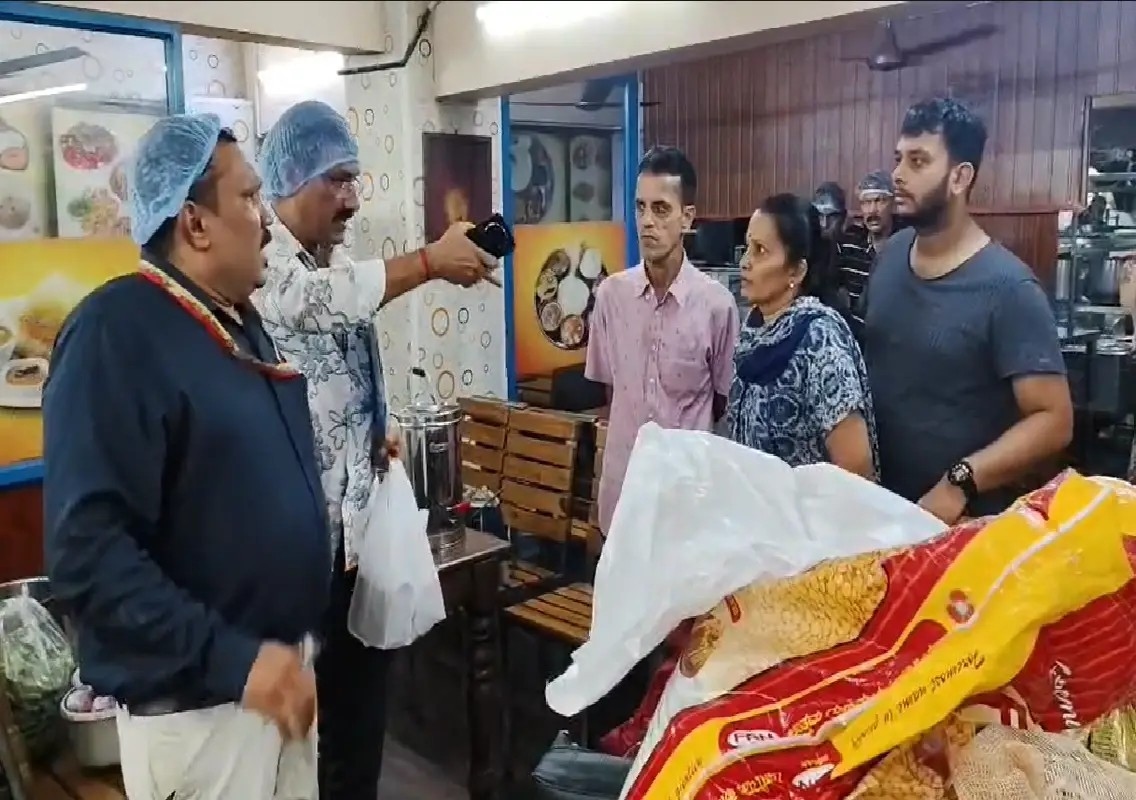


Mangaluru: A complaint from a customer alleging the presence of a cockroach in sambar prompted a surprise food safety inspection at Vrindavan Hotel in Thokkottu, Ullal, on Tuesday.
Acting on the complaint, Dakshina Kannada district food safety designated officer Dr Praveen Kumar visited the hotel and conducted a detailed inspection of its kitchen and food storage arrangements. The inspection reportedly found lapses in the maintenance of basic hygiene and the systematic storage of food ingredients.
The raid was carried out at around 1:30 pm, when the hotel shutters were pulled down and the kitchen was thoroughly inspected. Dr Praveen Kumar was accompanied by his driver during the surprise visit.
According to the food safety official, the inspection was initiated specifically after a customer’s grievance regarding a cockroach allegedly found in the sambar served at the hotel. The complaint led the department to examine the hotel’s kitchen conditions and the manner in which food items and ingredients were being stored.
Food storage found to be disorganised
During the inspection, officials found that the hotel did not have a separate storage room for keeping food items and ingredients. Instead, various food materials were reportedly kept in a haphazard manner at different places inside the kitchen.
Proper storage of food ingredients is an important aspect of maintaining hygiene in food establishments, as poorly organised storage areas can make cleaning and monitoring more difficult. The inspection at Vrindavan Hotel focused on these shortcomings and the need to maintain a cleaner and more systematic kitchen environment.
The food safety team directed the hotel staff to remove the improperly stored food items and reorganise the kitchen. The premises were also cleaned thoroughly during the inspection.
Officials ensured that the kitchen was completely washed and cleaned before issuing further directions to the hotel management.
Owner issued strict directions
Following the inspection, the hotel owner was instructed to make proper arrangements for storing food items in separate and designated areas. The official stressed that ingredients and other food materials should not be piled up indiscriminately inside the kitchen.
The directions were aimed at ensuring that the establishment maintains better hygiene and follows proper food storage practices in the future. The hotel management was asked to organise the available food materials systematically and take steps to prevent similar hygiene-related complaints.
Dr Praveen Kumar said the inspection had revealed a failure to maintain basic hygiene standards at the establishment. He confirmed that action had been initiated against the hotel owner.
A notice has been issued to the owner in connection with the hygiene lapses detected during the surprise inspection. The department will also file a case before the court of the additional deputy commissioner (ADC), he said.
Action follows customer’s grievance
The case highlights the role of consumer complaints in triggering inspections of food establishments. The food safety department can conduct inspections when concerns are raised about the quality, hygiene or safety of food served to customers.
In this instance, the allegation that a cockroach was found in sambar led to an immediate inspection of the hotel’s kitchen. While the inspection focused on the customer’s complaint, officials also examined the overall hygiene and storage conditions inside the premises.
The inspection found shortcomings in the way food ingredients were stored, particularly the absence of a separate storage space and the haphazard arrangement of materials in the kitchen. Officials subsequently directed the hotel to undertake immediate cleaning and improve its food storage practices.
The action against the establishment is expected to proceed further with the issuance of a notice and the filing of a case before the ADC court.
Hygiene standards under scrutiny
Food hygiene remains a key concern for restaurants and other food establishments, particularly in kitchens where ingredients are stored and meals are prepared throughout the day. Regular cleaning, organised storage and the separation of food materials from unsuitable or unhygienic areas are among the measures necessary to maintain sanitary conditions.
The inspection at Vrindavan Hotel served as a reminder to food business operators about the importance of maintaining basic hygiene standards and keeping kitchens properly organised.
For customers, the incident also underlines the importance of reporting food safety concerns to the appropriate authorities. Complaints relating to unhygienic food, contamination or poor sanitation can enable officials to inspect establishments and take action where violations are found.
In the present case, the customer’s complaint resulted in a surprise inspection and immediate corrective measures inside the kitchen. The food safety department has directed the hotel management to improve its storage arrangements and maintain better hygiene, while legal action has also been initiated over the lapses found during the inspection.
The case before the court of the additional deputy commissioner will determine the next course of action against the hotel owner. Meanwhile, the establishment has been instructed to ensure that food ingredients are stored systematically and that the kitchen is kept clean to prevent further hygiene-related issues.