









Mangaluru: The CPI (M) Dakshina Kannada district committee has urged the Karnataka government to adopt a people-centric and comprehensive development policy for coastal Karnataka, instead of relying on corporate-oriented public-private partnership (PPP) models.
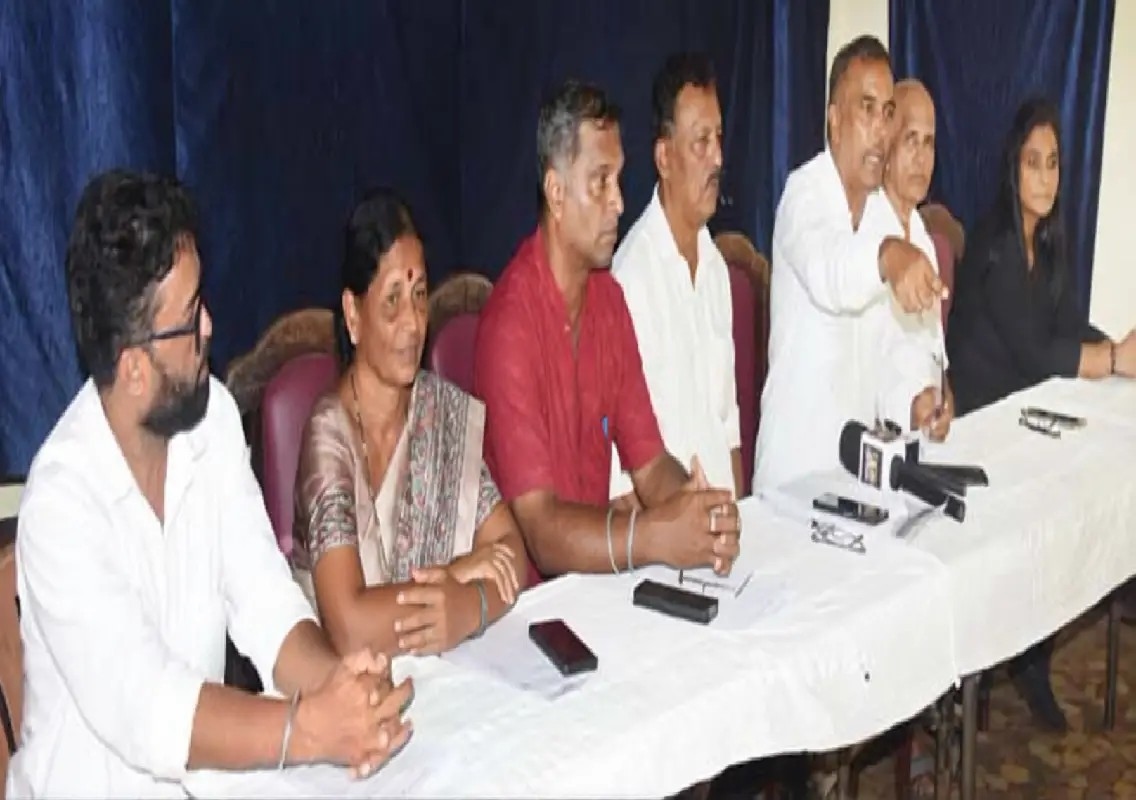
Addressing a press conference in Mangaluru on Tuesday, CPI (M) district secretary Muneer Katipalla said the special cabinet meeting scheduled to be held at the Praja Soudha building in Padil on September 18 should focus on the long-pending demands and concerns of people across the coastal districts.
The party said development in the region should benefit local communities across social and economic sections, while addressing issues related to employment, migration, healthcare, education, environment, fishing, housing and public transport.
CPI(M) raises concerns over coastal development
The CPI (M) alleged that the benefits of development in coastal Karnataka have not reached all sections of society equally. The party expressed concern over increasing migration, unemployment among local youth, environmental degradation and the growing influence of corporate investments.
Katipalla said the government’s development approach should prioritise the needs of local communities and strengthen public institutions rather than promote models that primarily serve corporate interests.
The party said the September 18 cabinet meeting provides an opportunity for the government to consider a comprehensive package of measures for Dakshina Kannada, Udupi and Uttara Kannada.
Healthcare infrastructure among key demands
Improving public healthcare facilities emerged as one of the major demands put forward by the CPI (M).
The party sought the establishment of Kidwai Cancer Hospital, Jayadeva Heart Hospital and a NIMHANS unit in Mangaluru. It also demanded a government multi-speciality hospital in Uttara Kannada.
The CPI (M) further called for better healthcare facilities in the newly created taluks of the coastal districts, arguing that residents should have access to specialised and quality medical services closer to their homes.
The party said strengthening government healthcare infrastructure would reduce the need for people, particularly from rural and economically weaker sections, to depend on private hospitals or travel long distances for specialised treatment.
Focus on local employment and traditional industries
The CPI (M) also called for policies aimed at creating more employment opportunities for local youth.
It demanded the promotion of industries based on arecanut, coconut and rubber, which are among the important agricultural products associated with the coastal region. The party said value addition and small-scale industries based on locally available agricultural produce could create employment while strengthening rural economies.
The party also sought a people-oriented coastal tourism policy. It said tourism development should generate employment and economic opportunities for local communities while protecting the region’s environment and cultural heritage.
The CPI (M) demanded modernisation of fishing harbours and greater support for traditional fishermen. It also sought promotion of small-scale industries linked to fisheries to strengthen the livelihoods of fishing communities.
Migration and welfare of non-resident Kannadigas
The party called for measures to create employment opportunities for local youth while also seeking regulation of migration and protection against the exploitation of migrant workers.
It proposed a welfare scheme for non-resident Kannadigas from the coastal districts on the lines of the scheme implemented in Kerala.
The CPI (M) said migrant workers should be protected from exploitation while local employment opportunities should also be strengthened through appropriate government policies.
Demands on housing, education and mining
The party sought a simplified policy for sand and red-stone mining, along with affordable housing and house sites for homeless families.
It also demanded expansion of government educational institutions across the coastal districts. The party called for government engineering colleges in all three coastal districts and polytechnic colleges at the taluk level.
According to the CPI (M), expansion of public education infrastructure would make professional and technical education more accessible to students from rural and economically weaker backgrounds.
The party also sought regulation of toll gates on coastal highways, stating that the government should ensure that toll-related policies do not impose an excessive burden on commuters and local residents.
Tribal, Dalit and forest rights issues
The CPI (M) called for comprehensive development measures for tribal communities, including the Koraga, Malekudiya and Kudubi communities.
It demanded implementation of the Dr Mohammed Peer report and the Forest Rights Act and sought measures to address pending issues concerning Dalit communities.
The party also called for appropriate measures regarding the Kasturirangan report, which has long been a subject of discussion in Karnataka in connection with environmental protection and development in ecologically sensitive areas.
Public transport and high court bench sought
Traffic congestion in Mangaluru and surrounding areas was another major issue raised by the party.
The CPI (M) sought measures to address growing traffic pressure and called for implementation of metro and other public transport projects.
It also demanded the establishment of a high court bench in Mangaluru, saying such an institution would improve access to judicial services for people in the coastal region.
The party further called for a special action plan to promote communal harmony and peaceful coexistence in the coastal districts.
Environmental protection among key concerns
The CPI (M) also highlighted environmental concerns arising from industrial activity in the coastal region.
The party demanded strict action against industries that release untreated wastewater into rivers and the sea. It sought adequate sewage and waste-treatment facilities in the Baikampady industrial area.
The party also proposed a separate industrial zone for fish-processing industries and fish mills, with the aim of managing industrial activity and addressing environmental concerns associated with such operations.
The CPI (M) said industrial development should be accompanied by effective environmental safeguards and adequate waste-management infrastructure.
March planned ahead of cabinet meeting
The CPI (M) announced that it would hold a march on September 18 in connection with the cabinet meeting.
According to the party, the march will begin at Naguri Junction at 9:30 am and proceed towards the Praja Soudha building at Padil, where the special cabinet meeting is scheduled to take place.
The party said it would submit a memorandum containing its demands on behalf of people from the coastal districts.
The memorandum is expected to cover issues ranging from healthcare, employment and education to fishing, housing, environment, public transport and social justice.
District secretariat members Sunil Kumar Bajal, Yadava Shetty, Sukumar Thokkottu and Jayanthi B Shetty, along with district committee members Prameela K and Yogeesh Jappinamogaru, were present at the press conference.
The CPI (M) said the September 18 cabinet meeting should be used to initiate concrete measures on the region’s long-pending issues. Its demands reflect a call for greater emphasis on public infrastructure, local employment, environmental safeguards and social welfare alongside economic development in coastal Karnataka.