







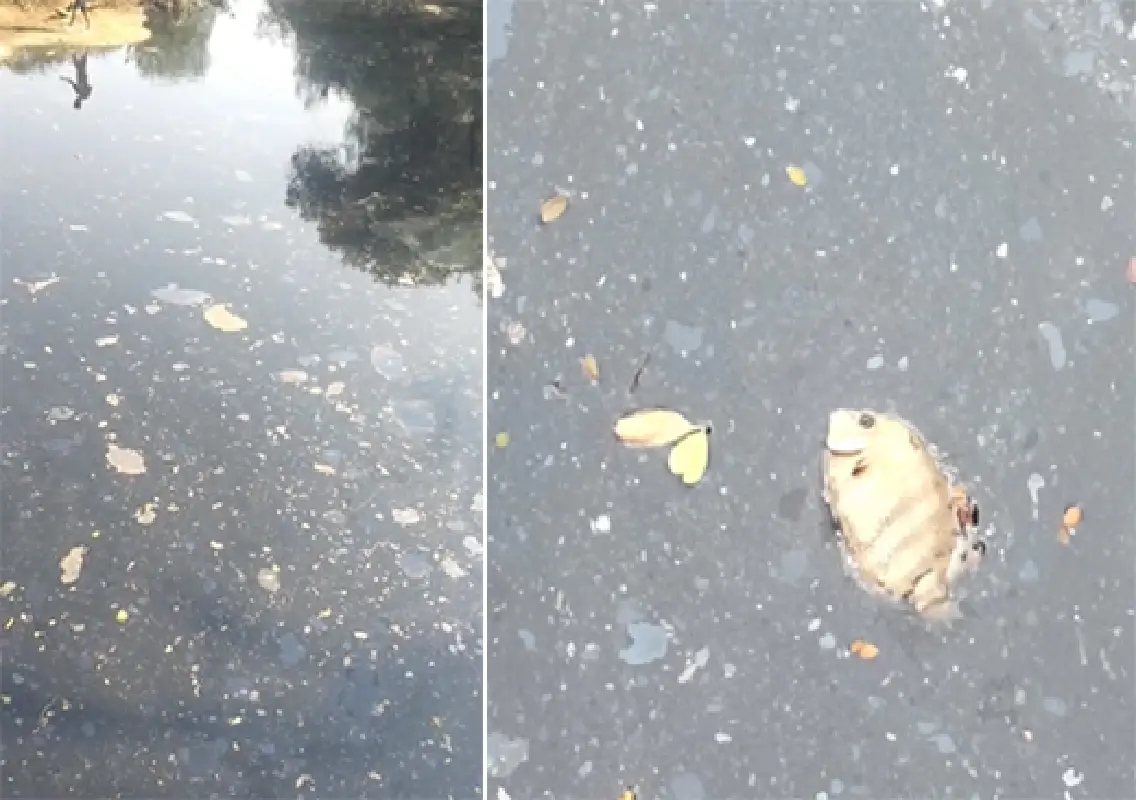


Mangaluru: Stagnant and foul-smelling water has been reported in a stream flowing into the Phalguni River near the Rayikatte area of Kuloor, with several fish found dead over the past week, triggering serious environmental and public health concerns among local residents.
People living near the stream say the water has turned dark, emits a strong odour, and shows visible signs of contamination. Despite the situation persisting for more than a week, residents allege that no effective remedial action has yet been taken by the district administration or pollution control authorities.
The affected stream is one of the minor water channels that eventually merge with the Phalguni River, a key river system in the region. Locals fear that continued contamination could affect downstream water quality and aquatic life.
Dead fish and foul odour alarm residents
Residents of Rayikatte and nearby areas said they first noticed the unusual condition when the water in the stream became stagnant and started emitting a foul smell. Soon after, dead fish were seen floating and along the banks, indicating possible oxygen depletion or chemical contamination.
According to locals, the problem has persisted for several days without interruption. Some residents reported that the colour and texture of the water suggest the presence of untreated waste discharge. Photographs and videos of the polluted stretch and dead fish have been circulated among citizen groups and environmental volunteers.
People in the vicinity say they are worried about possible health risks, especially for those living close to the stream and for communities downstream who depend on connected water sources.
Allegations of industrial effluent discharge
Local residents have alleged that industries operating in and around the Kuloor belt have been illegally discharging industrial effluents into small streams for several years. These streams ultimately connect to the Phalguni River system.
They claim that repeated complaints and protests in the past have not resulted in sustained enforcement or monitoring. According to them, discharge tends to increase at night or during off-hours, making it difficult to trace the exact source without continuous inspection.
Residents have called for surprise inspections, water sample testing, and installation of monitoring mechanisms to detect illegal effluent release points.
Environmental activists seek urgent probe
Environmental activist Muneer Katipalla described the situation as alarming and said it reflects long-standing neglect of water bodies in industrial zones. Speaking to media persons, he warned that unchecked pollution could cause lasting damage to the river ecosystem.
He urged the district administration and the Karnataka State Pollution Control Board to immediately collect water samples, conduct laboratory analysis, and publicly release the findings. He also demanded strict legal action against any industry or unit found violating pollution control norms.
Katipalla further stressed that pollution of feeder streams is as dangerous as pollution of the main river channel, since toxins and waste eventually accumulate in the larger river system.
Demand for immediate administrative action
Mangaluru residents and civic groups have called for coordinated action involving the district administration, pollution control authorities, and the local body. Suggested measures include temporary blocking of suspected discharge outlets, emergency aeration or flushing of the affected stream, and continuous monitoring until water quality improves.
There are also calls to create a public complaint tracking system so that environmental grievances are recorded and acted upon within fixed timelines.
Officials have not yet issued a detailed public statement on the incident. Residents say a prompt response is essential to prevent further ecological damage and restore confidence in environmental regulation.
Need for long-term monitoring
Environmental observers note that recurring pollution complaints in industrial belts highlight the need for long-term river and stream monitoring systems, including periodic audits, remote sensors, and community reporting channels.
Without sustained oversight, they warn, contamination incidents may continue to recur, affecting biodiversity, water safety, and public health.