







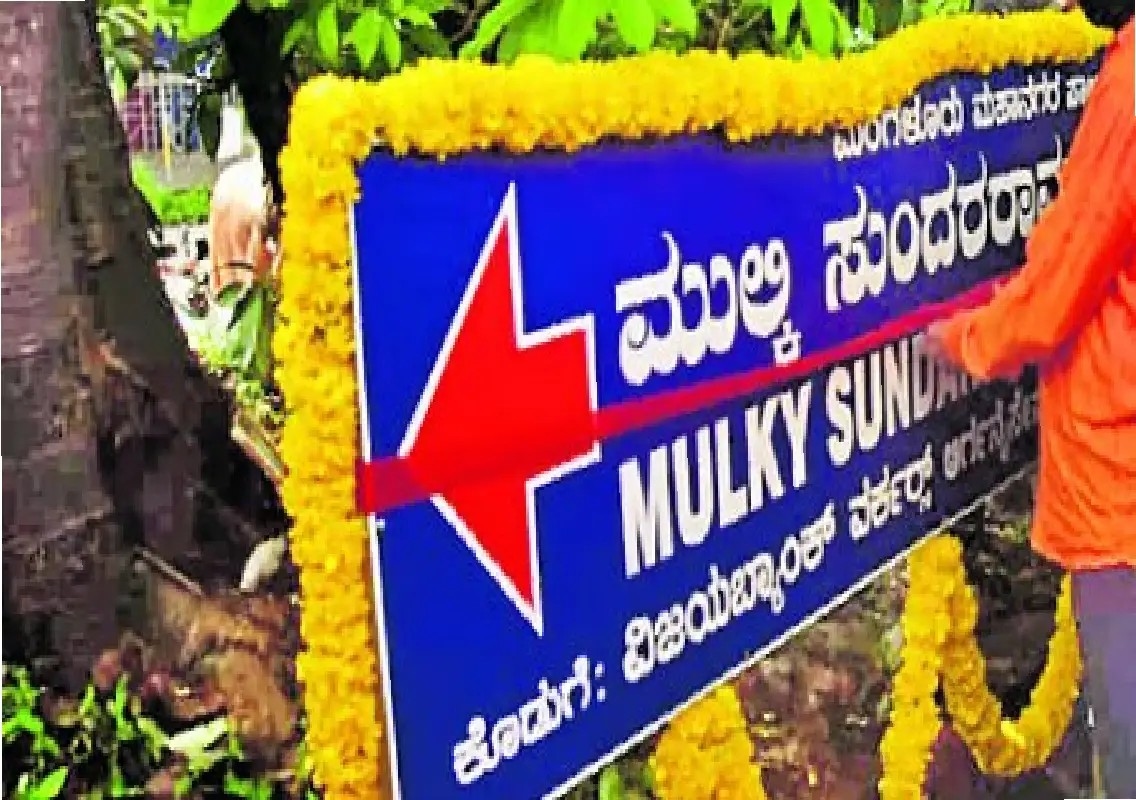


Mangaluru: Strong opposition has emerged against the demolition of the memorial site dedicated to renowned banker and social reformer Mulki Sundar Ram Shetty during the ongoing National Highway expansion works near Mulki. The Sundar Ram Shetty Abhimani Balaga has urged the government to restore the memorial and establish a competitive examination training centre in his memory to educate future generations about his immense contributions to banking, education and social development.
Memorial demolition sparks outrage
Addressing a press conference in Mangaluru, advocate Dinesh Hegde Ulepady condemned the demolition of the memorial located near the Bappanadu entrance in Mulki. He alleged that the National Highways Authority carried out the demolition without making alternative arrangements or relocating the memorial. According to him, the action was undertaken without consulting Sundar Ram Shetty’s family members, admirers or local residents, causing widespread disappointment among those who respect his legacy.
Ulepady described the demolition as an insensitive act that disregarded the sentiments of thousands of people who regard Sundar Ram Shetty as a visionary leader and social reformer. He said the memorial served as a symbol of inspiration for many people, particularly those associated with the banking sector and educational institutions.
He further stated that the authorities should have engaged with stakeholders and explored alternative options before proceeding with the demolition. The absence of any prior consultation or relocation plan has intensified public criticism and prompted calls for immediate corrective measures.
Architect of Vijaya Bank’s growth
Highlighting Sundar Ram Shetty’s remarkable contribution to the banking sector, Ulepady said he played a pivotal role in transforming Vijaya Bank from a regional financial institution into a nationally recognised bank.
Between 1963 and 1968, Shetty successfully oversaw the merger of nine smaller banks with Vijaya Bank, significantly strengthening its presence across India. His leadership helped expand banking services into rural areas and small towns, enabling farmers, small traders and ordinary citizens to access formal financial services.
Ulepady noted that Sundar Ram Shetty’s vision contributed to the economic growth of several regions and created employment opportunities for thousands of educated youth from coastal Karnataka. Many young professionals secured stable careers through recruitment drives conducted during the bank’s expansion phase.
Lasting impact on society
Apart from his achievements in banking, Sundar Ram Shetty made significant contributions to education, religious activities and social welfare initiatives. His efforts helped support community development and improve opportunities for underprivileged sections of society.
According to Ulepady, the impact of Shetty’s work extended far beyond financial services. He said the banker’s leadership and commitment to public welfare transformed the lives of countless families and contributed to the overall development of the region.
At the time of Vijaya Bank’s nationalisation in 1980, the bank had established an impressive network of 571 branches across the country. It employed more than 10,000 staff members and managed business worth over ₹605 crore, reflecting the scale of growth achieved under his stewardship.
Describing him as the “Modern Architect of Vijaya Bank”, Ulepady said his legacy continues to inspire professionals, entrepreneurs and social workers across Karnataka and beyond.
Demand for training centre in his memory
The Sundar Ram Shetty Abhimani Balaga has urged the government to acquire at least one acre of land in Mulki or Bappanadu and reconstruct the memorial at a suitable location. The organisation has also proposed the establishment of a dedicated training centre for banking recruitment examinations and competitive examinations such as IAS, KAS, IPS and judicial services.
According to the organisation, such a centre would not only honour Shetty’s memory but also help aspiring students and job seekers achieve their career goals. The initiative would ensure that future generations remain aware of his contributions to nation-building and public service.
Ulepady revealed that a memorandum outlining these demands has already been submitted to the Deputy Commissioner. He warned that the organisation would launch an agitation if the government failed to respond positively and take steps to restore the memorial.
Conclusion
The demolition of Mulki Sundar Ram Shetty’s memorial has reignited discussions about preserving the legacy of individuals who have made significant contributions to society. As demands for restoration gain momentum, community leaders and admirers hope the government will take swift action to honour the memory of the banker whose vision helped shape one of India’s leading public sector banks and positively impacted thousands of lives.