







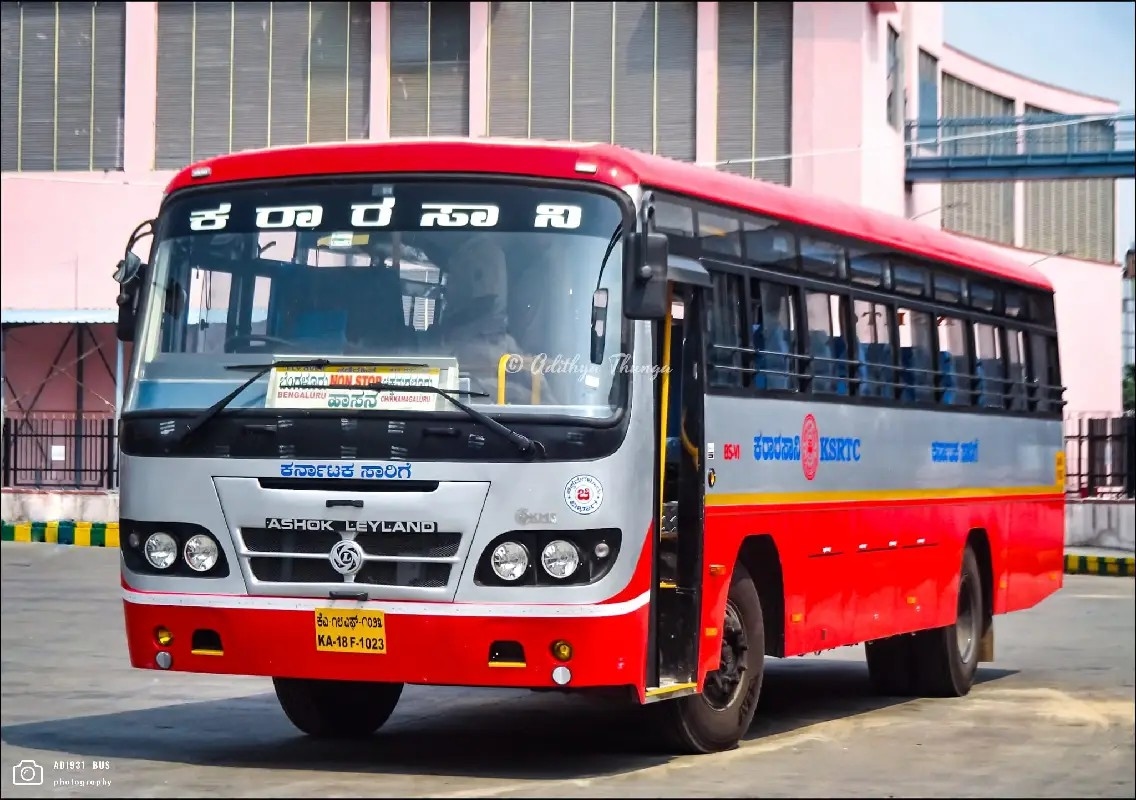


Mangaluru: Despite thousands of devotees travelling to the Sri Mookambika Temple in Kollur every day, the absence of regular direct KSRTC bus services from Mangaluru and Udupi has become a concern for pilgrims, particularly women who wish to use the free travel facility under the state government’s Shakti scheme.
Devotees currently have to depend largely on private buses or change buses at intermediate destinations to reach the prominent pilgrimage centre. While private operators run frequent services on the Mangaluru-Udupi-Kollur route, the lack of a comparable direct state-run service has led to repeated demands for better public transport connectivity.
The issue has gained importance as Kollur attracts devotees from several parts of Karnataka and neighbouring states throughout the year.
Thousands visit Kollur every day
An estimated 6,000 to 7,000 devotees from Karnataka, Kerala, Tamil Nadu, Telangana and other states visit the temple on an average day.
The number rises significantly during peak periods, when the daily footfall is reported to cross 12,000.
With such a large number of pilgrims travelling to Kollur, devotees have urged the Karnataka government to consider introducing direct KSRTC services from major cities and bus stands, particularly Mangaluru and Udupi.
A direct government bus would reduce the need for passengers to change buses during the journey and could make travel more convenient for senior citizens, families and women travelling alone or in groups.
Women unable to fully benefit from Shakti scheme
The lack of direct KSRTC connectivity has an additional implication for women.
Under the state government’s Shakti scheme, women are entitled to free travel on eligible government-operated buses within Karnataka, subject to the scheme’s applicable conditions.
However, women travelling to Kollur from Mangaluru or Udupi often have to rely on private buses for at least part of their journey because there is no regular direct KSRTC service on the route.
This means they cannot make full use of the free travel facility for the entire journey.
Devotees have therefore urged the government to introduce at least one direct KSRTC service each from Mangaluru and Udupi to Kollur every day.
Devotees call for at least one daily service
Nisha Kumari, a housewife and devotee, said the government should consider operating at least one KSRTC bus each from Mangaluru and Udupi to Kollur.
She pointed out that the temple is a historic and important pilgrimage destination and said a government-operated service would particularly benefit women and other devotees.
The demand is not necessarily for a large fleet of buses immediately. Devotees have suggested that even a limited number of scheduled services could provide an affordable and dependable option for those travelling to the temple.
A direct service could also offer greater certainty for pilgrims planning their journeys around temple rituals and timings.
Private buses dominate the route
Private buses have traditionally played a major role in providing connectivity between Mangaluru, Udupi, Kundapur and Kollur.
Frequent private services currently cater to the demand generated by pilgrims and other travellers.
KSRTC Mangaluru Division Senior Divisional Controller Rajesh Shetty said a state-run bus is currently operating on the Byndoor-Kollur-Bengaluru route.
He explained that the Kollur route has historically been dominated by private operators, particularly on routes connecting Mangaluru with Udupi and Kundapur.
However, he said the demand for direct services from Mangaluru and Udupi would be looked into.
Bus shortage remains a challenge
One of the main challenges facing KSRTC is the availability of buses.
Dakshina Kannada district Guarantee Schemes Implementation Committee Chairman Bharath Mundodi said the issue of KSRTC connectivity to Kollur had already been raised during a recent state-level committee meeting.
According to him, discussions are under way regarding the introduction of services.
However, the shortage of buses remains a major constraint. He said procurement of additional buses had only recently begun and that the new vehicles would be distributed among different KSRTC divisions across Karnataka.
The availability of additional buses could provide the corporation with greater flexibility to introduce new routes and strengthen services on existing routes.
Meeting scheduled in Mangaluru
A meeting has been scheduled in Mangaluru on August 18 to review the number of new buses received by the Mangaluru division.
The meeting is also expected to examine how the newly received buses can be deployed across the division based on passenger demand.
The Kollur demand could be considered as part of this exercise, particularly given the high number of pilgrims travelling to the temple every day.
The decision will depend on factors such as bus availability, operational feasibility, passenger demand and the division’s existing service requirements.
Kerala already operates direct service
The demand from devotees has also been strengthened by the fact that Kerala operates a daily bus service connecting Kottarakkara in Kollam district with Kollur.
The service provides direct connectivity for devotees travelling from Kerala to the prominent temple.
Devotees from coastal Karnataka have questioned why similar direct connectivity is not available from major nearby cities such as Mangaluru and Udupi, particularly when the two cities are important transport centres in the region.
A direct KSRTC service could potentially serve not only local devotees but also pilgrims from neighbouring districts who travel through Mangaluru or Udupi.
Better connectivity could support pilgrimage tourism
Kollur is one of the major pilgrimage destinations in the coastal Karnataka region and attracts visitors throughout the year.
Improved public transport connectivity could make the journey easier for pilgrims who do not have access to private vehicles.
It could also help senior citizens, families with children and women who prefer government-operated transport.
For local devotees, the availability of a direct service would reduce the inconvenience associated with changing buses and waiting for connecting services.
Demand likely to grow during peak season
The need for reliable connectivity becomes more apparent during festival periods and other peak pilgrimage seasons, when the number of visitors rises sharply.
With daily footfall crossing 12,000 during busy periods, existing transport services can face increased pressure.
A regular KSRTC service would provide an additional option and could complement the private bus network rather than necessarily replacing it.
If introduced with suitable departure and return timings, the service could be particularly useful for devotees planning same-day or short-duration temple visits.
Conclusion
The demand for direct KSRTC services from Mangaluru and Udupi to Kollur reflects the growing need for stronger public transport connectivity to major pilgrimage centres.
With thousands of devotees visiting the Sri Mookambika Temple every day and significantly higher footfall during peak seasons, devotees believe at least one daily direct service from each city would make travel considerably easier.
For women, such a service could also provide an opportunity to make greater use of the Shakti scheme during their journey.
The August 18 meeting in Mangaluru to review the availability and deployment of newly received buses could provide an opportunity to examine the long-standing demand. If operationally feasible, introducing direct services could benefit pilgrims while strengthening public transport connectivity between coastal Karnataka’s major cities and one of its most important pilgrimage destinations.