







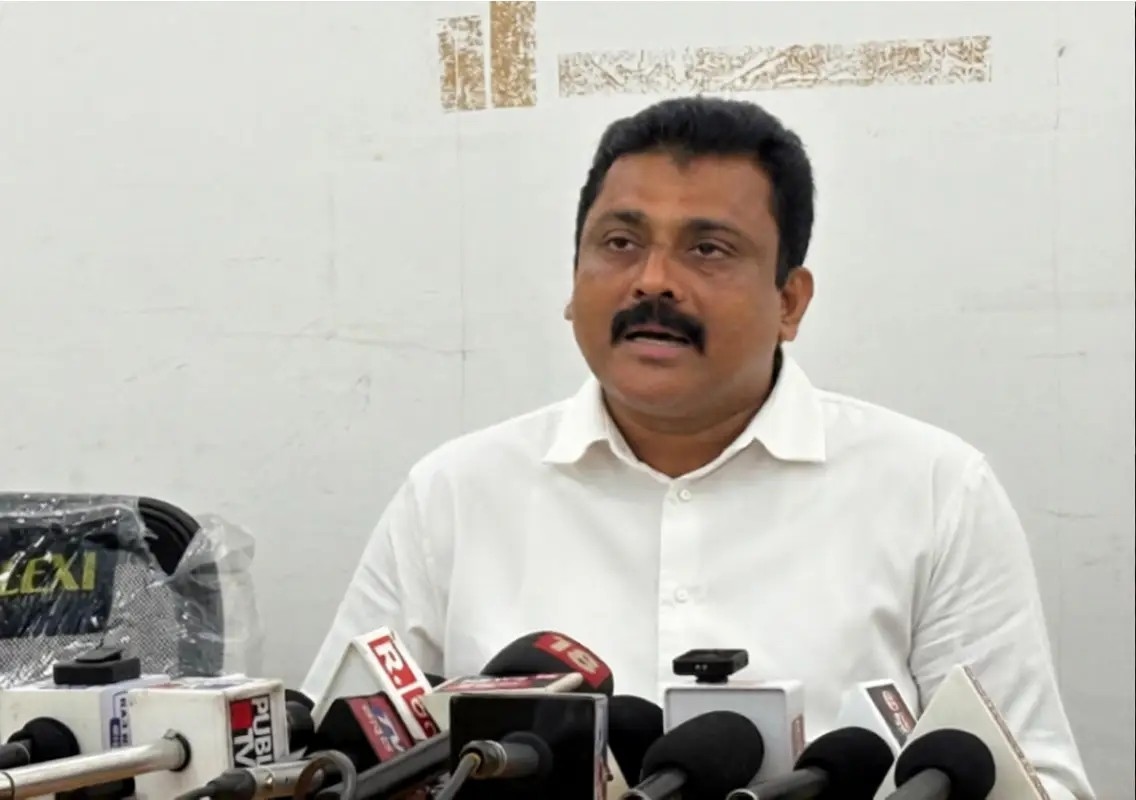


Mangaluru: MLC Kishore Kumar has raised concerns over delays in processing Forms 11A and 11B under the e-Swathu 2.0 software, stating that the system has caused considerable inconvenience to citizens by forcing them to make repeated visits to government offices.
Over 1.84 lakh Form 11A applications received
The issue was raised in the Legislative Council through starred and unstarred questions Nos. 410 and 408.
According to the government’s response, since e-Swathu 2.0 was introduced on December 1, 2025, a total of 1,84,222 applications for Form 11A have been received across the state.
Of these, 1,53,795 applications have been approved, while 639 have been rejected and 23,802 applications remain pending.
In Dakshina Kannada, 253 Form 11A applications have been rejected. In Udupi district, 55 applications have been rejected, including 35 in Karkala.
Form 11B applications facing greater delays
The situation is also a concern in the processing of Form 11B applications.
Of the 15,936 Form 11B applications submitted since the implementation of the new system, only 5,151 have been approved, while 8,892 applications are still pending.
Among the pending applications, 65 are from Dakshina Kannada and 436 are from Udupi district.
Kishore Kumar said the additional approval procedures introduced under e-Swathu 2.0 have made the process more complicated than before.
Additional approval stages questioned
Under the earlier system, approval from the Panchayat Development Officer (PDO) at the gram panchayat level was sufficient for Form 11A applications.
However, under e-Swathu 2.0, applications now require approval from the Executive Officer (EO) at the taluk level.
Similarly, Form 11B applications that were earlier processed at the gram panchayat level have now been moved to the Chief Executive Officer (CEO) of the Zilla Panchayat for approval.
According to the MLC, these additional layers have increased processing time and created unnecessary difficulties for ordinary citizens.
He demanded that the additional EO and CEO approval stages be removed and that the earlier system of processing applications at the gram panchayat level be restored.
Citizens lack application tracking facility
Kishore Kumar also pointed out shortcomings in the application tracking system.
He said citizens currently do not have an adequate facility to identify the particular officer under whose login their application is pending.
He further said that when an application submitted through the citizen login is rejected, applicants are not being provided sufficient information about the reason for rejection.
This lack of transparency, he argued, makes it difficult for citizens to understand the status of their applications or take corrective measures when required.
Paperless system still requires physical documents
The MLC also questioned the claim that e-Swathu 2.0 is a paperless system.
Despite the introduction of the digital platform, applicants are allegedly still being asked to submit physical documents at taluk and Zilla Panchayat offices.
According to him, this defeats the purpose of introducing an online system designed to reduce the need for citizens to visit government offices.
Technical problems add to public difficulties
Kishore Kumar further highlighted several technical problems affecting the functioning of e-Swathu 2.0.
These reportedly include slow servers, frequent system outages and difficulties in uploading scanned documents. He also pointed to problems with the display of old property records and inadequate coordination with other government software, including Kaveri.
Other issues raised included errors while typing Kannada Unicode text and a lack of adequate technical support for users.
He also said the automatic transfer and deemed approval mechanism prescribed under the Karnataka Grama Swaraj and Panchayat Raj (Grama Panchayat Taxes, Rates and Fees) Rules, 2025, has not yet been effectively activated in the e-Swathu 2.0 system.
Call for immediate corrective measures
Kishore Kumar said the objective of e-Swathu 2.0 was to bring greater transparency, speed and simplicity to the administration of property records.
He argued that a digital system intended to make government services easier should not instead force citizens to repeatedly visit government offices.
The MLC urged the government to immediately address the technical and administrative problems affecting the software and conduct a special drive to clear the large number of pending Form 11A and 11B applications.
He also called for the removal of unnecessary approval stages and stressed that the maximum number of property-record services should be made available at the gram panchayat level itself.
According to him, strengthening services at the local level would reduce delays, improve transparency and make property-related government services more accessible to citizens.