







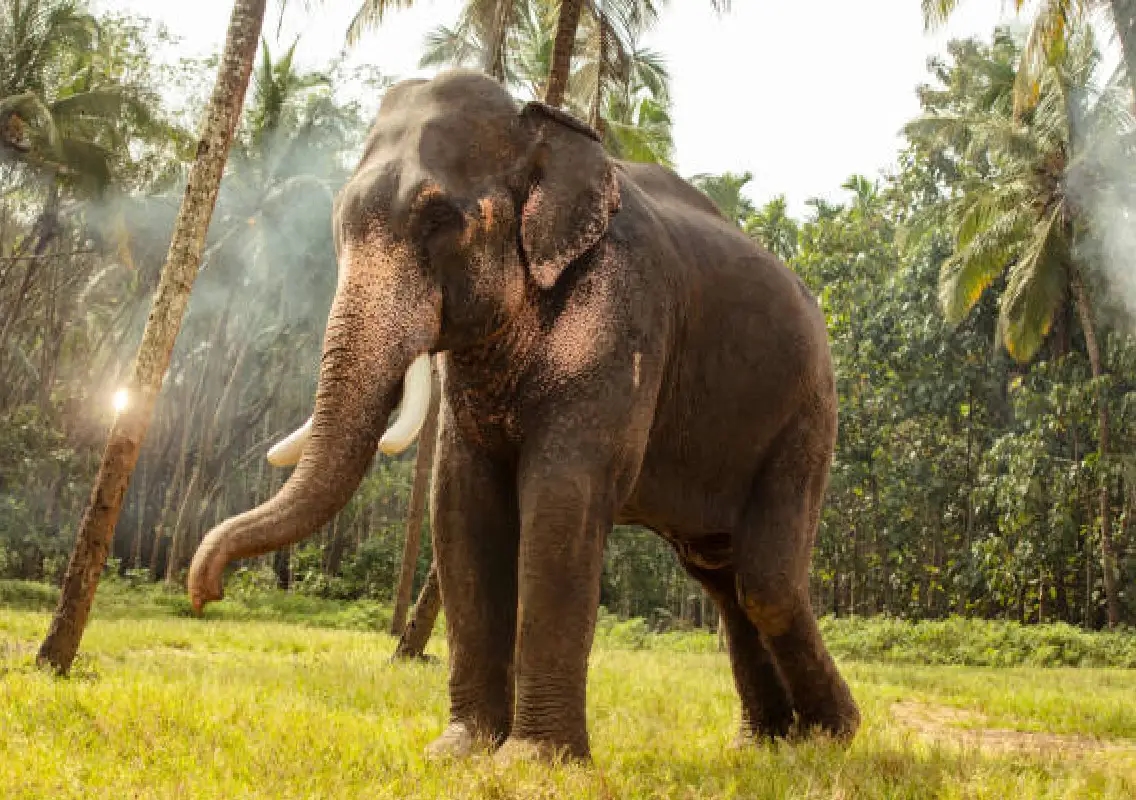


Mangaluru: The state government has established an Elephant Task Force (ETF) for the Mangaluru division of the Forest Department to address the growing wild elephant menace in villages of Dakshina Kannada district. The decision was announced through an official order issued by Geetha M Patil, Undersecretary to the Department of Forest, Ecology and Environment.
The special unit has been created to respond quickly to incidents of elephant movement near human settlements and agricultural areas, which have been reported frequently in several parts of the district in recent years.
Special task force with 28 personnel
According to the government order, the Elephant Task Force will consist of 28 personnel. The team will include one Deputy Range Forest Officer, two Forest Guards and 25 outsourced staff members.
The unit will function under the supervision of the Deputy Conservator of Forests (DCF) of the Mangaluru division. The task force will be stationed in Sullia, which will serve as the operational base for the team.
Forest officials said Sullia was chosen as the base because several nearby areas frequently report elephant movement, particularly near forest fringes and agricultural land.
Focus on elephant-prone villages
The main responsibility of the Elephant Task Force will be to monitor and manage wild elephant movement in affected areas. The team will patrol villages where elephant sightings and crop damage incidents are common.
Officials said the unit will respond whenever elephants enter human settlements, agricultural fields or coffee estates. The task force members will track the movement of the animals and take steps to drive them back into forest areas safely.
The initiative aims to reduce conflicts between humans and elephants, which have increased in many rural parts of Dakshina Kannada district.
Equipment and vehicles provided
To ensure effective functioning, the government has provided essential equipment and vehicles for the task force.
Members of the team will be equipped with walkie-talkies, guns, crackers and other necessary gear to monitor and control elephant movement.
A control room will also be set up at the base location to coordinate operations and monitor alerts regarding elephant sightings.
In addition, the department has sanctioned three jeeps and one Canter vehicle for the task force. These vehicles will be used for patrolling and for quick response when elephants are spotted in villages or farmland.
Order to implement immediately
In the order issued on March 2, Undersecretary Geetha M Patil directed forest department officials to take immediate steps to make the Elephant Task Force operational.
The formation of the task force is part of the government’s broader efforts to strengthen wildlife management and reduce human-wildlife conflict in the region.
Forest officials said the specialised team will help in responding more quickly to emergency situations and improve coordination among forest staff working in elephant-prone areas.
Addressing human-wildlife conflict
Wild elephant movement has been a recurring issue in several villages in Dakshina Kannada district, particularly in areas located near forest boundaries. Farmers and residents have often reported crop damage and threats to safety due to elephants entering agricultural land and settlements.
The creation of the Elephant Task Force is expected to improve monitoring and response systems in such situations.
Officials said the task force will work closely with local forest staff and residents to track elephant movement and ensure that preventive measures are taken to avoid dangerous encounters.
With the new team set to begin operations soon, authorities hope the initiative will help reduce the impact of wild elephant incursions and provide better protection for both villagers and wildlife.