







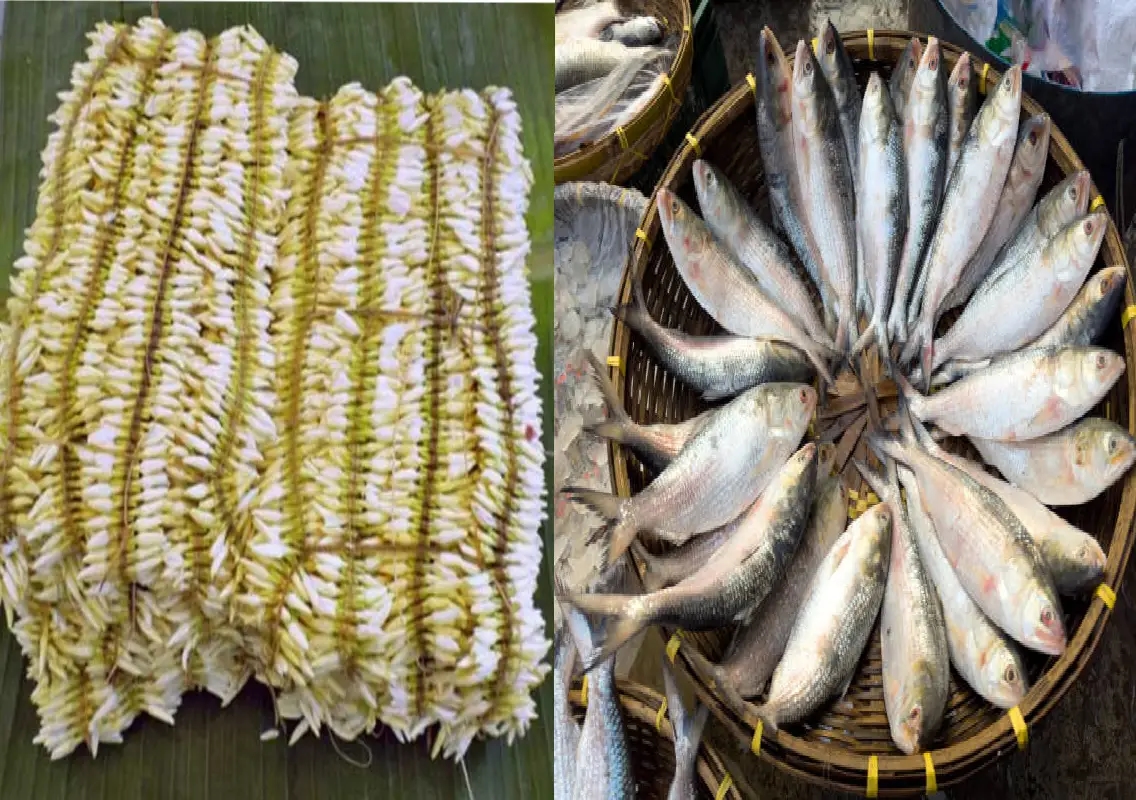


Mangaluru: Exports of fish and jasmine flowers from the coastal districts of Karnataka have come to a near standstill due to the ongoing conflict in West Asia, causing heavy financial losses for traders and exporters. The disruption in cargo movement and the sudden drop in overseas demand, particularly from Gulf countries, has severely affected businesses in Mangaluru and nearby regions.
Traders say the slowdown has already resulted in losses worth crores of rupees and could have wider implications for the coastal economy if the situation continues.
Gulf demand crucial for coastal exports
The coastal districts of Dakshina Kannada and Udupi have long depended on the Gulf market for exports of perishable goods such as fish, flowers, fruits and vegetables.
More than 8 lakh Kannadigas are estimated to be living and working in Gulf countries including Dubai, Abu Dhabi, Kuwait, Saudi Arabia and Qatar. The large expatriate population regularly purchases products from Karnataka, creating steady demand for goods shipped through cargo services from Mangaluru.
To meet this demand, traders in the region routinely send items such as fresh fish, jasmine flowers, vegetables, fruits and even spare parts through air cargo.
However, the current geopolitical tensions in West Asia have disrupted cargo operations and drastically reduced demand.
Jasmine flower exports come to a halt
Jasmine flowers, one of the most popular export products from the region, have been particularly affected by the situation.
According to Vincent, a well-known jasmine trader in the region, large quantities of jasmine flowers from Mangaluru and Udupi are typically transported to Mumbai before being shipped to Gulf countries.
He explained that on a normal day, around 250 to 300 “atte” (bundles or consignments) of jasmine flowers are sent from the coastal region to Mumbai.
Out of these, about 150 to 200 consignments are usually exported further to Gulf countries to meet the demand from expatriate communities.
However, with the conflict disrupting trade routes and cargo movement, exports have now nearly stopped.
Traders say the sudden drop in orders has forced them to halt shipments, leaving growers and suppliers struggling with unsold produce.
Fish export sector also affected
The region’s fish export sector, which is a major contributor to the coastal economy, has also been badly hit.
Fresh fish from the coastal belt is commonly exported to Gulf markets where demand remains high among the Indian diaspora.
But exporters say that due to the ongoing crisis in West Asia, shipments have slowed drastically, with several consignments being cancelled or postponed.
The lack of regular cargo flights and uncertainty in international logistics have made it difficult for exporters to continue their operations.
Impact on coastal economy
The slowdown in exports is expected to affect several segments of the local economy.
Apart from traders and exporters, the disruption has also impacted fishermen, flower growers, transport operators and cargo handlers who depend on the export trade for their livelihood.
Industry insiders say the situation could also affect the revenue of the customs department, which collects duties and charges related to cargo exports.
If the conflict continues and trade routes remain disrupted, the financial losses could increase further in the coming weeks.
Traders seek government support
Exporters and traders have urged the authorities to monitor the situation closely and provide necessary support to industries dependent on international trade.
They say that small-scale farmers and fishermen are particularly vulnerable because they rely on daily sales to sustain their livelihoods.
Industry representatives have also called for alternative export arrangements and logistical support to minimise losses during the crisis.
Conclusion
With the Gulf market playing a crucial role in sustaining the coastal export economy, the ongoing disruption has created uncertainty among traders and producers in Mangaluru and surrounding districts.
Business owners hope that the situation in West Asia stabilises soon so that exports of fish, jasmine and other goods can resume and prevent further economic losses in the region.