







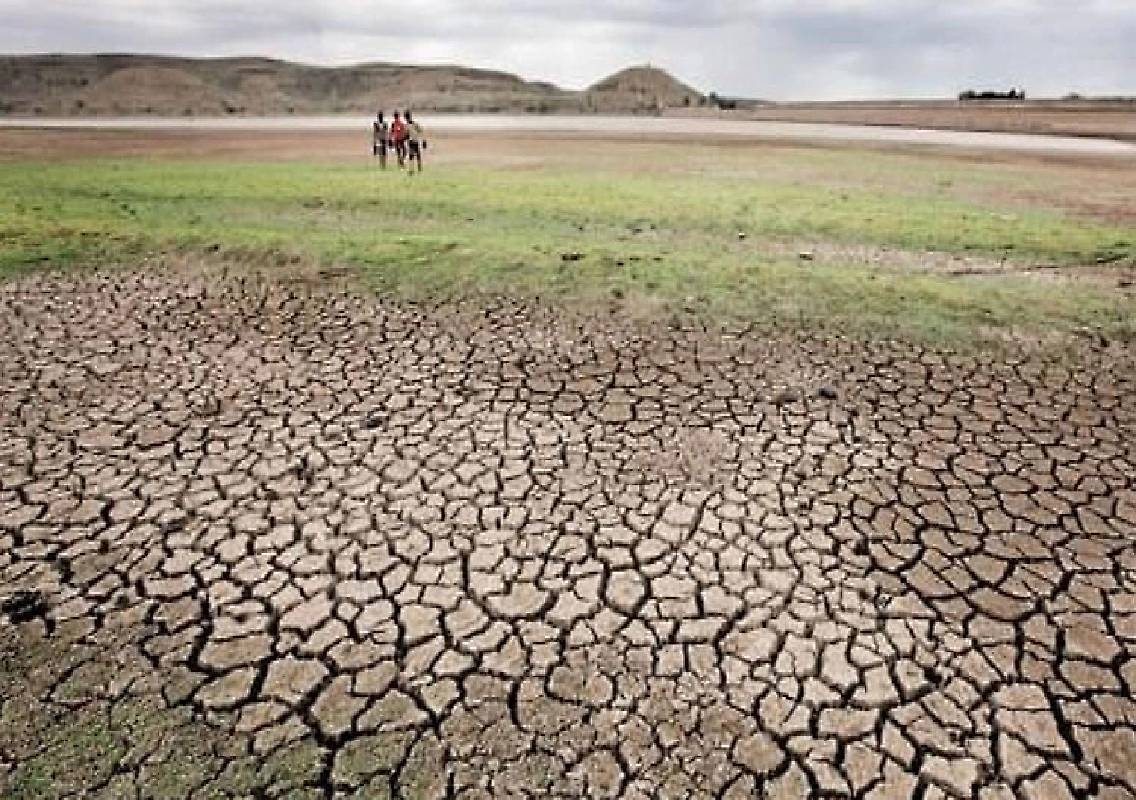


Mangaluru: The Karnataka government has declared five taluks in Dakshina Kannada and Udupi districts as drought-affected following assessments of rainfall deficiency and prevailing ground conditions.
The newly declared areas are Bantwal, Belthangady and Ullal in Dakshina Kannada, and Udupi and Byndoor in Udupi district. The decision is part of the state government’s latest expansion of its drought-hit list, which now covers 217 of Karnataka’s 240 taluks.
The declaration comes after a weak southwest monsoon across Karnataka. The state recorded a 35% rainfall deficit during the 2026 southwest monsoon, with the Karnataka State Natural Disaster Monitoring Centre describing it as the state’s weakest monsoon since 1971.
Bantwal, Belthangady and Ullal added in Dakshina Kannada
In Dakshina Kannada, three taluks — Bantwal, Belthangady and Ullal — have been brought under the drought-affected category.
The inclusion follows the government’s assessment of rainfall and other drought indicators. The declaration enables the district administration to undertake drought-response measures in accordance with applicable government norms.
The development is significant for the coastal district, where agriculture and horticulture depend heavily on seasonal rainfall. Although the region receives substantially higher rainfall than many parts of Karnataka, uneven distribution and prolonged dry spells can still affect crops, soil moisture and water availability.
Recent rainfall has provided temporary relief in parts of Dakshina Kannada. However, the drought declaration is based on the assessment period and prescribed criteria rather than conditions on a single day.
Udupi and Byndoor declared drought-affected
In neighbouring Udupi district, the government has declared Udupi and Byndoor taluks drought-hit.
The two taluks have been experiencing the effects of deficient rainfall during the season, prompting their inclusion in the latest government notification.
The drought declaration does not mean that every part of the taluk is experiencing identical conditions. Rainfall can vary considerably between different locations, particularly in coastal Karnataka.
For instance, Byndoor received significant rainfall during a spell in September, with 82.9 mm recorded over 24 hours during one such period. Kundapur also recorded 73.9 mm during the same period.
The figures illustrate the difference between short-term rainfall events and the longer assessment used to determine drought conditions.
State drought-hit tally reaches 217
The latest additions have taken the number of drought-affected taluks in Karnataka to 217 out of 240.
According to reports, the state had initially declared 101 taluks drought-affected. Another 23 were subsequently added, followed by 53 more, taking the total to 177. The latest phase added another 40 taluks.
The newly added 40 taluks include areas across several districts. Along with Bantwal, Belthangady, Ullal, Udupi and Byndoor, the list includes taluks in Bengaluru Rural, Chikkamagaluru, Shivamogga, Kodagu, Uttara Kannada, Belagavi, Dharwad, Gadag and other districts.
Only 23 of Karnataka’s 240 taluks are currently outside the drought-hit category, according to the latest figures.
Drought declaration follows assessment process
The state follows prescribed drought-management procedures before declaring an area drought-affected.
The assessment considers factors such as rainfall deficiency, crop conditions, soil moisture and other indicators. Ground-level verification is also undertaken before areas are formally included in the drought list.
A government order issued in September for an earlier phase stated that declarations were based on scientific assessment and ground-truthing in accordance with the Manual for Drought Management, 2020. The order also authorised district disaster-management authorities to undertake drought relief and response measures in affected taluks.
The same process allows further areas to be declared drought-affected if they meet the prescribed criteria during the assessment period.
Crop-loss assessment to follow
Following the declaration, officials from the Revenue, Agriculture and Horticulture departments are expected to assess the impact of drought conditions on crops.
Such assessments help determine the extent of crop damage and provide information for deciding appropriate relief measures.
The government has also directed officials to continue monitoring drought conditions during the Kharif 2026 season. Weekly assessments are expected to help authorities identify additional areas that may qualify for drought declaration.
For farmers, the impact of deficient rainfall can extend beyond immediate crop losses. Reduced soil moisture can affect planting decisions, irrigation requirements, horticultural production and the availability of water for livestock.
Coastal Karnataka sees uneven rainfall
The drought declaration comes despite episodes of heavy rainfall in parts of the coastal region during September.
Dakshina Kannada and Udupi received substantial showers during some periods, providing relief from high temperatures. However, the rainfall was not uniform across the districts.
On one September day, for example, several areas of Dakshina Kannada received rain while some locations in Udupi recorded only light showers. Byndoor received significantly higher rainfall than Udupi town during that spell.
This variation highlights why drought assessments consider broader seasonal conditions rather than isolated rainfall events.
Karnataka faces prolonged rainfall deficit
The wider drought situation is linked to Karnataka’s exceptionally weak southwest monsoon.
The state recorded a 35% deficit in southwest monsoon rainfall, according to the Karnataka State Natural Disaster Monitoring Centre. The deficit exceeded the previous state record of 33% recorded in 2002.
The India Meteorological Department has also forecast below-normal rainfall for Karnataka during October and November, according to recent reporting. This could keep water availability and agricultural conditions under scrutiny during the post-monsoon period.
The rainfall outlook will therefore remain important for the coastal districts, particularly for farming communities already affected by the seasonal deficit.
Relief measures to depend on ground assessment
The drought declaration allows authorities to initiate measures under applicable drought-relief norms, but the specific assistance available to farmers and other affected groups will depend on government assessments and eligibility.
Officials will need to determine crop losses and other impacts before relief measures are finalised.
District administrations are also expected to continue monitoring water availability and agricultural conditions in the affected taluks.
For Dakshina Kannada and Udupi, the inclusion of five taluks in the drought list brings the focus back to rainfall management, crop protection and preparedness for a potentially drier post-monsoon period.
Conclusion
Bantwal, Belthangady and Ullal in Dakshina Kannada, along with Udupi and Byndoor in Udupi district, have been declared drought-affected by the Karnataka government. The move is part of the latest expansion of the state’s drought list to 217 taluks. Despite some recent spells of rain along the coast, the declaration follows a broader assessment of seasonal rainfall deficiency and ground conditions. Officials will now assess crop losses and other impacts as the state continues to monitor drought conditions.