







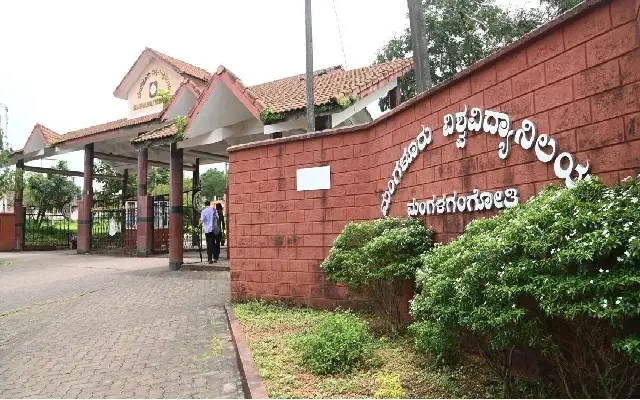


Mangaluru: A groundbreaking study by the Department of Applied Zoology, Mangalore University, has traced the origins of the traditional gotra system, offering new genetic insights into its historical basis. Researchers explain that the concept dates back thousands of years to the era of the Saptarshis. Traditionally, marriage within the same gotra is prohibited as members are regarded as distant kin. The system also includes pravara, which denotes broader kinship ties.
Across India, Brahmins follow 18 primary gotras such as Bharadwaja, Gautama, and Vashishtha, which still shape marriage customs. To study these patterns, scientists examined short tandem repeats (STRs) in the genomes of 334 Brahmins and compared them with data from 1,300 Eurasian men. The findings reveal a shared paternal ancestry, linking Indian Brahmins with populations from Iran, Tajikistan, and Uzbekistan—tracing back to a common R1a genetic ancestor, likely before the Indo-Iranian split in northern Afghanistan.
Lead researcher Jaison Sequeira noted that regional variations are evident. Northern Brahmins displayed closer genetic affinity with Afghans such as the Pashtuns, suggesting later admixture. By contrast, southern groups like Konkanis retained older genetic patterns aligned with West Iranians. The study points to two distinct waves of R1a ancestry entering India, separated by centuries.
While precise migration timelines remain unclear, earlier work estimated the Indo-European influx into India around 4,000 years ago, with a 500–800-year gap between the ancestors of Afghan and Brahmin populations.
Sequeira emphasized the need to preserve India’s genetic diversity much like cultural artefacts. Corresponding author Prof. M.S. Mustak stressed that pan-India collaborations, particularly through the Genome India Project, are vital for advancing such research. The study was carried out with contributions from researchers in Karnataka, Haryana, Madhya Pradesh, New Delhi, and Switzerland.