







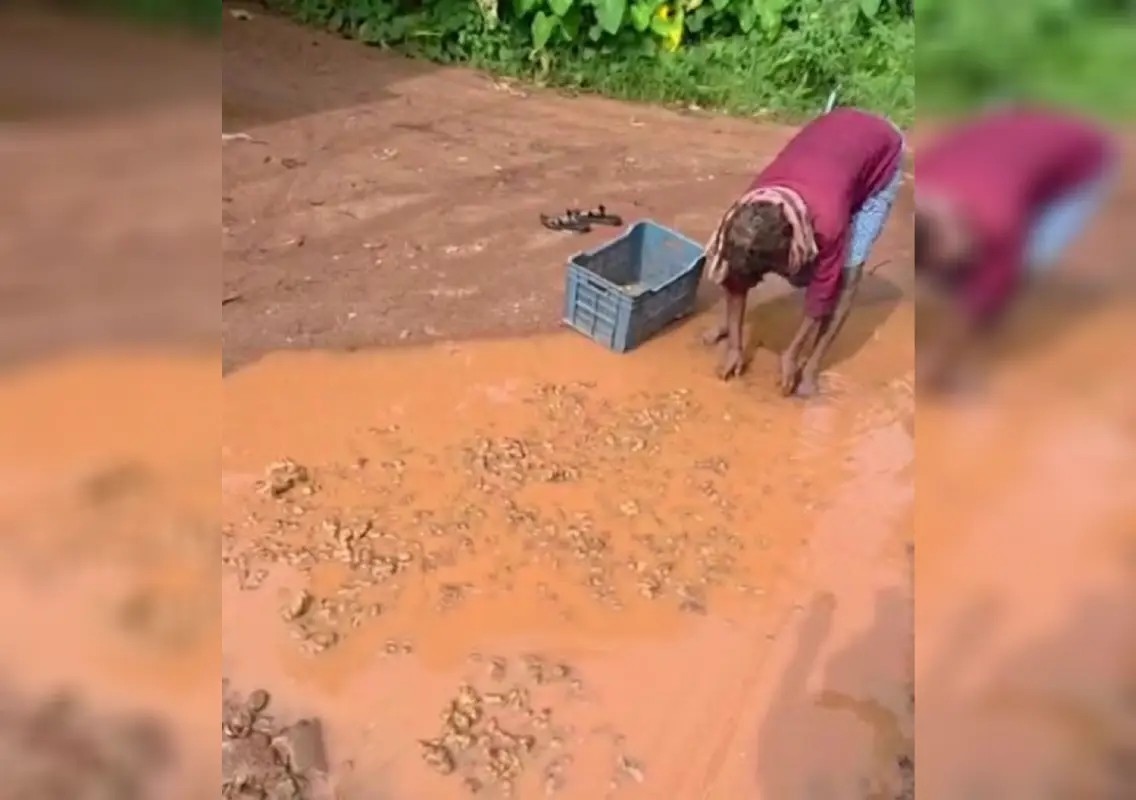


Mangaluru: A ginger seller along the Bikarnakatte-Kaikamba Road was reportedly seen washing the produce using muddy water collected in a roadside pothole, raising concerns over food hygiene and the safe handling of vegetables sold to the public.
The incident was witnessed by commuters and passersby, who reportedly noticed the vendor using stagnant water accumulated in the pothole to wash ginger before displaying it for sale.
The practice has raised questions about the hygiene standards followed by roadside vendors while handling fresh produce meant for public consumption.
Stagnant water used to wash ginger
The ginger seller was reportedly seen collecting water from a roadside pothole and using it to wash the produce.
The water had accumulated in the pothole along with mud and road debris, making its use for washing food particularly concerning. Fresh vegetables are often handled and consumed by the public, and the quality of water used to clean them can have a direct bearing on their hygiene.
Water collected in roadside potholes is not intended for washing food. It can contain dirt, microorganisms and other contaminants picked up from the surrounding road surface.
The incident has therefore prompted concerns over whether consumers could unknowingly be exposed to contaminated produce when vegetables are handled under such conditions.
Food safety concerns
Fresh produce can come into contact with a variety of contaminants during transportation, storage and sale. Proper washing with clean water is an important part of maintaining food hygiene before vegetables reach consumers.
Using visibly muddy or stagnant water can potentially introduce additional contaminants rather than removing them.
Roadside potholes can contain mud, dust, vehicle-related residues and waste washed from nearby surfaces. When such water is used directly on food items, the possibility of contamination becomes a concern.
While the specific health impact of the ginger in this incident has not been established, the reported practice highlights the importance of following basic food safety measures.
Need for hygienic handling
Roadside vegetable vendors often handle produce in locations exposed to traffic, dust and changing weather conditions. Maintaining cleanliness in such environments can be challenging, making proper food-handling practices particularly important.
Vendors should use clean water when washing vegetables and ensure that produce is not placed directly on dirty or contaminated surfaces.
Proper storage and protection from dust, insects and other contaminants are also essential. Simple precautions can significantly improve the hygiene of food sold in public places.
The incident along the Bikarnakatte-Kaikamba Road has highlighted the need for greater awareness among vendors about these basic practices.
Importance of consumer awareness
The incident also underlines the role consumers can play in identifying and reporting unhygienic food-handling practices.
People purchasing vegetables and other fresh produce from roadside vendors can look for basic hygiene measures, including clean water, clean containers and proper storage.
However, ensuring compliance cannot rest entirely with consumers. Vendors need to be made aware of food safety requirements, while the relevant authorities should monitor food-handling practices in public areas.
Regular inspections can help identify unhygienic practices and encourage vendors to follow appropriate standards.
Need for monitoring
The reported incident has renewed attention on the need for regular monitoring of roadside food and vegetable vendors.
Food sold directly to the public should be handled in conditions that minimise the risk of contamination. Authorities can play an important role by conducting awareness programmes and inspections, particularly in busy roadside vending areas.
Vendors can also be encouraged to maintain basic hygiene facilities, including access to clean water for washing produce.
The use of stagnant roadside water to clean food is an avoidable practice and highlights the need for better awareness and supervision.
Protecting food hygiene
The reported washing of ginger in muddy water serves as a reminder that food safety begins well before produce reaches the consumer’s kitchen.
Clean water, hygienic handling and appropriate storage are basic requirements for maintaining the quality and safety of fresh produce.
Although the incident itself requires appropriate verification, it has raised a valid concern about the conditions under which vegetables are sometimes handled and sold in public spaces.
Greater awareness among vendors, responsible consumer practices and regular monitoring by authorities can together help ensure that fresh produce sold to the public meets basic hygiene standards.