







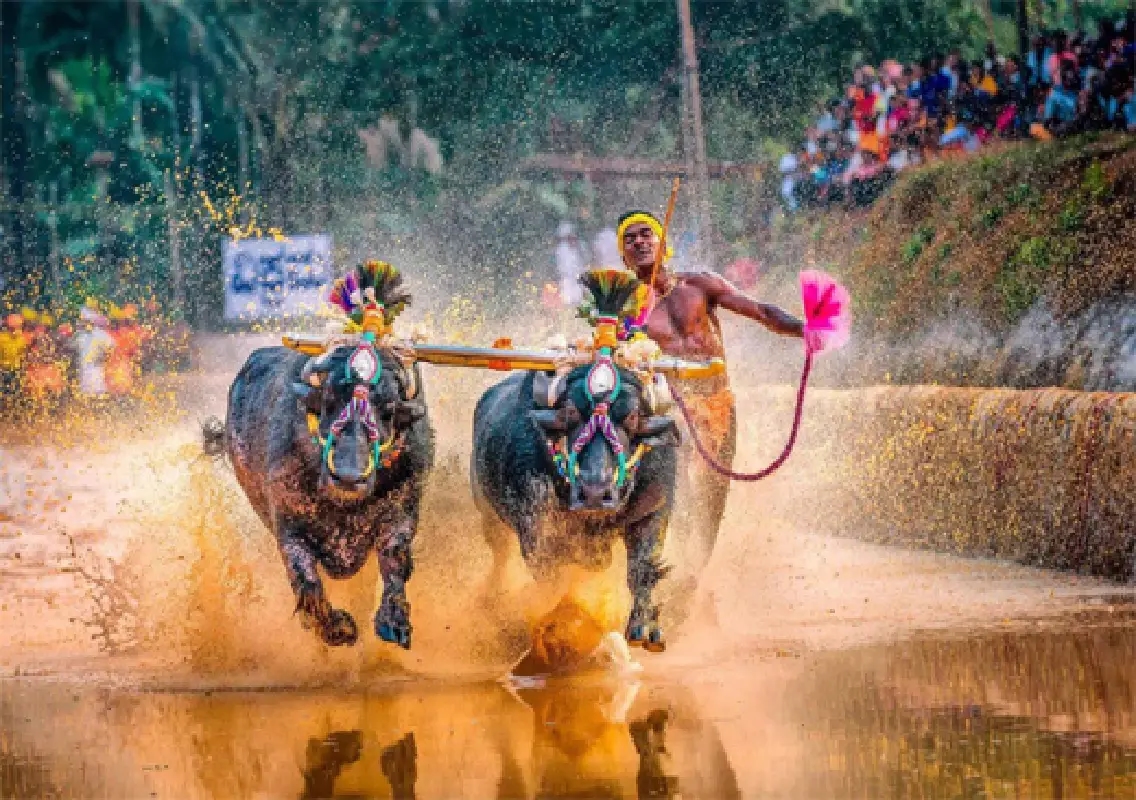


Mangaluru: The recent sharp rise in gold prices has begun to affect the conduct of Kambala, the traditional buffalo race that symbolises the cultural heritage of Tulu Nadu. Organisers say the increasing cost of gold — a key component of Kambala prizes — is putting additional financial pressure on already expensive events.
Kambala competitions, held across coastal Karnataka, traditionally award gold medals to winning buffalo pairs and their owners. With gold rates climbing steeply in recent weeks and no immediate signs of correction, committees fear that prize costs will rise significantly this season and beyond.
Despite the financial strain, organisers have said they are committed to continuing the long-standing tradition of awarding gold medals to winners.
Gold and Kambala share a long tradition
Aikala Bava Deviprasad Shetty, president of the Kambala committee, said gold awards are deeply linked to the spirit and prestige of Kambala events. He stressed that buffalo owners invest enormous time, effort, and money in preparing their animals for competition, and gold medals remain the most valued recognition of victory.
“Kambala and gold share an inseparable bond. Owners raise Kambala buffaloes like their own children and spend lakhs of rupees on their care and training. Their ultimate goal is to win a gold medal at a Kambala event,” Shetty said.
He explained that the tradition of awarding gold medals is not merely symbolic but emotionally and culturally significant for participants and rural communities associated with the sport.
According to committee norms followed across many events, buffaloes securing first place in each race category are awarded a one-pawan gold medal, while second-place winners receive a half-pawan gold medal.
“Even though gold prices have increased sharply, it is our responsibility to continue this tradition. We will make every effort to ensure that gold medals continue to be awarded,” he added.
Event costs already running high
Organisers pointed out that conducting a single Kambala event already involves major expenditure, even without factoring in rising gold prices. Costs include track preparation, water management, animal care facilities, security, lighting, seating, logistics, prize distribution, and cultural programmes.
Shetty said the total cost of organising one Kambala event typically ranges between ₹40 lakh and ₹50 lakh, depending on the scale and location. With gold rates rising, prize expenses alone are expected to increase substantially, pushing overall budgets higher.
Committees often depend on donations, local sponsors, community contributions, and ticketed arrangements to meet expenses. However, fluctuating commodity prices — especially gold — make advance budgeting difficult.
Organisers say that if gold prices continue to rise, smaller committees may struggle to host events without stronger sponsorship backing.
Appeal for government budget support
The Kambala committee has urged the state government to provide dedicated financial support for the traditional sport through a specific budget allocation.
Shetty appealed for at least ₹5 crore to be earmarked for Kambala promotion and conduct in the government budget. He said such support would help preserve a cultural practice that has gained national and international attention in recent years.
“Kambala represents the identity and heritage of this region. Government backing will help organisers maintain standards, ensure animal welfare, and continue traditional prize structures,” he said.
Committees believe that structured funding support could also help standardise facilities and safety measures across venues.
Mega sponsor model under consideration
To manage rising costs, organisers are exploring a new sponsorship model inspired by large sporting leagues. The committee is considering bringing in mega sponsors, similar to the IPL-style event partnership structure, starting next season.
Plans are underway to approach major entrepreneurs not only from the coastal Karnataka region but also from business hubs such as Bengaluru, Mumbai, and Dubai. The aim is to create long-term sponsorship partnerships that can underwrite major event expenses, including gold prizes.
“Talks are being planned with leading businesspersons and corporate groups. We are preparing to introduce a mega sponsor model from next year,” Shetty said.
Organisers believe that broader sponsorship participation will reduce uncertainty and allow Kambala events to grow in scale and professional management while retaining their traditional character.
Balancing tradition and sustainability
Cultural observers note that Kambala has evolved from a rural sporting practice into a high-profile cultural event drawing large crowds and media attention. With that growth has come increased operational cost and expectation.
Committees now face the challenge of balancing tradition — such as gold medal awards — with financial sustainability. Organisers say community pride and cultural continuity remain their top priorities, even as they adapt to economic realities.
For now, Kambala committees have made it clear that rising gold prices will not stop them from honouring winners with gold — but new funding models may soon become essential.