







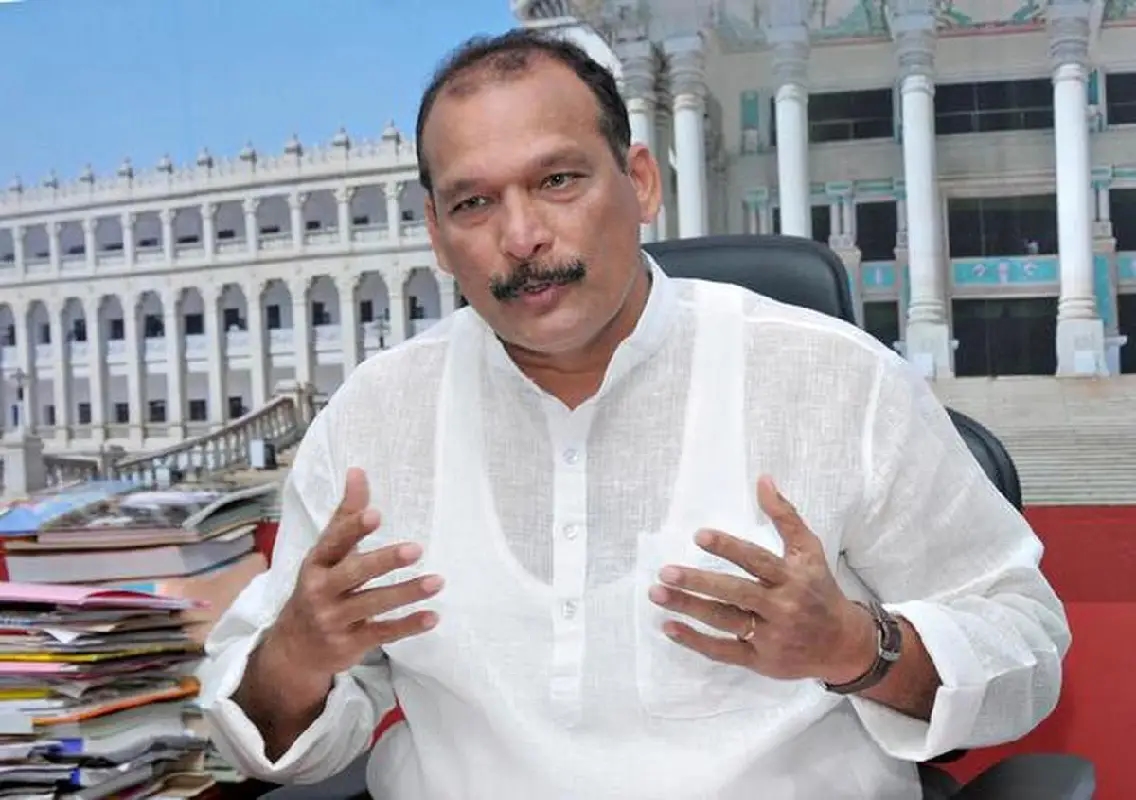


Mangaluru: The Karnataka government is committed to repealing the anti-conversion law introduced in 2022 during the tenure of former Chief Minister Basavaraj Bommai, Legislative Council member Ivan D’Souza has said.
Addressing a press conference at the Congress office in Lalbagh, Mangaluru, Ivan D’Souza expressed confidence that the government would withdraw the legislation during the forthcoming winter session of the state legislature, scheduled to begin in Belagavi on December 2.
He said the Congress had opposed the legislation when it was introduced and had promised to repeal it after returning to power. However, the government could not fulfil the commitment earlier because the party did not have the required numerical strength in the Legislative Council.
Repeal likely during Belagavi session
Ivan D’Souza recalled that the anti-conversion legislation was introduced in 2022 when Basavaraj Bommai was the Chief Minister. Siddaramaiah, who was then the Leader of the Opposition, had assured that the Congress would repeal the law if voted to power.
Although the Congress government completed three years in office, the repeal could not be taken up earlier because the party lacked the necessary numbers in the Legislative Council.
D’Souza said KPCC president B K Hariprasad had now assured that the government remained committed to withdrawing the legislation, as the party had secured the required numerical strength.
“We are confident that the Act will be withdrawn during the legislative session beginning in Belagavi on December 2,” he indicated.
The proposed repeal is expected to be an important issue during the forthcoming legislative session, with the Congress seeking to fulfil one of its earlier political commitments.
Demand to withdraw cases registered under the Act
The Legislative Council member also referred to demands from activists seeking the withdrawal of the 46 cases reportedly registered across Karnataka under the anti-conversion law.
He said the legislation had created difficulties for individuals, particularly those entering interfaith marriages.
According to him, there was no justification for creating an atmosphere in which people faced difficulties over their personal relationships and religious choices.
He also referred to the distinction between cases involving allegations of forced religious conversion and those arising from other circumstances. While activists have sought the quashing of cases registered under the legislation, allegations of forced conversion, if established, would continue to constitute criminal offences under applicable law.
D’Souza maintained that the anti-conversion legislation itself should be repealed, arguing that it had adversely affected individuals and created unnecessary complications.
Demand for separate reservation category for Christians
Apart from the anti-conversion legislation, D’Souza raised the demand for a separate sub-category for the Christian community in Karnataka’s Backward Classes reservation list.
He said the Christian community should be provided a distinct classification with 2% reservation, separate from the existing Category 3(B).
At present, Christians are included under Category 3(B), which carries 5% reservation and covers several other communities. According to D’Souza, approximately 18 communities are included in this category.
He argued that the Christian community had consistently been recognised as socially and educationally backward and deserved a separate reservation arrangement to ensure better access to educational and employment opportunities.
Existing Category 3(B) classification questioned
D’Souza said the sharing of the existing 5% reservation among numerous communities had resulted in competition for limited opportunities.
He pointed out that Christians, along with Dalits, other backward classes and people from rural backgrounds, often faced difficulties in accessing opportunities within the existing classification.
He argued that retaining Christians within the broader Category 3(B) group did not adequately address the community’s specific requirements.
The demand, therefore, is to remove the Christian community from Category 3(B) and provide it with a separate sub-category carrying 2% reservation.
The proposal is expected to require further examination by the state government, including consideration of the applicable constitutional and reservation-related criteria.
Leaders attend press conference
Several representatives and community leaders were present during the press conference.
Those present included Bhaskar Rao, Nagendra Kumar, N P Manuraj, Satish Pengal, Herbert D’Souza, Iman, Muhammad Nawaz and Manish Bolara, among others.
The press conference brought together demands concerning the repeal of the anti-conversion legislation and a separate reservation classification for Christians in Karnataka.