







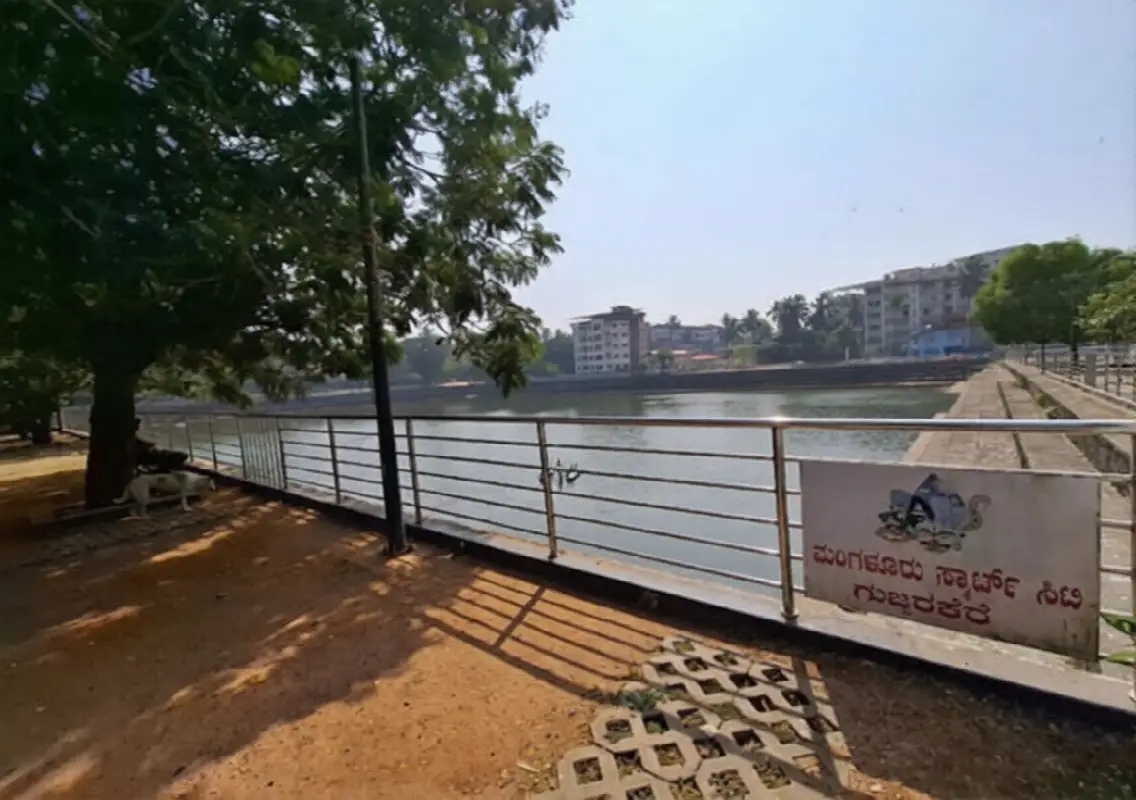


Mangaluru: Gujjarakere, one of the oldest and most revered theertha lakes in Mangaluru, has once again been found to be heavily contaminated with disease-causing bacteria, raising serious concerns over public health, heritage conservation and administrative negligence. Recent laboratory test reports have confirmed that the lake water is completely polluted and unfit for human consumption, despite the lake having been developed under the Smart City project at a cost of several crore rupees.
Laboratory tests reveal alarming contamination
Water samples collected from Gujjarakere and tested at a laboratory have revealed extremely dangerous levels of bacterial contamination. As per the test results, the total coliform count in the lake water stands at 1,600 per 100 ml, while the faecal coliform count is also 1,600 per 100 ml.
Experts state that the presence of such high levels of coliform bacteria indicates severe contamination, primarily due to sewage or human waste. The laboratory report has clearly declared the water unsafe and unfit for drinking or any form of domestic use.
According to established water quality standards, the total coliform count in potable water should be zero. A count of 1 to 3 is considered satisfactory, while a count between 4 and 10 is categorised as poor. Any reading above 10 renders the water unfit for consumption. Similarly, faecal coliform bacteria must also be completely absent for water to be considered safe. In contrast, Gujjarakere’s current readings stand at a dangerously high 1,600.
Pollution levels worsening over time
This is not the first time Gujjarakere has been found contaminated. Around seven months ago, water testing had revealed a total coliform count of 1,600 and a faecal coliform count of 500. Compared to those findings, the current faecal coliform level has more than tripled, indicating a sharp deterioration in water quality.
Historical data further highlights the long-standing nature of the problem. Tests conducted in 2014 and 2015 showed bacterial counts of around 1,100. When tested again in 2016, the contamination levels had increased further. Despite repeated testing and consistent detection of dangerous bacteria over the years, effective remedial measures have remained elusive.
Environmentalists point out that the steady rise in bacterial contamination clearly suggests continuous inflow of untreated sewage into the lake.
Sewage inflow cited as main cause
The primary reason for the severe pollution is said to be the inflow of sewage water into Gujjarakere. Local residents and activists have repeatedly alleged that underground sewage lines and stormwater drains connected to nearby residential and commercial areas are discharging waste directly into the lake.
Despite several representations made to the Mangaluru City Corporation (MCC) and Smart City authorities, residents claim that no concrete action has been taken to stop sewage inflow or restore the lake’s water quality. While the lake has been cosmetically developed with walkways, lighting and landscaping, the core issue of water contamination remains unaddressed.
Sacred lake with deep historical roots
Gujjarakere is not just a water body but holds immense religious and historical significance for the people of Mangaluru. It is believed to have been formed through the penance and spiritual power of Guru Gorakhnath, a disciple of Nath Panth sage Guru Machendranath. References to these sages are found in historical accounts associated with Mangaluru’s presiding deity, Shri Mangaladevi Amma.
For centuries, the sacred theertha from Gujjarakere was used for ritual bathing of the deity at the historic Bolar Hale Kote Shri Mariyamma Temple. The lake was once revered for its purported healing properties and was believed to cure ailments.
Smart City project under scrutiny
The contamination has cast a shadow over the Smart City project under which Gujjarakere was developed. Though the lake now appears visually attractive, activists argue that beautification without addressing ecological health defeats the very purpose of urban rejuvenation.
Environmental experts stress that Gujjarakere once played a crucial role in groundwater recharge and ecological balance. Its degradation not only threatens public health but also affects the city’s water security.
Activists demand accountability
Reacting to the latest test reports, Nemu Kottari, general secretary of the Gujjarakere Theertha Conservation Forum, said the findings conclusively prove the lake water is unsafe.
“Once a vital water source contributing to groundwater conservation and holding rich historical and religious significance, this sacred lake urgently requires protection and conservation. The negligence of officials from the concerned departments in matters related to the development and preservation of the lake is evident,” he said.
Activists have demanded immediate measures to stop sewage inflow, conduct comprehensive desilting and ecological restoration, and fix accountability on officials responsible for the neglect.
Conclusion
The repeated detection of dangerous bacteria in Gujjarakere highlights a serious failure in protecting one of Mangaluru’s most important heritage water bodies. While cosmetic development has transformed its appearance, the lake’s deteriorating water quality underscores the urgent need for scientific intervention, strict monitoring and administrative accountability. Without immediate corrective action, Gujjarakere risks losing both its sacred legacy and ecological relevance.