







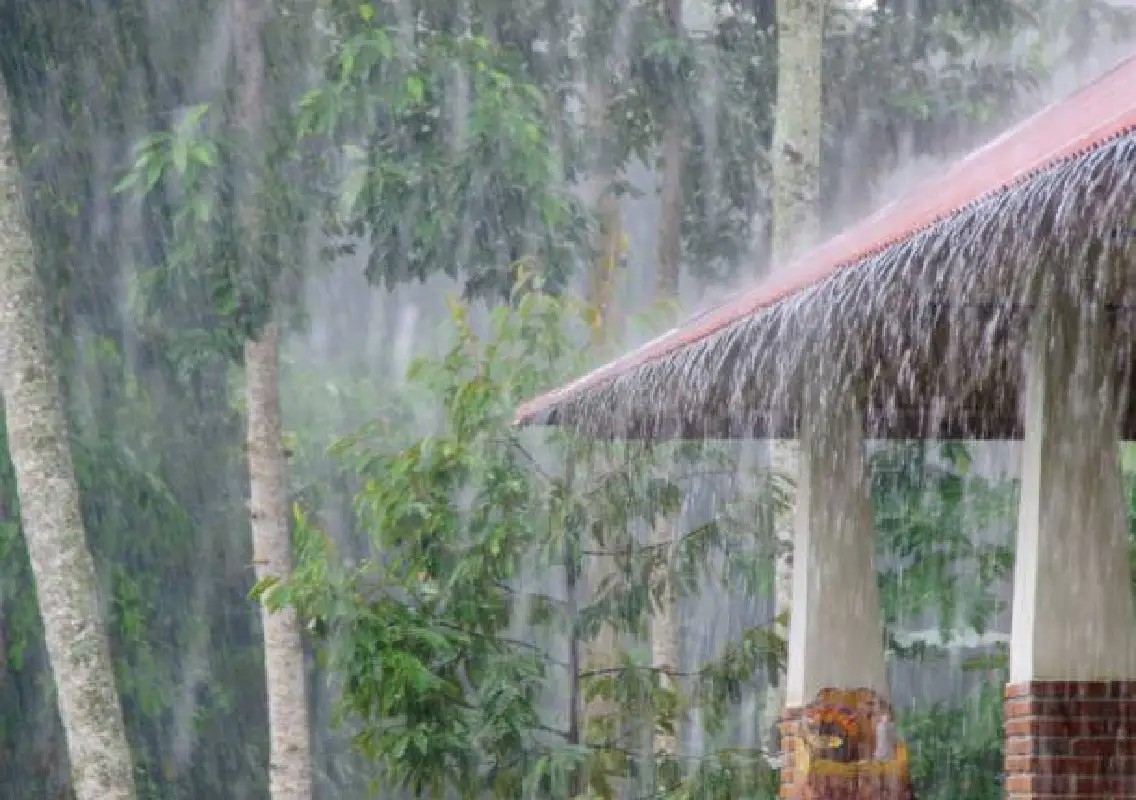


Mangaluru: Heavy rain continued to affect coastal Karnataka, with two houses suffering partial damage in Udupi district and widespread damage to power infrastructure in Dakshina Kannada during the 24-hour period ending at 8 a.m. on Thursday.
Light to moderate rainfall persisted across the coastal belt, while authorities monitored the impact of the monsoon on residential properties and public infrastructure.
Two houses damaged in Udupi
According to the Revenue Department, one house in Hadavu village of Byndoor taluk and another in Haklady of Kundapur taluk were partially damaged due to the heavy rain.
Officials estimated the total loss to the two houses at ₹65,000.
Udupi district recorded an average rainfall of 40.9 mm during the 24-hour period.
Among the taluks, Byndoor received the highest rainfall at 95.9 mm, while Brahmavar recorded the lowest at 14.4 mm.
Revenue officials continue to assess the extent of damage caused by the ongoing monsoon across vulnerable areas of the district.
Power infrastructure hit in Dakshina Kannada
In neighbouring Dakshina Kannada district, rain-related incidents caused significant damage to electricity infrastructure.
According to the Dakshina Kannada District Disaster Management Authority, 84 electric poles were damaged, while around 4.2 kilometres of power lines were affected during the period.
The damage has impacted the electricity distribution network in several locations, with restoration work being taken up by the Mangaluru Electricity Supply Company (MESCOM).
Officials are working to restore damaged infrastructure and ensure uninterrupted power supply in the affected areas.
Rainfall above normal
Dakshina Kannada recorded 52.1 mm of rainfall in the 24 hours ending at 8 a.m. on Thursday, exceeding the normal rainfall of 42 mm for the corresponding period.
The continued rainfall has kept disaster management authorities on alert as the southwest monsoon remains active over the coastal districts.
Officials have advised residents in vulnerable areas to remain cautious, particularly in regions prone to waterlogging, falling trees and damage to power infrastructure, while monitoring the weather situation closely.