


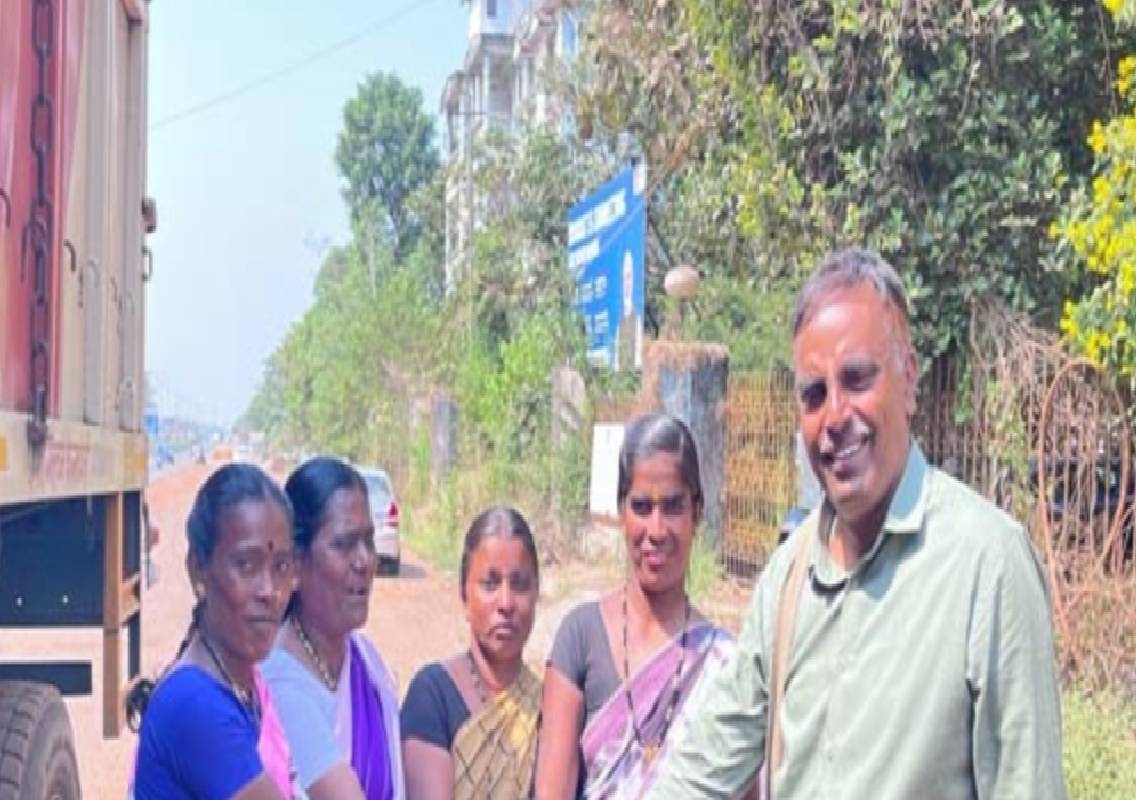


Mangaluru: In a significant development for four dismissed women contract workers, Hindustan Petroleum Corporation Limited (HPCL) has agreed to reinstate them following an 81-day indefinite protest outside the company’s facility at Baikampady in Surathkal. The decision brings relief to the workers, who had been demanding the restoration of their employment.
The company’s decision was communicated during a meeting held on Thursday, November 19, in the presence of the Assistant Labour Commissioner (Central), Mangaluru. HPCL officials reportedly expressed their willingness to take back the four women workers – Sharanavva Bhajantri, Paravva Ganiger, Sooravva Kollad and Suvarna Patil.
The development came after weeks of demonstrations organised by the workers and supported by several trade unions, women’s organisations and local leaders. The protest, which continued for 81 days outside the HPCL gate at Baikampady, concluded on Thursday evening following assurances from the company regarding their reinstatement.
HPCL assures reinstatement before December 2
During the meeting, HPCL officials assured the Assistant Labour Commissioner that the process of reinstating the four women would be completed before the next round of discussions scheduled for December 2.
Following the company’s assurance, the Assistant Labour Commissioner informed the workers about the proposed return to employment and advised them to withdraw their protest and rejoin duty.
The assurance marked a breakthrough in the prolonged dispute between the women contract workers and the company. The workers had been staging an indefinite demonstration outside the facility, seeking the restoration of their jobs.
Although the company has agreed to take them back, the formal reinstatement process is expected to be completed before the next scheduled meeting. The December 2 discussions will therefore be an important stage in following up on the assurance given by HPCL officials.
81-day protest concludes at Baikampady
The announcement brought an end to the 81-day protest at the HPCL gate in Baikampady, Surathkal. Following the development, the women workers and their supporters celebrated by distributing sweets outside the company’s premises on Thursday evening.
The prolonged demonstration had drawn the attention of various organisations and local representatives, who extended their support to the four women in their fight to regain employment.
The protest was led by the Centre of Indian Trade Unions (CITU) and the Nagarika Horata Samithi, Surathkal. The Janavadi Mahila Sanghatane, Democratic Youth Federation of India (DYFI) and several other people’s organisations also supported the movement.
The sustained participation of these organisations helped keep the workers’ demands in focus throughout the protest.
Workers had served at HPCL facility for several years
The dispute dates back to September 1, when the four women reportedly arrived at the HPCL facility for their regular duties but were denied entry. According to an earlier report, their access passes had been blocked, and security personnel informed them that their services had been terminated.
The women had reportedly worked at the facility for periods ranging from 10 to 25 years. Their responsibilities included housekeeping and other contract-based work.
The workers alleged that neither HPCL management nor the contractor had directly communicated the termination to them in advance. They also expressed concern over losing their livelihoods after spending several years working at the facility.
Their dismissal had created financial difficulties for the families, particularly as some of the women were responsible for meeting household expenses, children’s education costs, rent and loan repayments.
The issue subsequently gained wider attention after trade unions and local organisations intervened in support of the workers.
Trade unions and local organisations extend support
The Centre of Indian Trade Unions and Nagarika Horata Samithi played a key role in organising and sustaining the agitation.
Several leaders and organisations participated in the movement, including CITU Karnataka state leaders, the Janavadi Mahila Sanghatane and DYFI representatives.
During an earlier protest, CITU Karnataka state president Meenakshi Sundaram raised concerns about the employment conditions of contract workers and the challenges they face in securing their rights.
He questioned why workers who had reportedly served for 15 to 18 years were not provided with appointment letters and expressed concern over employment insecurity.
Nagarika Horata Samithi leader Muneer Katipalla also highlighted the importance of protecting the rights and dignity of contract workers. He maintained that employees working in Special Economic Zones should receive appropriate legal protections and fair treatment.
Former MLA Moideen Bava, CITU leaders Meenakshi Sundaram, B M Bhat and Sunil Kumar Bajal, along with other district-level representatives, extended guidance and support to the workers during their struggle.
The Dakshina Kannada Deputy Commissioner had also responded to the demands raised by the workers.
Muneer Katipalla welcomes the outcome
Following the announcement of HPCL’s decision, Nagarika Horata Samithi leader Muneer Katipalla thanked the organisations, political representatives, trade union members and individuals who stood in solidarity with the four women.
He described the development as an important achievement for the committee and said it demonstrated the significance of collective action in protecting the rights and livelihoods of ordinary working-class people.
He also expressed satisfaction and pride over the outcome of the 81-day protest.
The decision has brought relief to the four women, who had continued their demonstration despite the difficulties associated with a prolonged protest.
December 2 meeting to be crucial
With HPCL assuring that the reinstatement process would be completed before December 2, attention is now on the implementation of the company’s commitment.
The upcoming meeting is expected to provide an opportunity to review the progress made towards bringing the four women back into employment.
For the workers and their supporters, the immediate priority will be ensuring that the assurance translates into formal reinstatement.
The conclusion of the 81-day agitation marks an important development in the dispute and highlights the role played by trade unions, community organisations and labour authorities in addressing workers’ grievances.
The case has also brought attention to the concerns of long-serving contract employees and the importance of clear communication and employment security.
While the company’s assurance has offered hope to the four women, the completion of the reinstatement process will be the key step in bringing the prolonged dispute to a formal conclusion.