







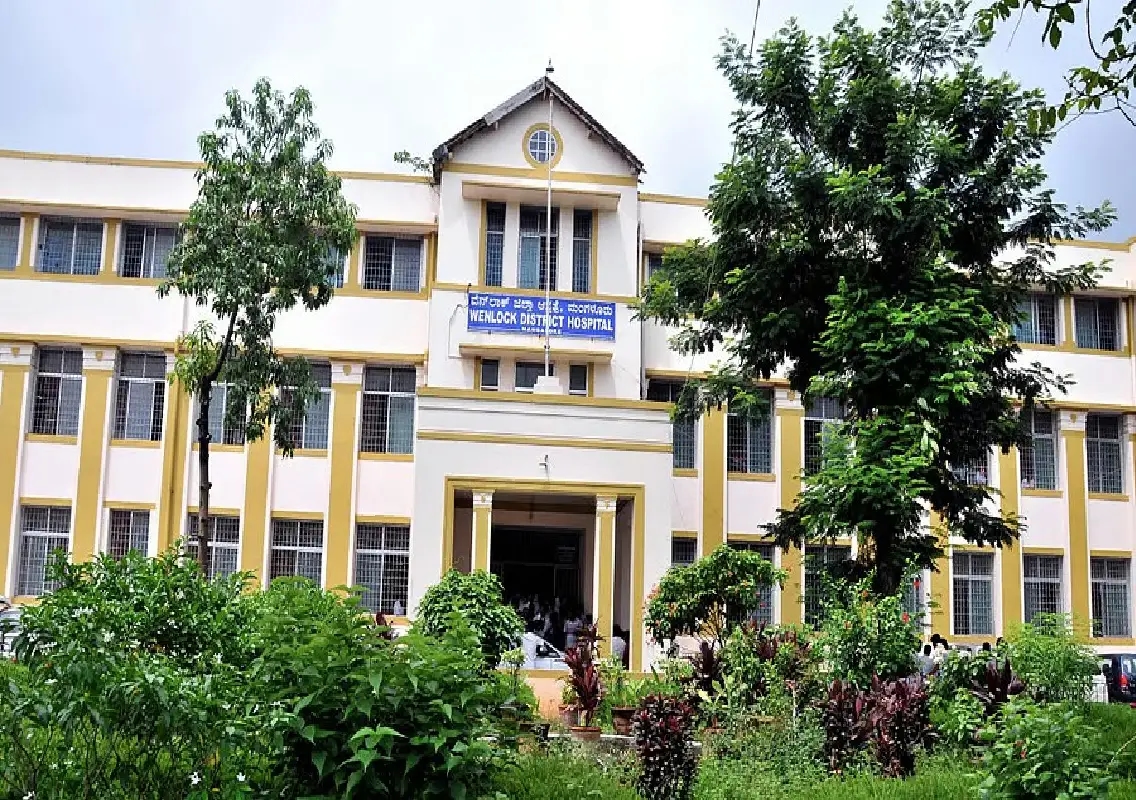


Mangaluru: Non-availability of ICU beds at Government Wenlock District Hospital is causing major inconvenience to critical patients from Dakshina Kannada and several neighbouring districts, with officials confirming that almost all of the hospital’s 116 ICU beds remain occupied on most days due to rising referrals and emergency admissions.
Health authorities said the pressure has increased significantly in recent months as the hospital receives a steady inflow of critical cases not only from across the district but also from coastal, Malnad and border regions of neighbouring states. As a result, immediate ICU admission is often not possible even for serious patients brought to the facility.
Referrals pouring in from around 12 districts
District Health Officer (DHO) Dr Thimmaiah HR said the hospital functions as a major tertiary care centre and receives critical patients from a wide catchment area because of its advanced treatment facilities and specialist departments.
According to the health department, critical cases are routinely referred from all taluks of Dakshina Kannada, in addition to patients from nearly a dozen other districts and parts of northern Kerala. This referral load has led to near-constant ICU occupancy.
Officials noted that when emergency cases reach the hospital, doctors sometimes struggle to secure ICU beds immediately due to the already saturated capacity. This has created operational stress and delays in critical care admission.
Advisory issued to hospitals before referring cases
In view of the recurring bed shortage, the district health authorities have issued instructions to government and private hospitals across coastal districts, Malnad region and nearby areas to check ICU bed availability before referring critical patients.
The DHO said hospitals have been specifically requested to verify bed status in advance instead of transferring patients directly without confirmation. The move is aimed at avoiding situations where critically ill patients are transported long distances only to find no ICU beds available on arrival.
Officials said better coordination between referring hospitals and the district facility would help manage patient flow more efficiently and reduce hardship for families.
Private hospitals asked to step in when needed
Health authorities clarified that when ICU beds are unavailable at the government facility, empanelled private hospitals are expected to accommodate referred critical patients based on official reference letters issued by the department.
The DHO stated that private hospitals that are part of government health schemes are obligated under their agreements to provide treatment in such referred cases. This mechanism is intended to ensure continuity of care when government ICU capacity is exhausted.
He added that government hospitals typically refer only tertiary care and highly critical cases to private institutions under the scheme framework.
AB-ArK scheme access without special card
Officials also clarified eligibility rules under the Ayushman Bharat Arogya Karnataka (AB-ArK) scheme to prevent confusion among patients and families during emergency referrals.
Patients do not necessarily need a separate AB-ArK card to avail treatment benefits in either government or empanelled private hospitals. Authorities said the scheme benefits can be accessed by submitting a ration card, Aadhaar card and a mobile number linked to Aadhaar.
This simplified documentation process is expected to help faster admission and approval during emergencies, especially when patients are moved between hospitals due to ICU shortages.
No referral letter needed for emergencies
The health department further clarified that referral letters are not mandatory in emergency situations. Hospitals are expected to begin stabilisation and necessary treatment immediately in life-threatening cases, regardless of paperwork status.
Officials stressed that emergency care cannot be delayed due to administrative formalities. Documentation and scheme processing can be completed subsequently once the patient is stabilised.
This clarification has been communicated to empanelled hospitals to ensure that urgent cases are not denied or delayed treatment.
Public criticism and demand for upgrades
The ICU bed shortage issue has been raised repeatedly by social organisations and political representatives at various forums. Many have called for capacity expansion and institutional upgrades to match the growing healthcare demand in the region.
DYFI district president Santhosh Bajal said that long-term solutions require structural strengthening of government healthcare infrastructure. He suggested that upgrading the hospital into a regional-level centre, establishing a government medical college, and opening specialty institutes such as a Sri Jayadeva Institute of Cardiovascular Sciences and Research unit and a Kidwai Memorial Institute of Oncology centre would significantly ease the burden.
Healthcare activists argue that such expansions would distribute patient load, reduce referral pressure and improve timely access to specialised care.
Conclusion
With ICU demand consistently exceeding capacity, health authorities are now focusing on better referral coordination and private sector participation to manage critical care needs. However, experts say that without a substantial increase in government ICU infrastructure and specialty centres, pressure on major district hospitals is likely to continue.