







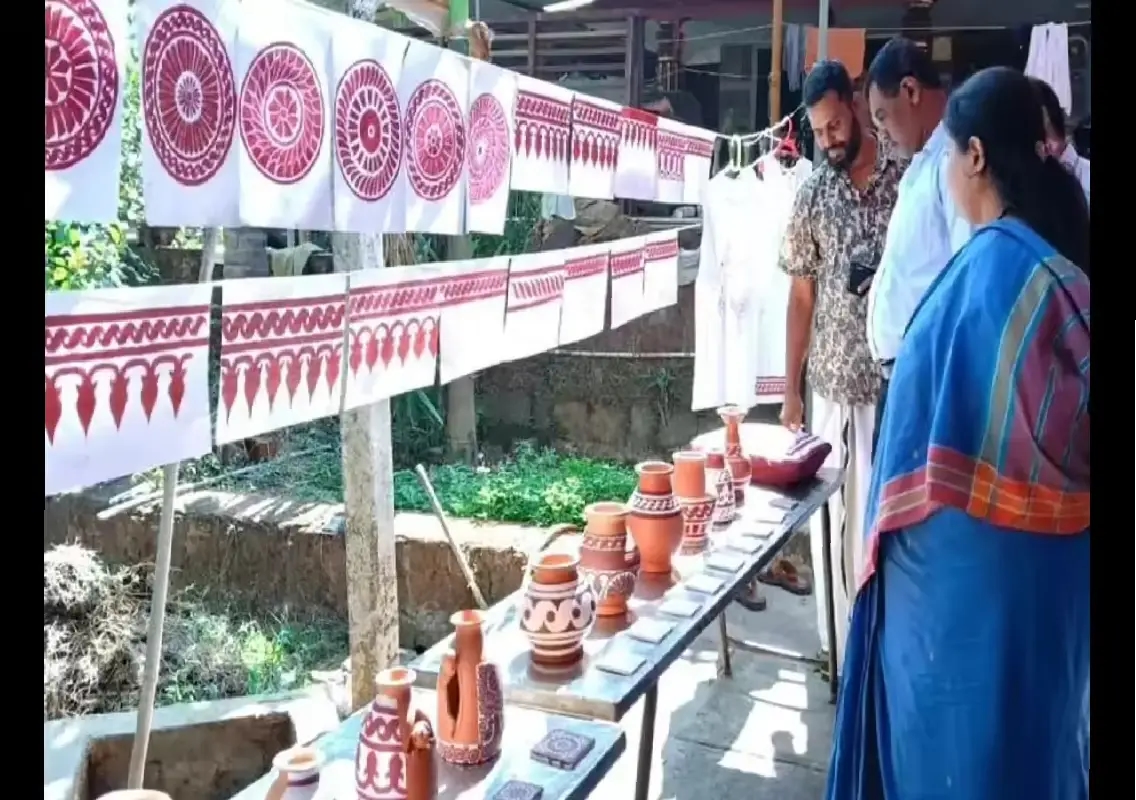


Mangaluru: A 25-day design development workshop held at Havanje has breathed new life into the centuries-old Kaavi art tradition by adapting it to contemporary, everyday products while retaining its cultural essence. The workshop showcased innovative applications of Kaavi motifs on souvenirs, terracotta items, apparel, home décor products and wooden utilities, highlighting sustainability and relevance beyond traditional temple and heritage spaces.
The Kaavi art tradition workshop was conducted at Bhaasa Gallery and Studio under the stewardship of the Potters Cottage Industrial Cooperative Society Ltd, Puttur. It was organised in collaboration with the Handicrafts Development Board under the Ministry of Culture, as part of efforts to revive and sustain endangered traditional art forms along the Karnataka coast.
Reviving a fading heritage
Kaavi art, known for its distinctive red oxide plaster technique and intricate carvings, has historically adorned temple walls, shrines and heritage structures across coastal Karnataka and Goa. Over the years, however, the art form has seen a sharp decline due to lack of patronage, changing construction practices and limited economic opportunities for artisans.
The Havanje workshop aimed to address these challenges by reimagining Kaavi art in forms that appeal to modern consumers. By incorporating traditional motifs into functional and decorative products, the initiative sought to open new markets for artisans and ensure the art form’s long-term sustainability.
Artists explore modern adaptations
During the 25-day programme, participating artists worked on translating Kaavi designs onto a wide range of products, including eco-friendly souvenirs, terracotta artefacts, clothing, home décor items and wooden utilities. The focus was on sustainable materials and practical usage, making Kaavi art accessible to a wider audience.
Senior designer Brijesh Jaiswal from Delhi guided the artists throughout the workshop, helping them with design development, product innovation and contemporary aesthetics while respecting the traditional grammar of Kaavi art.
Call for community participation
Commenting on the initiative, renowned Kaavi artist and resource person Janardhan Havanje said such experimental efforts are crucial for the survival of the art form. “These kinds of workshops will play a major role in sustaining Kaavi art. It is important that local communities actively participate and take ownership of preserving this heritage,” he said.
He also revealed that an application for a Geographical Indication (GI) tag for Kaavi art has already been submitted. “We are hopeful that the GI tag will be granted jointly for Goa and the coastal region. This will give Kaavi art the recognition and protection it deserves,” he added.
Local support and encouragement
Expressing happiness over the initiative, Havanje gram panchayat president Asha Poojary said it was heartening to see such culturally significant workshops being held in the village. “Kaavi artist Janardhan Havanje is the pride of our village. I hope more local artisans actively engage with this art form and help take it forward,” she said.
She noted that programmes like this not only preserve heritage but also create livelihood opportunities for rural artisans, especially the younger generation.
Institutional backing for artisans
Handicrafts Development Board assistant director Rajeshwari said the department regularly conducts design development programmes for rural artisans across the state. “We provide daily allowances during the training period and also extend marketing support through exhibitions and promotional platforms,” she said.
Highlighting the significance of the Havanje initiative, she added, “It is encouraging to see the endangered Kaavi art being nurtured as a sector along the coast, particularly in Havanje of Udupi district. I sincerely hope this art form receives a GI tag soon.”
Valedictory session and future hopes
The workshop concluded with a valedictory session, during which certificates were distributed to the participating artists. The event marked not just the end of a training programme but the beginning of renewed hope for Kaavi art’s future.
Organisers and artists alike expressed confidence that such sustained efforts, combined with institutional support and community participation, can help Kaavi art reclaim its rightful place in both cultural and commercial spaces. By bridging tradition with contemporary design, the Havanje workshop demonstrated that heritage arts can evolve without losing their soul.