







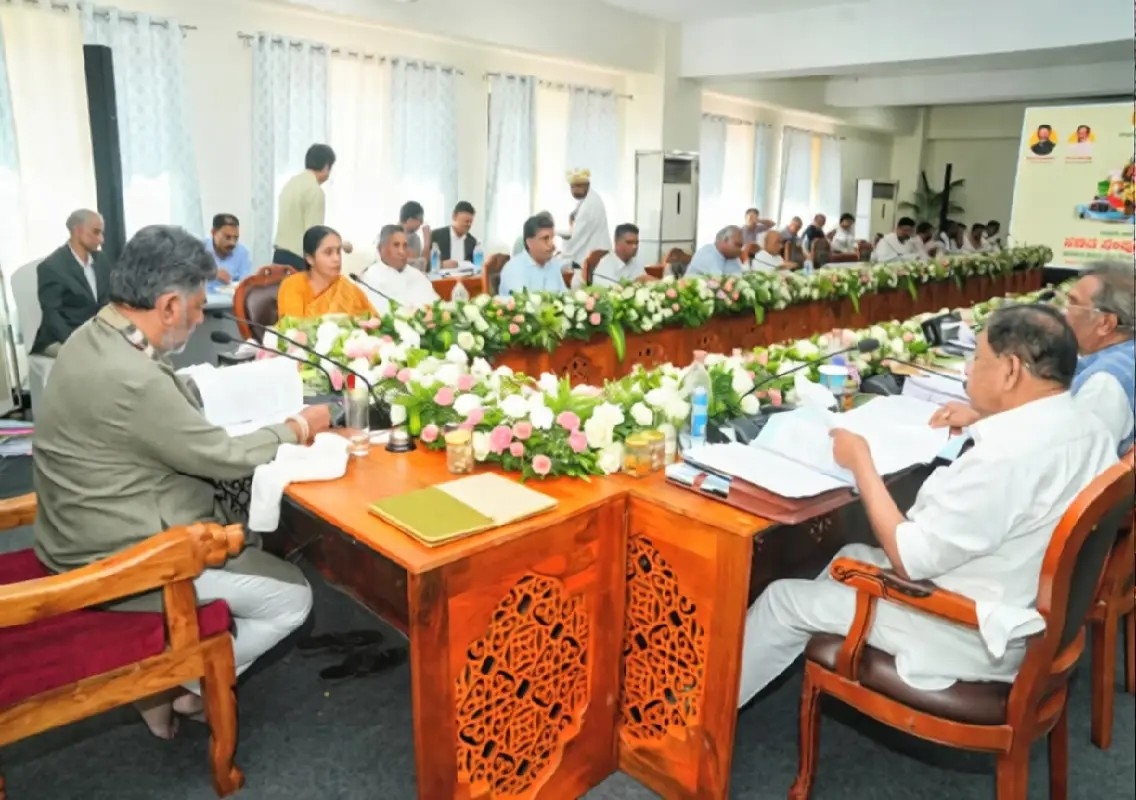


Mangaluru: The Karnataka Cabinet meeting held in Mangaluru on Friday cleared a series of measures aimed at strengthening religious, cultural, fisheries and industrial development in the coastal region, with several decisions specifically benefiting Dakshina Kannada and Udupi districts.
The announcements include grants for historically significant temples and religious institutions in Dakshina Kannada, reservation of 150 acres for a proposed Fisheries Park at Mulki, steps towards developing an industrial area in Hebri and a major increase in the government grant for Kambala.
The Cabinet meeting was the first of its kind to be held in Mangaluru, with the government having indicated that coastal infrastructure, fisheries, tourism and industrial development would receive attention.
Grants for eight temples in Dakshina Kannada
The Revenue Department has sanctioned grants for the comprehensive development of eight historically and culturally significant religious institutions in Dakshina Kannada.
The largest allocation among the listed temples is ₹5 crore for Sri Mahalingeshwar Temple in Puttur.
Seven other institutions have each been sanctioned ₹1 crore. They are Odiyoor Math, Vitla; Shree Dhama Manila; Sri Manila Village Kukkaje Kalikamba Anjaneya Swami temple; Kanyyur Chamundeshwari temple in Kanya village; Pilli Chamundi Daivasthan at Kondana, Kotekar, Ullal; Sri Rama Kshetra at Kanyadi; and Kemaru Math, Sri Sandipani Sadhanasrama.
The allocations are intended for comprehensive development of the respective institutions and recognise their role in the religious, cultural and historical heritage of the coastal region.
| Sl. No. | Name and address of the organization | Sanctioned amount (in Rs. lakhs) |
| 1 | Sri Mahalingeshwar Temple, Puttur, Dakshina Kannada District | 500.00 |
| 2 | Odiyoor Math Vitla, Bantwal Taluk, Puttur Vidhan Sabha Constituency | 100.00 |
| 3 | Shree Dhama Manila, Bantwal Taluk, Puttur Vidhan Sabha Constituency | 100.00 |
| 4 | Sri Manila Village Kukkaje Kalikamba Anjaneya Swami Puttur Vidhan Sabha Constituency | 100.00 |
| 5 | Kanyyur Chamudeshwari Constituency, Kanya Village, Puttur Vidhan Sabha Constituency | 100.00 |
| 6 | Pilli Chamundi Daivasthan Kondana Kotekar, Ullala | 100.00 |
| 7 | Sri Rama Kshetra Kanyadi, Dakshina Kannada District | 100.00 |
| 8 | Kemaru Math, Sri Sandipani Sadhanasrama, Dakshina Kannada District. | 100.00 |
₹13 crore sanctioned for other institutions
The Revenue Department has also sanctioned grants totalling ₹13 crore to 11 institutions in Dakshina Kannada under various budget heads.
Al-Markazul Islami at Adyar and Darunnur Educational Centre at Kashipatna have each been sanctioned ₹1.50 crore.
Shanti Educational Trust at Babbukatte, Marikkala Jumma Masjid at Naringana, Karnataka Islamic Academy at Kumbra, Markazul Huda Women’s College at Kumbra, South Karnataka Salafi Movement in Mangaluru, St Joseph Vaz Shrine at Mudipu and St Lawrence Shrine at Bondel have each been sanctioned ₹1 crore.
Sayed Madani Jumma Masjid has been sanctioned ₹5 crore, while Infant Jesus Shrine at Bikarnakatte has been allocated ₹50 lakh.
The allocations cover institutions representing different religious communities in the district.
| Sl. No. | Institution Name & Address | Amount sanctioned (Rs. in Crores) |
| 1 | Shanti Educational Trust. Babbukatee Permannur Village, Ullal Taluk | 1.00 |
| 2 | Marikkala Jumma Masjid, Bekal Ustad, Naringana Village, Ullal study centre and reading room | 1.00 |
| 3 | Al-Markazul Islami (R). Adyar Village, Mangaluru Taluk | 1.50 |
| 4 | Darunnur Educational Centre. Kashipatna, Belthangady Taluk | 1.50 |
| 5 | Karnataka Islamic Academy (KIA), Kumbra, Olamogaru Village, Puttur Taluk | 1.00 |
| 6 | Markazul Huda Womens’ College, Kumbra, Olamogaru Village, Puttur Taluk | 1.00 |
| 7 | South Karnataka Salafi Movement, Mangaluru, Dakshina Kannada District | 1.00 |
| 8 | St. Joseph Vaz Shrine, Mudipu, Kairangala village, Ullal Taluk | 1.00 |
| 9 | Sayed madani jumma masjid | 5.00 |
| 10 | Infant Jesus Shrine, Bikarnakatte, Mangaluru | 0.50 |
| 11 | St. Lawrence Shrine, Bondel, Mangaluru | 0.50 |
Coastal erosion funding proposal remains pending
The Cabinet-related announcements also highlighted coastal erosion, one of the major recurring concerns along Karnataka’s coastline.
The state has sought ₹208.94 crore from the Central Government under National Disaster Response Fund (NDRF) guidelines to address coastal erosion. The proposal is currently pending with the Central Government.
Coastal erosion has emerged as a major infrastructure and environmental challenge for the coastal districts, affecting beaches, settlements, roads and other public assets. The issue has been among the concerns raised ahead of the Mangaluru Cabinet meeting, which was positioned as an opportunity to consider long-pending regional demands.
150 acres reserved for Fisheries Park at Mulki
One of the key industrial and fisheries-related announcements concerns the proposed Fisheries Park at Mulki in Dakshina Kannada.
The coastal districts of Dakshina Kannada, Udupi and Uttara Kannada together have a coastline of about 343.30 km and contribute significantly to fisheries and marine-product trade.
Against this backdrop, the State Government has proposed establishing a dedicated Fisheries Park at Mulki to promote fisheries-related activities and strengthen the coastal fisheries economy.
An order has been issued reserving 150 acres for the Fisheries Park from a total of 316.79 acres in Kolluru, Ballunje and Ulipadi villages. The Karnataka Industrial Areas Development Board issued the final notification for the land on September 16, 2026, while the order reserving the 150 acres was issued under Government Order No. CI 84 SPQ 2026 dated September 17, 2026.
The proposal is expected to provide a dedicated space for fisheries-linked industries and activities, potentially strengthening value addition and related economic opportunities in the coastal belt.
Industrial development proposed in Hebri
The Cabinet announcements also cover industrial development in Udupi district.
A total of 113.89 acres in Kerebettu and Shivapura villages of Hebri taluk was notified for acquisition in January 2023 for development as an industrial area.
Compensation has already been paid for a majority of the land acquired. The distribution of compensation relating to trees, malki or standing crops and assets, and building structures is currently under progress.
The government is also examining the acquisition of additional land adjoining the proposed industrial area. The additional land is expected to be developed based on industrial demand.
Among the activities envisaged are data centres, factories and manufacturing units, potentially expanding the industrial base of the Hebri region.
The emphasis on industrial land comes amid wider calls from coastal industry representatives for more land and infrastructure to support new investments. Ahead of the Mangaluru Cabinet meeting, industry organisations had also highlighted the need to address land availability for industrial development.
Kambala grant increased to ₹1 crore
The Cabinet has also decided to increase the government grant for Kambala from ₹40 lakh to ₹1 crore.
Kambala, the traditional buffalo race associated with the farming communities of coastal Karnataka, is an important part of the region’s folk culture and sporting tradition.
The enhanced grant is intended to encourage and support the traditional sport, which involves racing pairs of buffaloes through specially prepared tracks.
The increase comes at a time when Kambala has gained wider recognition beyond the coastal districts while continuing to remain closely connected with the agricultural and cultural traditions of Tulunadu.
Focus on coastal development
The decisions announced around the Mangaluru Cabinet meeting reflect a broad focus on religious heritage, fisheries, industry and traditional culture.
The government had earlier said that the special Cabinet meeting would examine local requirements and take decisions concerning ports, infrastructure, fisheries and industries.
For Dakshina Kannada, the temple grants, Fisheries Park proposal, support for Kambala and attention to coastal erosion represent interventions across different sectors. For neighbouring Udupi, the proposed industrial development at Hebri could provide additional land for manufacturing and emerging sectors such as data centres.
The announcements therefore place a mix of cultural preservation, fisheries development and industrial expansion on the coastal development agenda, alongside the larger infrastructure and connectivity priorities discussed ahead of the Cabinet meeting.
Conclusion
The September 18 Cabinet meeting in Mangaluru has resulted in a package of decisions and allocations covering religious institutions, fisheries infrastructure, industrial development and Kambala. With coastal erosion funding still awaiting consideration by the Centre, further follow-up will be required to translate the announced measures into completed projects and infrastructure on the ground.