







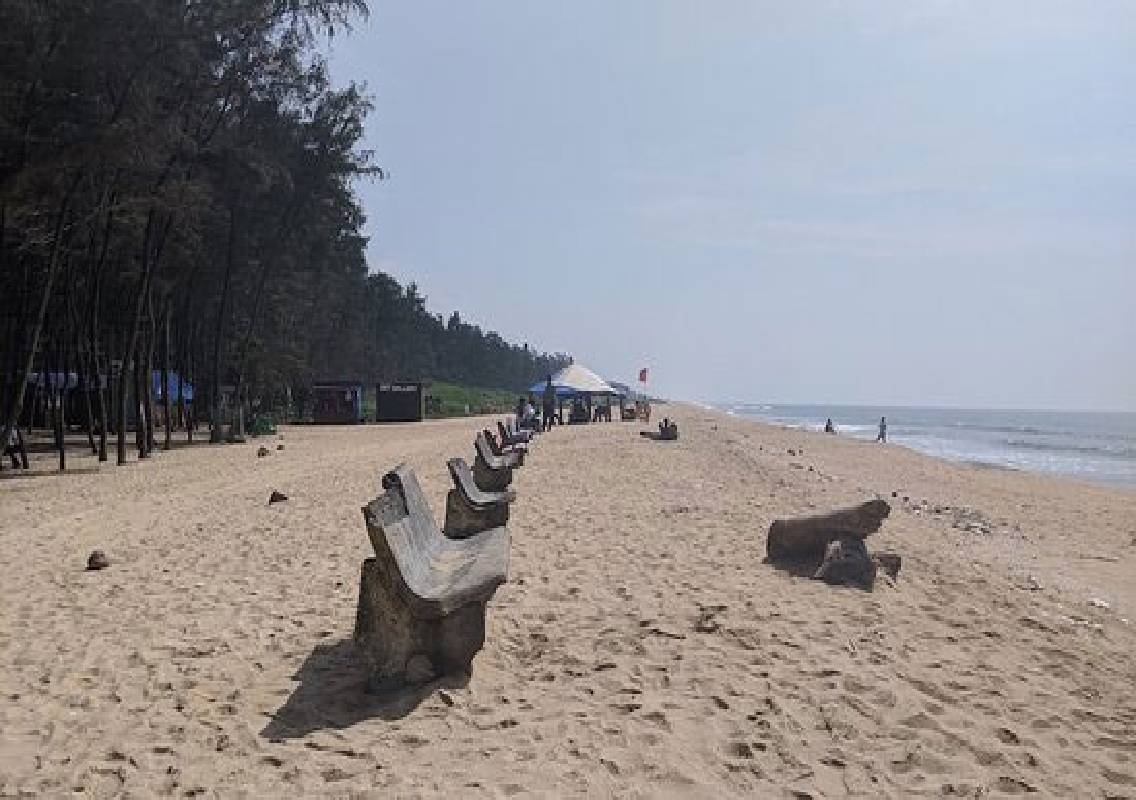


Mangaluru: The Karnataka government has moved to fast-track the development of five key coastal tourism destinations across Udupi and Dakshina Kannada districts, with agencies appointed to oversee sustainable tourism development and prepare the projects under a public-private partnership (PPP) model.
The move follows commitments made in the 2026-27 State Budget to tap the tourism potential of Karnataka’s coastal districts and develop an integrated coastal tourism network.
Five destinations identified
The five projects include Trasi-Maravanthe, Kodi-Kundapura Beach and Barkur Fort in Udupi district, along with Kodikal and Tannirbhavi Beach in Dakshina Kannada.
The government has appointed IPE Global as the Programme Management Unit (PMU) for sustainable development and tourism promotion in coastal Karnataka.
Ernst & Young LLP (EY) has been appointed as the transaction adviser for developing the five identified destinations under the PPP model.
The appointments are expected to help move the projects from planning to implementation while bringing private-sector expertise into tourism infrastructure development.
Focus on integrated coastal tourism
The projects are part of the proposed Integrated Coastal Tourism Development Project, announced in the Karnataka Budget.
According to MLC Ivan D’Souza, the initiative aims to utilise the special tourism potential of the State’s coastal districts and create better connectivity to tourist destinations.
The government has also given in-principle approval for developing connectivity through seaplanes and heli-taxis, in collaboration with aviation and water adventure tourism stakeholders.
The plans also include promoting joy rides and river cruise activities, adding new experiences for tourists visiting the coastal region.
Coastal and Malnad tourism policy
The development is being taken forward under the Coastal and Malnad Karnataka Tourism Policy.
The policy seeks to develop coastal Karnataka as a high-quality tourism destination with modern facilities while promoting responsible and sustainable tourism.
The policy covers the three coastal districts of Uttara Kannada, Udupi and Dakshina Kannada.
It also extends to selected areas of Chikkamagaluru, Shivamogga and Hassan districts, creating a wider tourism circuit connecting the coast with the Malnad region.
Better facilities planned for tourists
The government’s plans go beyond developing beaches and heritage locations.
Officials are also looking at improving roadside amenities and highway hubs to make travel more convenient for tourists.
The focus on infrastructure is expected to support longer stays and improve access to tourist destinations that currently have limited facilities.
Adventure water sports are another area being explored as part of the policy.
Tannirbhavi among key projects
In Dakshina Kannada, Tannirbhavi Beach is among the five destinations selected for development.
The beach, located near Mangaluru, is already a popular destination and has significant potential for further tourism-related infrastructure and recreational activities.
Kodikal is the other Dakshina Kannada location included in the first set of five projects.
In Udupi district, the government has selected the scenic Trasi-Maravanthe stretch, Kodi-Kundapura Beach and the historic Barkur Fort.
Heritage and beach tourism combined
The selection of Barkur Fort alongside coastal destinations indicates an attempt to combine heritage tourism with beach and leisure tourism.
Barkur is known for its historical significance and ancient ruins, while Trasi-Maravanthe and Kodi-Kundapura are associated with beaches and coastal landscapes.
Developing these locations together could help create a broader tourism circuit rather than concentrating visitors at individual destinations.
Private participation to drive projects
The five projects will be developed under the PPP model, with EY serving as the transaction adviser.
The PPP approach is intended to bring private investment and expertise into tourism infrastructure while the government provides policy and institutional support.
The transaction adviser will play a role in structuring the projects and helping prepare them for private-sector participation.
Karnataka’s 320-km coastline in focus
Karnataka has a coastline stretching around 320 km, covering Uttara Kannada, Udupi and Dakshina Kannada.
The government wants to use the coastline’s beaches, heritage sites, waterways and natural attractions to create a stronger tourism economy.
The new policy places emphasis on responsible tourism while seeking to provide world-class facilities across the coastal belt.
Adventure tourism gets push
Adventure and water-based tourism are also expected to receive greater attention.
The government plans to explore opportunities for water sports and other coastal recreational activities, potentially giving tourists more options beyond conventional sightseeing.
River cruises and joy rides are also part of the proposed tourism expansion.
The integration of these activities with improved road and air connectivity could make coastal Karnataka more attractive to both domestic and international visitors.
Connectivity to get a boost
One of the major challenges for tourism destinations is accessibility.
The proposed use of seaplanes and heli-taxis could provide alternative ways of reaching selected destinations, particularly those located away from major transport hubs.
The government intends to work with aviation and water adventure tourism stakeholders to explore these options.
Tourism development across regions
The Coastal and Malnad Karnataka Tourism Policy is designed to connect several geographical regions.
Along with the coastal districts, selected taluks in Chikkamagaluru, Shivamogga and Hassan are covered under the policy.
This could help create tourism circuits linking beaches with hill stations, forests, heritage sites and other attractions in the Malnad region.
Budget commitments move forward
MLC Ivan D’Souza said Tourism Minister K J George has ensured that commitments made in the 2026-27 Budget are being prioritised.
The appointment of the PMU and transaction adviser represents an important step towards implementing the integrated coastal tourism plans.
The next stage will involve detailed preparation and structuring of the individual projects before implementation under the PPP model.
Sustainable tourism remains a focus
The government has stressed that tourism development should be sustainable and responsible.
The objective is not only to increase visitor numbers but also to develop destinations with appropriate infrastructure and facilities while protecting the coastal environment.
This approach will be important as increased tourism activity can place pressure on beaches, water resources and local ecosystems.
Conclusion
Mangaluru: Karnataka has moved to fast-track five coastal tourism projects in Udupi and Dakshina Kannada, covering Trasi-Maravanthe, Kodi-Kundapura Beach, Barkur Fort, Kodikal and Tannirbhavi Beach.
IPE Global has been appointed as the Programme Management Unit, while Ernst & Young LLP will serve as the transaction adviser for developing the destinations under the PPP model.
The wider Coastal and Malnad Karnataka Tourism Policy aims to strengthen tourism infrastructure across the State, with plans for water sports, river cruises, improved roadside facilities and potential seaplane and heli-taxi connectivity.
The initiative could give coastal Karnataka a significant tourism boost while creating new opportunities for investment and local economic development.