







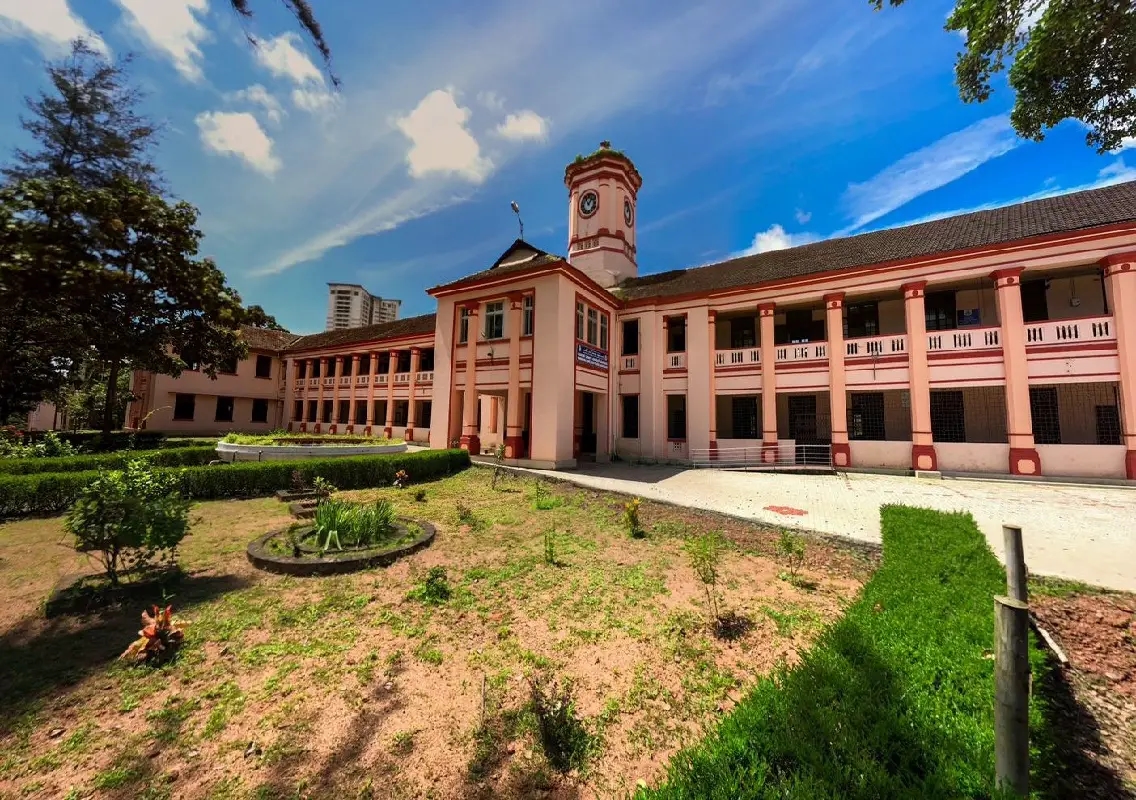


Mangaluru: The Karnataka (Government) Polytechnic (KPT), Mangaluru, has achieved autonomous status from the All India Council for Technical Education (AICTE), becoming the country’s first government polytechnic to attain autonomy after 78 years of existence. The status, granted by AICTE, New Delhi, marks a significant milestone in the history of technical education in the state and the country.
Officials said the autonomous status was granted by AICTE a few months ago and was subsequently approved by the Karnataka Technical Education Board in October last year. Until recently, AICTE had extended autonomous status only to engineering colleges, with diploma institutions kept outside its ambit. However, with a renewed national emphasis on skill development and industry-ready education, several government polytechnics across India have now been granted autonomy, paving the way for academic reforms at the diploma level.
Second-largest polytechnic in the state
KPT is the second-largest government polytechnic in Karnataka and has played a key role in technical education for decades. Established in 1946 with just four branches, the institution has steadily expanded and currently offers eight diploma programmes. These include courses in computer science, polymer technology and other engineering disciplines aligned with evolving industry requirements.
The campus is spread across more than 19 acres and houses academic blocks, laboratories, sports facilities and student support infrastructure. Over the years, the institution has built a reputation for academic discipline, consistent results and strong industry linkage.
Selection through a rigorous process
Ravindra M Keni, the first dean of the institution, said AICTE had proposed extending autonomous status to polytechnic institutions that are over 25 years old. “A large number of colleges across the country applied for autonomy. In the first round, 100 institutions were shortlisted, and in the second round, the list was narrowed down to 15. Our institution was selected through this rigorous evaluation process,” he said.
He added that the polytechnic has already completed one semester after becoming an autonomous institution, marking the beginning of a new academic phase.
Strong academic and placement record
Explaining the factors that helped the institution secure autonomous status, Keni said the polytechnic has consistently recorded 100 per cent admissions and placements for its graduates. On an average, around 500 students take admission every year across the eight diploma programmes, each of which has a duration of three years.
In addition to academic performance, the institution has excelled in extracurricular activities. It has emerged as sports champions for 12 consecutive years and has maintained an active presence in National Cadet Corps (NCC) and National Service Scheme (NSS) activities. These achievements, officials said, reflected the holistic development of students, which was a key parameter in the evaluation process.
Academic freedom under autonomy
With autonomous status, the polytechnic will now have complete academic independence. This includes the authority to design industry-aligned curricula, conduct examinations, prepare question papers, evaluate answer scripts and manage academic documentation internally.
“The status grants complete independence in academic matters, while financial control will continue to remain with the state government,” Keni said. He explained that multiple statutory bodies such as the board of studies, board of examiners and examination committees will be constituted to ensure transparency and academic rigour.
The institution will also have the freedom to conduct admissions without waiting for government notifications and will be able to print and issue its own marks cards.
Industry collaboration and funding opportunities
Autonomy is also expected to strengthen industry collaboration. The institution can now directly partner with industries for curriculum development, internships, training programmes and skill-based initiatives. It will also receive priority consideration for funding from AICTE and the Ministry of Education (MoE), officials said.
This flexibility is expected to help the polytechnic respond quickly to technological changes and emerging skill requirements, thereby improving the employability of diploma graduates.
Future roadmap
While the immediate focus is on stabilising the autonomous academic framework, the institution plans to chalk out new academic and research initiatives after one year. These may include the introduction of new diploma programmes, short-term certification courses and enhanced industry engagement.
Conclusion
The granting of autonomous status to Karnataka Government Polytechnic marks a landmark moment for government diploma education in India. It reflects a broader shift towards empowering institutions with academic freedom to improve quality, relevance and outcomes. With its strong legacy, infrastructure and performance record, the institution is expected to set a benchmark for other government polytechnics aspiring for autonomy in the coming years.