









Mangaluru: The Karnataka government is preparing to introduce a cap on student intake for computer science and allied engineering programmes, limiting institutions to a maximum of 900 seats across such streams. The move is aimed at correcting the growing imbalance in engineering education, where traditional branches have witnessed a steady decline in admissions as students increasingly prefer computer science-related disciplines due to strong employment opportunities and attractive salary packages.
Government seeks balanced growth across engineering streams
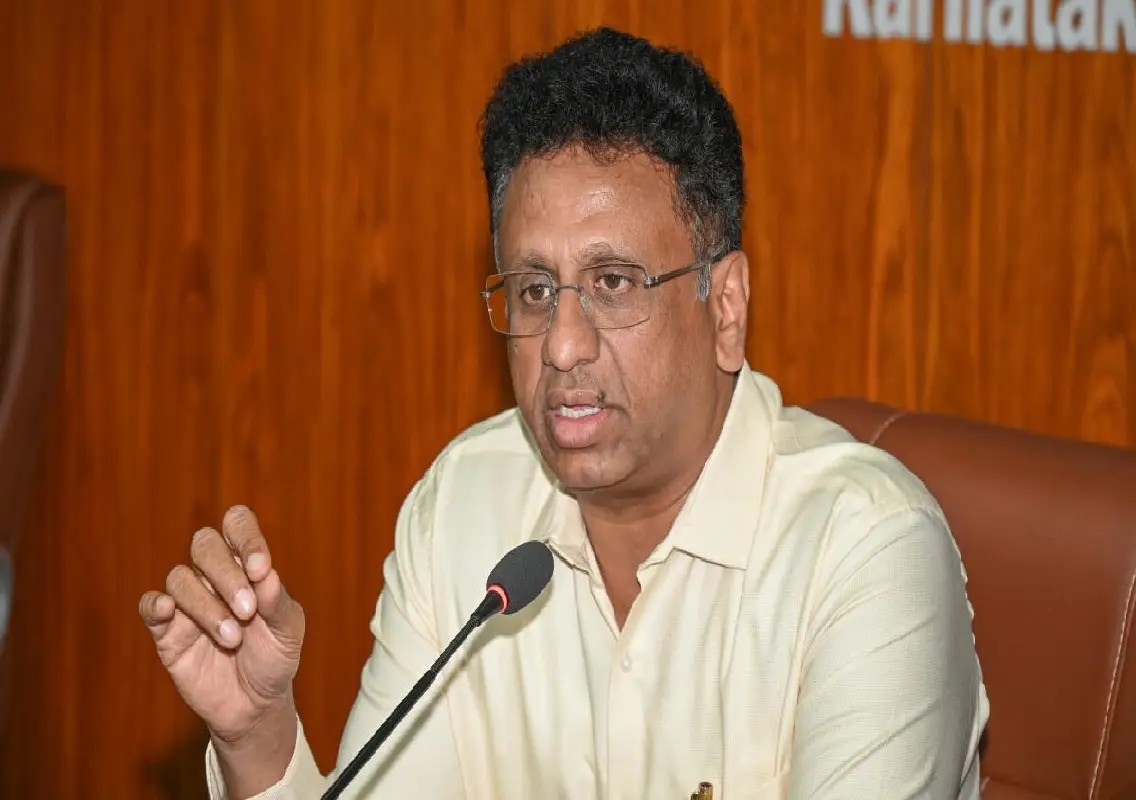
The proposal was announced by Karnataka Higher Education Minister Dr M C Sudhakar, who expressed concern over the disproportionate expansion of computer science and related courses across engineering institutions in the state. According to the minister, several well-established colleges have significantly increased their intake in computer science streams over the years, leading to thousands of seats concentrated in a single domain.
The government believes this trend has adversely impacted enrolment in traditional engineering disciplines such as civil engineering, mechanical engineering and automobile engineering. These branches, which historically formed the backbone of technical education and industrial development, have reportedly experienced a considerable reduction in student interest.
Officials say the increasing preference for computer science-related programmes has largely been influenced by the rapid growth of the information technology sector and the perception of better career prospects. However, policymakers now argue that an overconcentration in one field could create an imbalance in the broader engineering ecosystem.
Committee recommendations form the basis of reforms
To address the issue, the state government had constituted a committee headed by Prof Sowmyanarayanan Sadagopan, former director of IIIT-Bangalore, to study the trend and suggest measures.
Based on the committee’s recommendations, the government has proposed a structured framework for intake across engineering institutions.
Under the new norms, newly established engineering colleges will initially be allowed to admit only 60 students for each specialisation. Computer science and allied programmes can gradually increase student intake over four years, reaching a maximum of 180 seats.
The policy also limits institutions to offering a maximum of five computer science-related courses. Collectively, these programmes cannot exceed an overall intake of 900 students.
Authorities believe these restrictions will encourage colleges to maintain diversity in course offerings rather than disproportionately expanding a single academic domain.
Accreditation linked to further seat expansion
The proposed policy also places significant emphasis on academic quality and accreditation standards.
Institutions seeking to increase their intake beyond 180 seats after four years will be required to obtain accreditation from the National Board of Accreditation (NBA). Once accreditation is secured, colleges will be allowed to add 60 seats annually, subject to a maximum ceiling of 300 seats per course.
The government sees accreditation as a mechanism to ensure that institutions expanding their programmes maintain appropriate academic standards, infrastructure, faculty strength and educational quality.
Officials have indicated that linking seat expansion to accreditation may encourage institutions to improve teaching quality and adopt better academic practices.
Existing institutions to get transition period
The proposed regulations will also affect institutions that already have a significantly larger intake in computer science streams.
To avoid sudden disruption, the government plans to provide a transition period for existing colleges to comply with the revised norms. Institutions with higher student numbers will be expected to secure NBA accreditation within two years.
Failure to meet the accreditation requirement within the specified timeframe could result in a reduction of sanctioned seats by the state government.
The phased implementation is expected to provide colleges sufficient time to adapt to the new policy framework while minimising disruption for students and ongoing academic operations.
Curriculum changes also under consideration
Apart from regulating admissions, the committee has also suggested changes to engineering curricula to align traditional disciplines with emerging industry requirements.
Recommendations include integrating artificial intelligence and other modern technologies into core engineering programmes. Such changes are intended to make conventional branches more attractive to students while ensuring graduates remain relevant in an evolving technological landscape.
Industry experts have often highlighted that fields such as civil and mechanical engineering are also undergoing significant transformation through automation, data analytics and AI-based applications. Integrating these technologies into course structures may create stronger links between traditional sectors and future industry demands.
The government’s latest proposal signals an attempt to balance student preferences, industry trends and educational sustainability. While computer science continues to remain a preferred choice for many students, authorities appear keen on ensuring that other engineering disciplines are not sidelined in the process.