







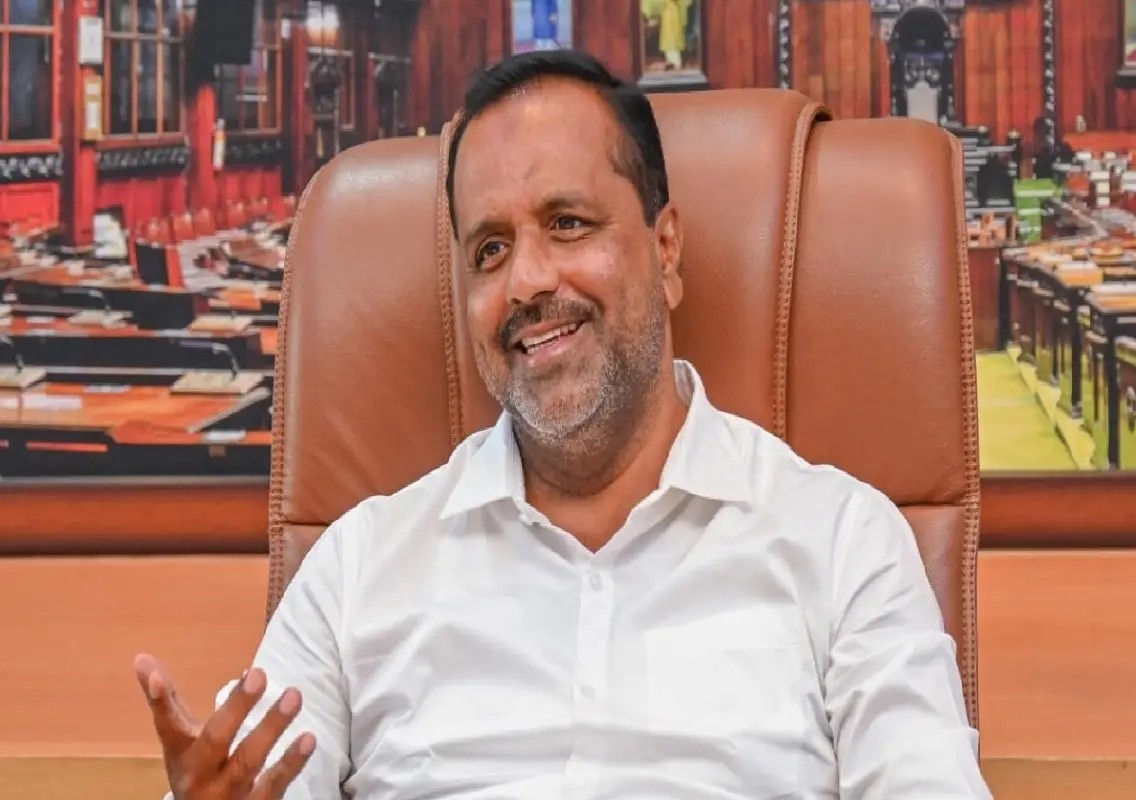


Mangaluru: Karnataka Health Minister U T Khader on Thursday announced a series of healthcare initiatives aimed at strengthening public health infrastructure, improving emergency medical services, expanding health insurance coverage and extending medical benefits to government employees, pensioners and senior citizens.
Addressing a press conference at the Circuit House in Mangaluru, Khader said the state government has finalised a comprehensive healthcare plan focused on making quality medical treatment more accessible and affordable to people across Karnataka.
The initiatives include recruitment of thousands of healthcare workers, expansion of the 108 ambulance fleet, introduction of bike ambulances in congested cities, changes to the Ayushman Karnataka scheme and expansion of health insurance programmes for government employees and retired personnel.
Nearly 4,000 healthcare staff to be recruited
As part of efforts to strengthen healthcare delivery at the grassroots level, the government has begun large-scale recruitment for primary health centres (PHCs) across the state.
The recruitment drive covers doctors, nurses, pharmacists and laboratory technicians. Khader said around 200 MBBS doctors had already joined government service in various districts over the past one-and-a-half months.
Recruitment of nearly 1,000 additional healthcare personnel is currently in progress, while approval has also been granted for the appointment of another 3,000 staff members.
The expansion is intended to address shortages at government health facilities and improve the availability of medical services, particularly at the primary healthcare level. Strengthening PHCs is expected to help people access treatment closer to their homes while reducing pressure on larger government hospitals.
450 new 108 ambulances planned
The government is also planning a major expansion of Karnataka’s emergency ambulance network.
According to Khader, around 450 new 108 ambulances will be deployed across the state. This will take the total number of ambulances in the fleet to more than 750.
The government aims to ensure that ambulances reach patients within 20 minutes in rural areas and within 15 minutes in urban areas. The proposed response-time standards are intended to improve access to emergency medical care, particularly during accidents and other medical emergencies where delays can have serious consequences.
In cities affected by heavy traffic, the government plans to introduce 100 bike ambulances. These vehicles will allow emergency personnel to reach patients more quickly, provide immediate medical assistance and stabilise them before they are shifted to hospitals.
Khader said service providers would face penalties if ambulances fail to meet the prescribed response times. The government will also maintain strict standards relating to ambulance cleanliness, driver behaviour and vehicle maintenance.
Ayushman Karnataka scheme may be expanded
The state government is reviewing the Ayushman Karnataka scheme with the aim of improving access to cashless treatment.
Khader said the government wants patients referred from government hospitals to receive treatment at private hospitals without having to bear out-of-pocket expenses.
The scheme is being reviewed in consultation with medical experts and non-governmental organisations to identify areas that require improvement and make the programme more accessible to beneficiaries.
The government is also considering extending benefits currently available to beneficiaries holding Below Poverty Line (BPL) cards to eligible Above Poverty Line (APL) cardholders.
Khader said discussions on the proposed expansion had already been held with Chief Minister Siddaramaiah and that an action plan was being prepared.
If implemented, the expansion could widen the number of families able to access financial protection for medical treatment through the state-supported healthcare programme.
Arogya Sanjeevini coverage to double
The government has also announced plans to expand the Karnataka Arogya Sanjeevini Scheme for serving government employees.
Under the proposed expansion, the number of medical procedures covered by the scheme will increase from around 1,500 to nearly 3,000.
The government also plans to revise treatment package rates in line with the Central Government Health Scheme (CGHS).
The revision is intended to make the scheme more attractive to hospitals and encourage greater participation from private healthcare providers. A wider network of participating hospitals would, in turn, provide government employees with more options when seeking treatment under the scheme.
The expansion is part of the government’s broader effort to strengthen healthcare benefits available to serving government personnel and their families.
Sandhya Kirana scheme for pensioners
For retired government employees, the government plans to introduce the Sandhya Kirana Scheme, a self-financed health insurance programme for pensioners aged between 60 and 70 years and their family members.
Under the proposed scheme, 1.25 per cent of the monthly pension of the primary pensioner will be deducted towards coverage.
Following the death of the primary pensioner, 0.75 per cent of the family pension will be deducted for continuation of the scheme.
The programme is intended to provide healthcare protection to pensioners during the period before they become eligible for senior citizen-focused health programmes.
The proposed model is aimed at creating a dedicated healthcare support system for retired government employees while using a contribution-based approach to finance the coverage.
Vayo Vandana scheme proposed for senior citizens
Khader also announced the proposed Vayo Vandana Scheme for senior citizens aged 70 years and above.
The state government intends to extend the proposed scheme to senior citizens from both APL and BPL families. However, its implementation is dependent on clarification from the Union government regarding beneficiary coverage and fund allocation.
Khader said the Chief Minister and Health Minister had written to the Union Health Ministry seeking early approval and operational guidelines for the programme.
The clarification is expected to determine how the scheme will be implemented in Karnataka and which categories of beneficiaries will receive coverage.
Focus on wider healthcare access
The announcements come as part of the state’s broader effort to improve public healthcare infrastructure, emergency response and financial protection for different sections of the population.
The proposed recruitment of thousands of healthcare workers is expected to strengthen staffing at government facilities, while the addition of 450 ambulances and 100 bike ambulances could improve emergency response times.
At the same time, the proposed expansion of health insurance programmes is aimed at reducing the financial burden of medical treatment on beneficiaries. The plans for government employees, pensioners and senior citizens are designed to provide greater continuity of healthcare coverage across different stages of life.
Khader said the initiatives reflect the state’s commitment to ensuring accessible, affordable and efficient healthcare services for people across Karnataka.
The success of the measures, however, will depend on effective implementation, adequate staffing, reliable ambulance operations and timely coordination between the state and Union governments. With several initiatives still at the planning or approval stage, their rollout and eventual reach will determine their impact on Karnataka’s public healthcare system.