







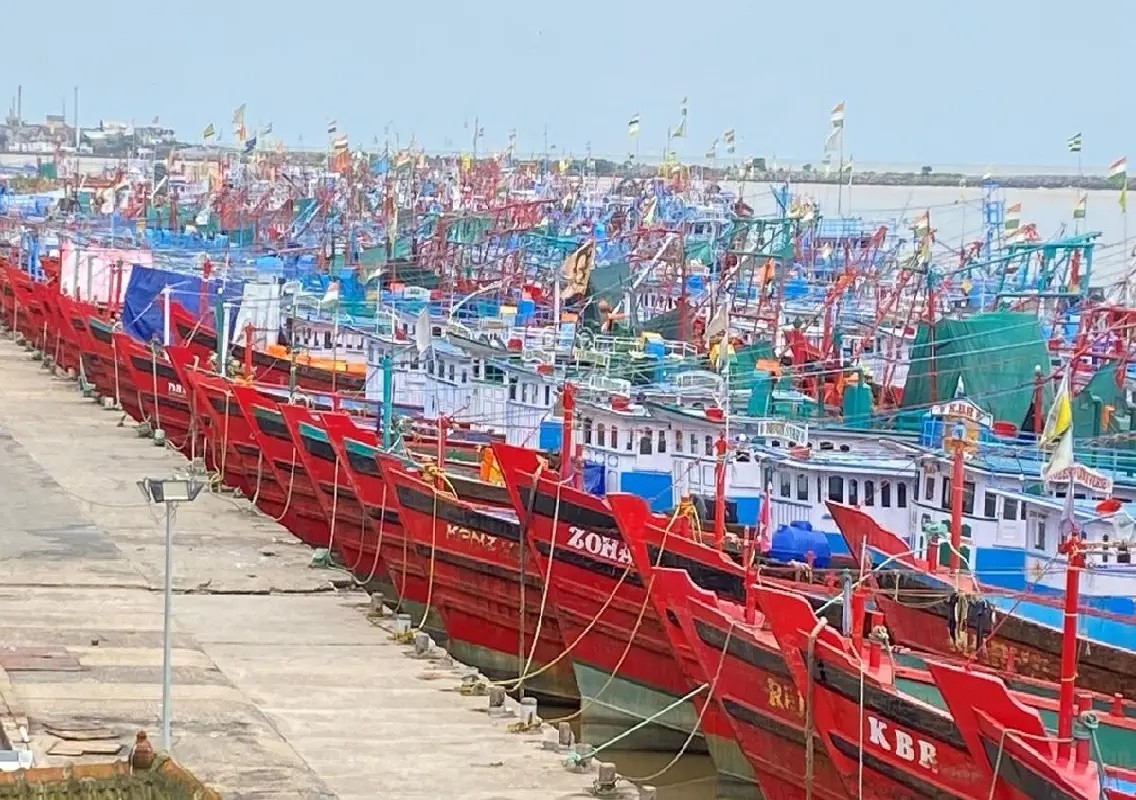


Mangaluru: Karnataka registered a 44% increase in marine fish landings in 2025, reversing the sharp decline witnessed in the previous year, according to the latest annual marine fish landing data released by the ICAR-Central Marine Fisheries Research Institute (CMFRI).
The State’s marine fish catch increased from 4 lakh tonnes in 2024 to 5.77 lakh tonnes in 2025, marking one of the strongest recoveries among India’s coastal states. The figures indicate a significant revival in marine fisheries after production had steadily declined over the past two years.
Karnataka’s marine fish production had fallen from 6.94 lakh tonnes in 2022 to 6.03 lakh tonnes in 2023, before dropping further to 4 lakh tonnes in 2024. In comparison, the State had recorded 5.50 lakh tonnes in 2021.
Favourable conditions aided recovery
According to CMFRI, Karnataka was among the best-performing coastal states in 2025, alongside Maharashtra, which recorded an 18% increase in marine fish landings.
CMFRI Director Grinson George attributed the recovery to favourable environmental conditions and sustainable fishing practices.
He said favourable ecological conditions helped revive small pelagic fish stocks, while regulated fishing pressure allowed fish populations sufficient time and space to recover. The combination of environmental support and better fisheries management contributed significantly to the improved landings recorded during the year.
The annual marine fish landing estimates were prepared by the Fishery Resources Assessment, Economics, and Extension Division of CMFRI using its online data collection system.
Tamil Nadu emerges as top producer
The latest CMFRI data showed that Tamil Nadu overtook Gujarat to become the country’s leading marine fish-producing state in 2025 with 6.85 lakh tonnes of landings.
Gujarat slipped to the second position after recording a 15% decline in marine fish landings, primarily due to adverse weather conditions, extended fishing bans and cyclonic disturbances that affected fishing operations.
Kerala retained the third position with a marginal 2% increase in marine fish production during the year.
The varying performance across coastal states highlights the influence of weather conditions, fishing regulations and ecological factors on marine fisheries.
Indian mackerel tops national catch
At the national level, Indian mackerel remained the most landed marine fish resource with 2.70 lakh tonnes.
It was followed by cephalopods at 2.57 lakh tonnes and oil sardine at 2.53 lakh tonnes.
Among major resources, cephalopods registered a 25% increase, while threadfin breams recorded an impressive 55% growth, with both reaching their highest landings in a decade.
Pelagic fish continued to dominate India’s marine fisheries, accounting for 54% of the total catch, followed by demersal resources, crustaceans and molluscs.
Fishing ban extension under discussion
Meanwhile, coastal states along India’s western coast are yet to arrive at a consensus on extending the annual marine fishing ban from the existing two months (June and July) to three months (June to August).
The seasonal ban on deep-sea fishing is imposed to protect breeding fish populations, prevent the harvesting of juvenile fish and reduce excessive fishing pressure during the spawning season.
Stakeholders in the fisheries sector have argued that extending the ban by an additional month could contribute to higher fish production in the long term by allowing commercially important species more time to breed and replenish stocks.
The proposal, however, continues to be under discussion among the western coastal states, with no final decision taken so far.
Karnataka’s strong rebound in marine fish landings during 2025 has reinforced confidence in the sector, with experts attributing the recovery to a combination of favourable environmental conditions and sustainable fisheries management practices.