







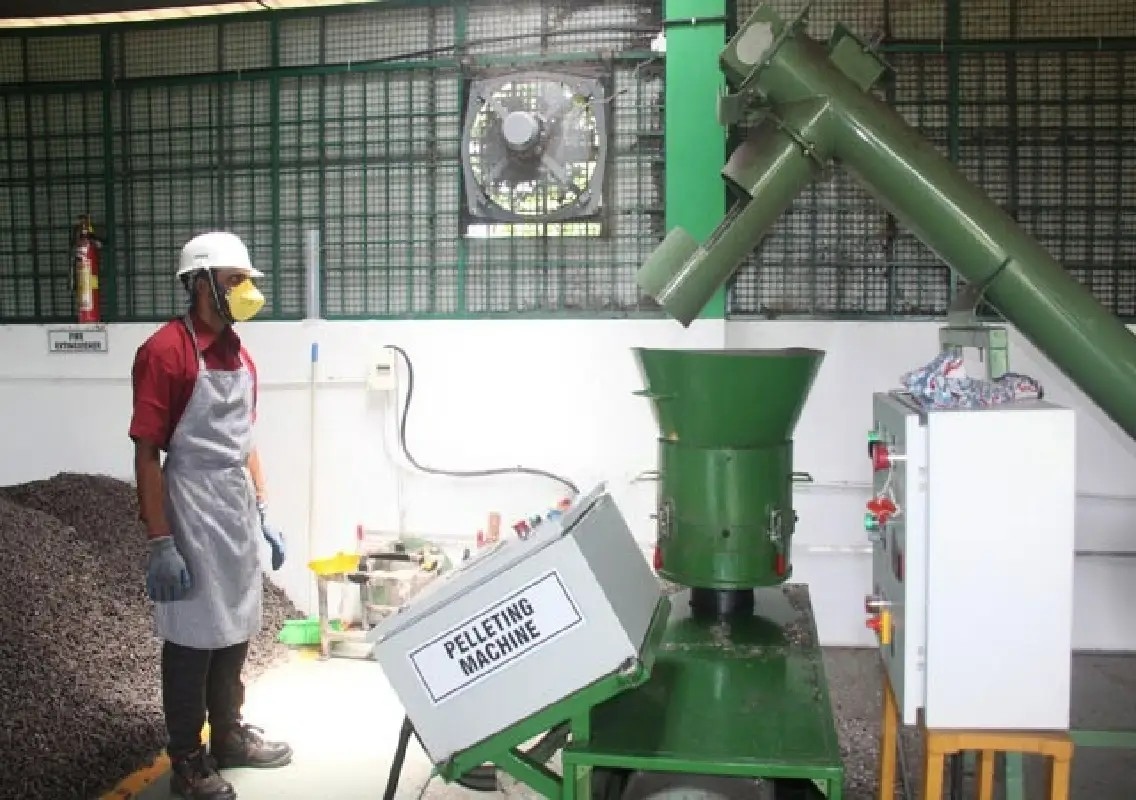


Mangaluru: In a significant boost to scientific waste management and sustainable development, the Dakshina Kannada Zilla Panchayat has commissioned Karnataka’s first Refuse Derived Fuel (RDF) pellet manufacturing unit at Kemral near Mangaluru. The pioneering facility converts non-recyclable dry waste into high-calorific industrial fuel pellets, providing an eco-friendly alternative to coal while substantially reducing the cost of transporting waste to distant processing centres.
The project, established under the Swachh Bharat Mission (Gramin) as a pilot initiative, aims to transform non-recyclable waste into a valuable industrial resource while promoting a circular economy and reducing the burden on landfills.
Pilot project promotes scientific waste management
The RDF pellet manufacturing unit has been designed to process non-recyclable dry waste, including discarded clothes, footwear, single-use plastics and other low-value waste materials that cannot be recycled through conventional methods.
Instead of sending such waste to landfills or transporting it over long distances for co-processing, the facility converts it into RDF pellets that can be used as an alternative fuel in industrial boilers.
Dakshina Kannada Zilla Panchayat Chief Executive Officer Vinayak Narwade, IAS, said the concept for the project emerged after an exposure visit to a similar RDF pellet manufacturing facility in Maharashtra. Inspired by the model, the district administration decided to establish Karnataka’s first such unit to promote sustainable waste management and resource recovery.
He said the initiative is intended to convert waste into a valuable commodity while encouraging environmentally sustainable practices and reducing dependence on fossil fuels.
Project implemented at a cost of Rs 50 lakh
The RDF pellet unit has been established at an estimated cost of around Rs 50 lakh.
Of this amount, approximately Rs 42 lakh was spent on procuring specialised machinery, including a pulveriser and pelletiser, through the tender process. Rather than constructing a new building, the Zilla Panchayat renovated and upgraded the existing dry waste processing shed at Kemral to accommodate the new facility.
Kemral Panchayat Development Officer Arun Pradeep D’Souza said the project was implemented by making optimal use of the available infrastructure, thereby reducing construction costs and accelerating execution.
He added that the unit provides a scientific solution for processing non-recyclable dry waste that would otherwise have to be transported to cement factories for disposal through co-processing.
Capacity to produce 50 tonnes of pellets every month
The pilot unit has the capacity to process two tonnes of RDF waste per day.
Operating for about 25 days every month, the facility is expected to produce nearly 50 tonnes of RDF pellets each month.
At present, the plant is processing waste collected from the Yedapadavu Material Recovery Facility (MRF), which generates around 45 to 50 tonnes of RDF waste every month.
The RDF pellets produced have a high calorific value, making them suitable as a cleaner substitute for coal in industrial boilers. Their use is expected to help industries reduce fossil fuel consumption while ensuring environmentally responsible disposal of non-recyclable waste.
Buy-back agreement ensures market for pellets
To ensure commercial viability, the Dakshina Kannada Zilla Panchayat has entered into a buy-back agreement with the Pune-based company that supplied the machinery.
Under the agreement, the company will purchase the RDF pellets at Rs 5 per kg, providing an assured market for the product.
As part of the Memorandum of Understanding (MoU) signed with the self-help group operating the unit, Re 1 from every kilogram of pellets sold will be credited to the Zilla Panchayat.
The revenue generated will be utilised for operational expenses, maintenance of the facility and establishing similar RDF pellet units in other locations.
Narwade said self-help groups have also been encouraged to explore partnerships with industries that may be willing to purchase the pellets at higher prices, enabling them to increase their income while generating additional revenue for the local body.
Significant savings in waste transportation
Until now, non-recyclable RDF waste collected at Material Recovery Facilities in Dakshina Kannada had to be transported to cement factories in Belagavi and Kalaburagi for co-processing.
Transporting a truckload of waste cost nearly Rs 48,000, placing a considerable financial burden on local bodies.
With the commissioning of the Kemral RDF pellet unit, the waste can now be processed locally into a value-added industrial fuel, significantly reducing transportation costs while strengthening scientific waste management practices.
The initiative also supports the circular economy by converting waste into a reusable resource rather than treating it solely as a disposal challenge.
Pilot to guide expansion across Dakshina Kannada
Dakshina Kannada currently has four Material Recovery Facilities (MRFs) located at Yedapadavu, Ujire, Kedambady and Narikombu, with a combined dry waste processing capacity of 31 tonnes per day.
Nearly half of the waste processed at these facilities consists of RDF material that can potentially be converted into fuel pellets.
Narwade said the Kemral facility will function as a pilot project for one year. Based on its operational performance and the lessons learnt, the Zilla Panchayat plans to establish similar RDF pellet manufacturing units at other MRF centres across the district.
He said the initiative represents a significant milestone in Karnataka’s waste management sector by reducing landfill dependency, lowering transportation costs, generating employment opportunities for rural women through self-help groups, and promoting cleaner industrial energy solutions.
The successful implementation of the project is expected to serve as a model for other districts seeking sustainable and cost-effective solutions for managing non-recyclable waste while advancing the principles of resource recovery and environmental conservation.