







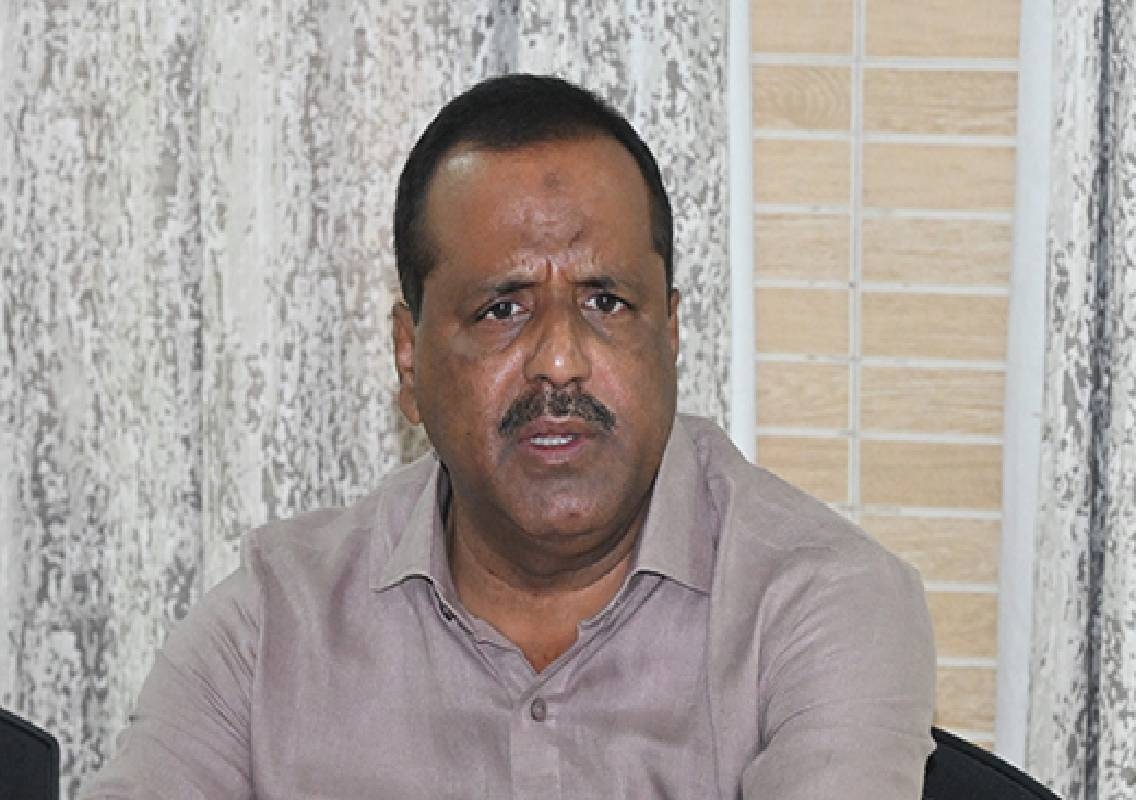


Mangaluru: Karnataka Health Minister U.T. Khader has urged the Union government to bring all life-saving medicines under price control and enact legislation to prevent excessive pricing by pharmaceutical companies.
Speaking to reporters in Mangaluru, Khader said the National Pharmaceutical Pricing Authority (NPPA) currently regulates the prices of scheduled medicines under the existing drug price-control framework, while non-scheduled medicines have fewer pricing restrictions. He said this gap could allow some medicines to be sold at prices far above their procurement costs.
Khader cited an example of an injection with a cost of around Rs 5,000 being sold for as much as Rs 60,000. He said Karnataka has submitted a detailed report to the Centre seeking wider price controls on life-saving medicines.
Karnataka seeks wider regulation of drug prices
The Karnataka government has been examining disparities between the procurement costs and maximum retail prices of medicines, medical devices and hospital consumables.
A recent state investigation identified substantial differences in the prices of several high-cost medicines. According to the findings reported by The New Indian Express, some products had MRPs ranging from 10 times to more than 52 times their procurement costs.
The state has sought stronger national-level measures, including an expansion of price controls under the Drugs (Prices Control) Order, 2013. It has also proposed greater transparency in hospital billing so that patients can understand the cost of medicines and medical consumables for which they are being charged.
Khader said state governments do not have direct authority to comprehensively regulate medicine prices and therefore sought intervention from the Centre.
NPPA controls scheduled medicines
Under the existing framework, the NPPA regulates prices in accordance with the Drugs (Prices Control) Order, 2013. Ceiling prices are fixed for formulations listed in the relevant schedule, which is based on the National List of Essential Medicines.
The Department of Pharmaceuticals said in August that the NPPA had effective ceiling prices for 935 formulations as of July 23, 2026. It also said that prices of 3,845 new drugs had been fixed under the applicable provisions of the DPCO.
For non-scheduled formulations, manufacturers are required not to increase the maximum retail price by more than 10% over the preceding 12 months. However, the pricing framework is different from the ceiling-price mechanism applied to scheduled formulations.
Khader has argued that life-saving medicines outside the scheduled list should also receive stronger protection against excessive pricing.
State begins inspections of medicines and consumables
The Karnataka government has already started inspections of medicines, medical consumables, injections and implants to examine price differences across the supply chain.
According to the state government’s findings reported recently, inspections identified 253 drugs with significant pricing anomalies. Another verification exercise conducted by Food Safety and Drug Administration and Drugs Enforcement officials covered more than 768 consumables and 189 high-cost drugs at wholesale premises, hospitals and other establishments.
The state is also planning further studies covering major branded medicines. Khader said the next phase would include an examination of 186 major branded drugs.
The government has indicated that the exercise will extend to categories such as critical antibiotics, anti-retroviral medicines, medical devices and hospital consumables that can significantly increase treatment costs.
Focus on transparency in hospital billing
One of the concerns raised by Karnataka is the difference between the price at which hospitals or institutions procure medicines and the amount ultimately charged to patients.
The state has sought mandatory disclosure of procurement or landing costs and MRP on patient bills. Such information, according to the proposals, would allow patients and their families to understand the pricing of medicines, devices and consumables included in hospital bills.
The government has also called for greater regulation of trade margins for essential high-value medicines and consumables.
These proposals come against the backdrop of state inspections that found large differences between procurement costs, printed MRPs and sale prices at different stages of the supply chain.
Khader seeks national action
Khader said the issue requires intervention at the national level because pharmaceutical pricing and the existing regulatory framework fall largely under central legislation.
Karnataka has therefore submitted its recommendations to the Union government, seeking expansion of the list of medicines covered by price controls and changes to the existing regulatory framework.
The state has also proposed an inter-ministerial expert group to examine drug pricing, trade margins, procurement costs and enforcement mechanisms.
The move is aimed at addressing concerns over affordability, particularly for patients undergoing prolonged treatment or requiring expensive medicines.
National consultation planned in Bengaluru
Khader also announced that a national-level consultation of food and drug department commissioners and senior officials from different states will be held in Bengaluru on November 15.
The meeting will discuss food and drug safety standards and seek to clarify the respective responsibilities of the Union and state governments.
The consultation is expected to provide an opportunity for states to discuss enforcement challenges and possible improvements to the regulatory framework.
The meeting comes as Karnataka seeks stronger coordination between state authorities and central agencies on drug pricing and patient protection.
Anti-snake venom stocks adequate, says Khader
Khader also spoke about the availability of anti-snake venom in Karnataka and said there was no shortage of the medicine in the state.
According to him, each Primary Health Centre has been stocked with 10 vials of anti-snake venom, while taluk hospitals have 30 vials each. District-level warehouses maintain additional reserves to meet emergency requirements.
He also said the government plans to introduce cold-storage facilities in 108 ambulances to ensure that anti-snake venom can be transported and stored under appropriate conditions.
The facility is expected to be implemented within the next one or two months.
Drug affordability remains a policy concern
The pricing issue has gained attention as healthcare costs continue to be a concern for patients, particularly those requiring cancer treatment, critical antibiotics, specialised injections and other high-cost medicines.
While the existing central framework provides price controls for medicines covered by the scheduled list, Karnataka is seeking a broader system that would cover more life-saving medicines and strengthen transparency across the supply chain.
The state’s proposals include wider price regulation, clearer billing practices, scrutiny of trade margins and stronger auditing and enforcement.
For patients, greater transparency could help them understand the actual costs associated with medicines and medical consumables used during treatment.
Conclusion
Karnataka Health Minister U.T. Khader has urged the Centre to bring all life-saving medicines under price control and introduce stronger measures against excessive pricing. Karnataka has submitted proposals seeking wider regulation, greater transparency in hospital bills and tighter monitoring of high-cost medicines and medical consumables.
The state is continuing inspections of medicines and consumables, while a national-level consultation of senior food and drug officials is scheduled in Bengaluru on November 15.