









Mangaluru: Doctors at KMC Hospital Mangaluru successfully treated a 10-month-old infant who was brought in with a life-threatening airway obstruction caused by suspected foreign body aspiration, more than 16 hours after the incident occurred at home.
The infant was rushed to the hospital in severe respiratory distress during the early hours of the night after initial evaluation at Puttur raised serious concerns. A timely, coordinated response by a multidisciplinary medical team proved crucial in saving the child’s life.
Delayed symptoms led to critical condition
According to the medical history, the incident occurred at the child’s residence while adults in the household were consuming peanuts. The infant, who was playing with other children, reportedly began coughing suddenly and was believed to have been eating peanuts. After a brief coughing episode, the child appeared to settle, leading family members to assume that the object had passed naturally.
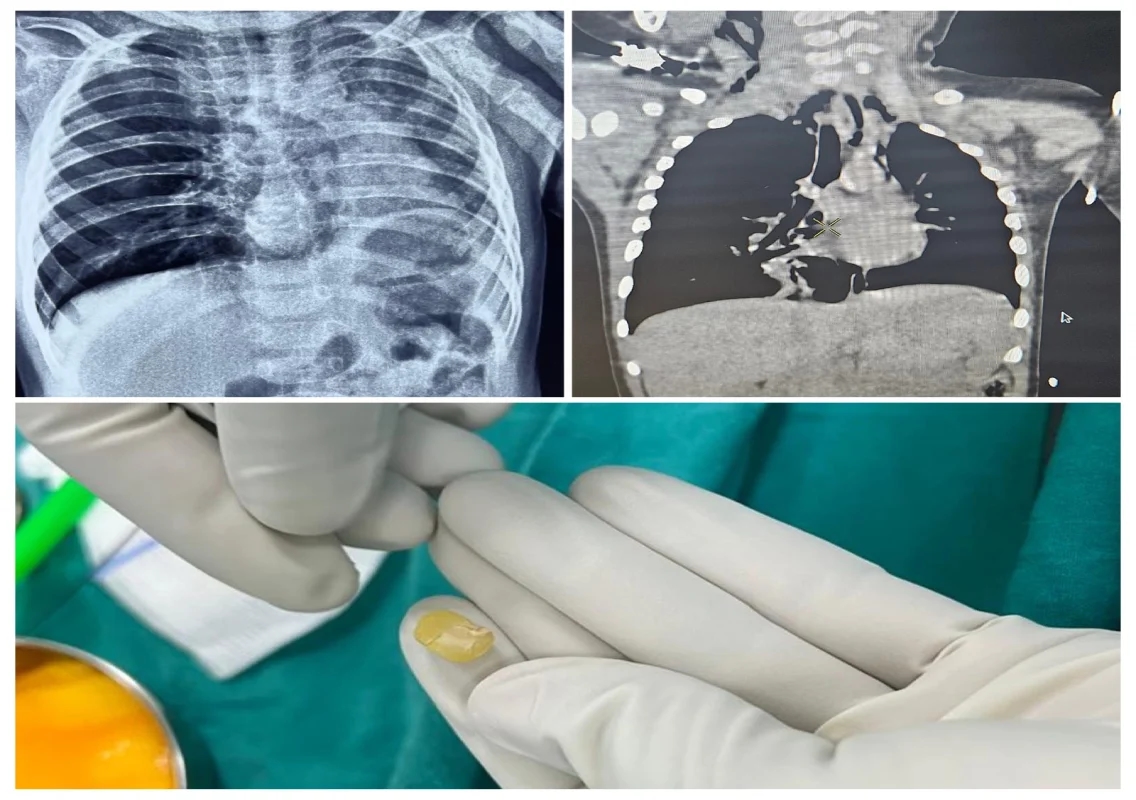
However, as the day progressed, the child became increasingly dull and breathless. The parents initially suspected a common cold or mild illness. A paediatric assessment by Dr Srikanth Rao in Puttur raised a strong suspicion of foreign body aspiration, supported by X-ray findings, prompting an urgent referral to KMC Hospital, Mangaluru.
Emergency assessment at KMC Hospital
On arrival, the infant was immediately evaluated by Dr Swathi Rao, Consultant – Paediatric Intensivist, who recognised the severity of the condition. Despite initial hesitation from the family regarding further intervention, the child’s respiratory status deteriorated rapidly. Oxygen saturation levels dropped to 88 per cent, and visible signs of respiratory distress became evident.
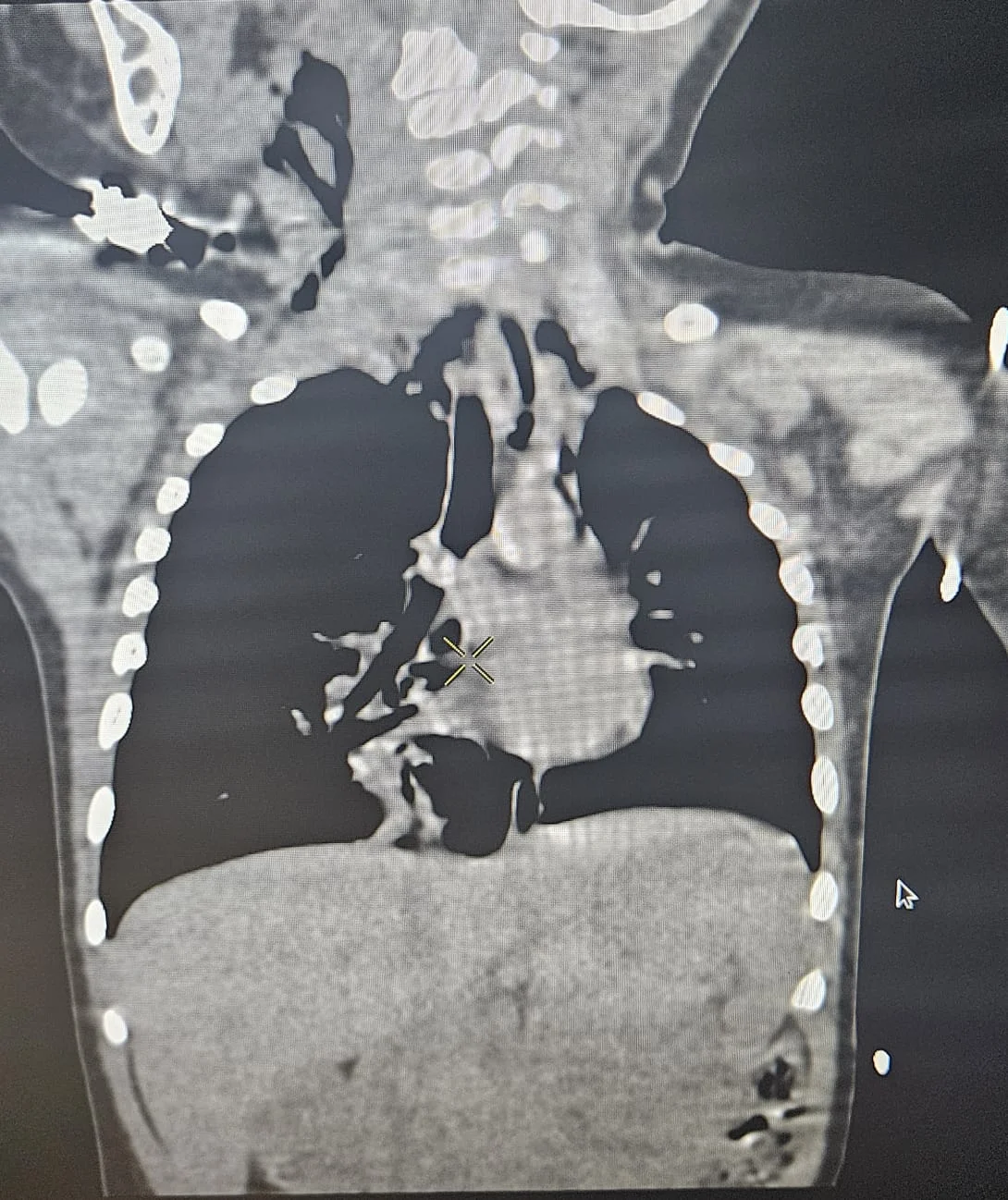
An urgent CT scan of the thorax confirmed the presence of a foreign body lodged in the right bronchus. The obstruction had caused hyperinflation of the right lung, while compressing the left lung and heart — a potentially fatal situation if not addressed immediately.
Midnight surgery with seamless coordination
An expert opinion was promptly sought from Dr Gautham Kulamarva, Consultant ENT Surgeon. Despite it being Christmas Eve night, swift coordination was achieved among the ENT team, operating theatre staff, anaesthesia team led by Dr Sunil and Dr Frieda, and the administrative teams at KMC Hospital units in Attavar and Ambedkar Circle.
All logistics were arranged without delay, and the child was taken into surgery around midnight. Dr Kulamarva performed an emergency bronchoscopic procedure, successfully removing the foreign body obstructing the right bronchus. The procedure was completed without complications.
As nearly 18 hours had elapsed since the aspiration and early signs of fluid accumulation had developed in the lung beyond the obstruction, the infant was electively ventilated for a few hours. The child was successfully extubated after six hours and showed steady recovery.
Doctors warn about ‘silent aspiration’
Dr Swathi Rao highlighted that not all choking episodes in children are dramatic or immediately obvious. “Sometimes, when a small object or food enters a child’s airway, there may be no loud coughing or sudden distress. Parents should watch for subtle signs,” she said.
She listed warning indicators such as sudden or persistent coughing, noisy breathing or wheezing on one side, repeated chest infections or pneumonia, unexplained breathing difficulty, and voice changes or hoarseness — all of which may point towards foreign body aspiration.
Dr Gautham Kulamarva emphasised the risks involved in such cases. “Bronchoscopic removal of a foreign body in young children is a high-risk procedure that demands timely intervention and specialised expertise. Delays can significantly worsen airway obstruction and increase the risk of life-threatening complications,” he said.
Parents urged to seek immediate medical care
Doctors stressed that any suspicion of foreign body aspiration should be treated as a medical emergency requiring immediate hospital attention. Even short delays can prove fatal. Several otherwise healthy children, they noted, have lost their lives due to foreign objects lodged in the airway, with peanuts being among the most common causes.
Parents were advised to avoid giving small food items such as peanuts to children until they are able to chew and swallow properly, usually around the age of three to four years. They were also cautioned to keep toys with removable parts, including button batteries, away from infants and toddlers.
Medical experts reiterated that prompt diagnosis and expert intervention save lives, while delays greatly increase the risk of severe and irreversible complications.
About Manipal Hospitals
Manipal Hospitals, one of India’s leading healthcare providers, serves over 80 lakh patients annually and focuses on delivering affordable, high-quality medical care. Its integrated network spans 49 hospitals across 24 cities, with 12,600 licensed beds, over 11,000 doctors, and a workforce exceeding 34,000 employees.
The group provides comprehensive curative and preventive healthcare to patients from India and abroad. Manipal Hospitals is AAHRPP accredited, and most hospitals in its network hold NABH, NABL, ER, and Blood Bank accreditations, with recognition for Nursing Excellence.