







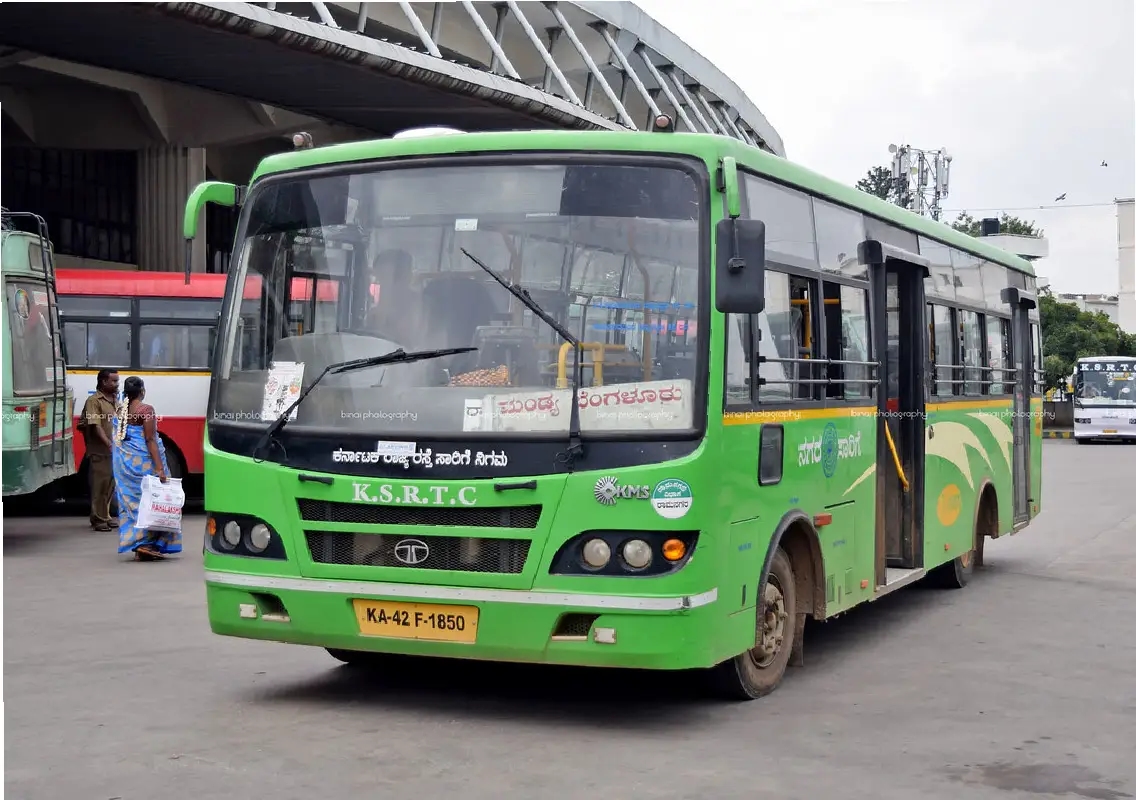


Mangaluru: Karnataka State Road Transport Corporation (KSRTC) buses will now be allowed to operate in the central areas of the city after the Dakshina Kannada district administration issued a fresh notification granting exemption from earlier movement restrictions. The decision reverses decades-old regulatory orders and is expected to significantly improve public transport access for daily commuters, students, women passengers and hospital visitors.
Decades-old restrictions officially withdrawn
The latest order issued by the Deputy Commissioner grants exemption from earlier restrictions that were imposed through official notifications dated January 5, 1991, and April 6, 1993. Those directives had placed limits on the entry and movement of KSRTC buses within core urban zones to manage congestion and streamline traffic at the time.
With changing traffic patterns, increased population and expanding urban limits, authorities have now reviewed the relevance of those restrictions. The new notification effectively allows state-run buses to enter and operate through central corridors that were previously off-limits under the older regulatory framework.
Officials clarified that the exemption applies specifically to KSRTC services and is aimed at strengthening public transport coverage in high-demand areas.
Major boost for Shakti scheme beneficiaries
One of the primary reasons cited for the decision is to help more passengers — especially women — fully benefit from the state government’s Shakti scheme. The scheme provides free bus travel for women on state-run transport services across Karnataka.
Due to earlier entry restrictions, many routes serving dense commercial and institutional zones were not directly accessible by KSRTC buses. As a result, eligible passengers often had to depend on alternate transport modes or take indirect routes, reducing the scheme’s practical benefit.
With the exemption now in place, women commuters are expected to gain better last-mile and point-to-point connectivity using government buses. This is likely to increase ridership and improve scheme utilisation rates.
Students travelling to colleges and training institutes located in central areas will also gain from more direct and affordable bus connectivity.
Improved access to public hospitals and services
The district administration has emphasised that the revised order is also intended to improve access to major public hospitals and essential service centres located in core urban zones. Patients and their families often depend on government bus services as a low-cost travel option.
Direct bus entry into central routes will reduce the need for multiple transfers and cut down out-of-pocket transport expenses for those travelling for medical treatment. Senior citizens and people with mobility challenges are also expected to benefit from more direct route access.
Better connectivity to government offices and civic service centres is another anticipated advantage, as many residents from surrounding rural and semi-urban areas travel daily for official work.
Push towards mass public transport usage
The order states that promoting mass public transport is a key objective behind the move. Authorities believe that strengthening bus connectivity in central zones will encourage more people to shift from private vehicles to public transport.
Over the years, rising ownership of cars and two-wheelers has added pressure on central roads, leading to congestion, parking shortages and slower traffic movement. Expanding the reach of government bus services is seen as a practical step toward reducing the number of private vehicles entering busy corridors.
Transport planners note that even a modest shift from private vehicles to buses can significantly improve traffic flow and reduce fuel consumption when scaled across thousands of daily commuters.
The move also aligns with broader environmental goals by lowering per-passenger emissions through higher-capacity shared transport.
Route planning and traffic coordination likely
Following the exemption, KSRTC is expected to coordinate with traffic police and transport authorities to plan routes, stops and schedules carefully. Operational adjustments may be introduced to ensure that additional bus movement does not create bottlenecks in already busy stretches.
Possible measures include designated stopping points, revised boarding zones and time-based entry planning during peak hours. Authorities are likely to monitor traffic impact during the initial implementation phase and make changes if required.
Transport officials may also review passenger demand data and increase service frequency on high-usage routes connecting outer areas with central commercial and institutional hubs.
Policy shift reflects changing urban needs
The withdrawal of restrictions first introduced more than three decades ago signals a broader shift in urban mobility planning. What was once considered necessary for traffic control is now being reconsidered in light of current commuter needs and public transport priorities.
By allowing KSRTC buses into central areas, the administration aims to improve affordability, accessibility and inclusiveness in daily travel. If supported with proper traffic management and scheduling, the decision is expected to benefit thousands of passengers and strengthen the role of state-run buses in urban transport.