







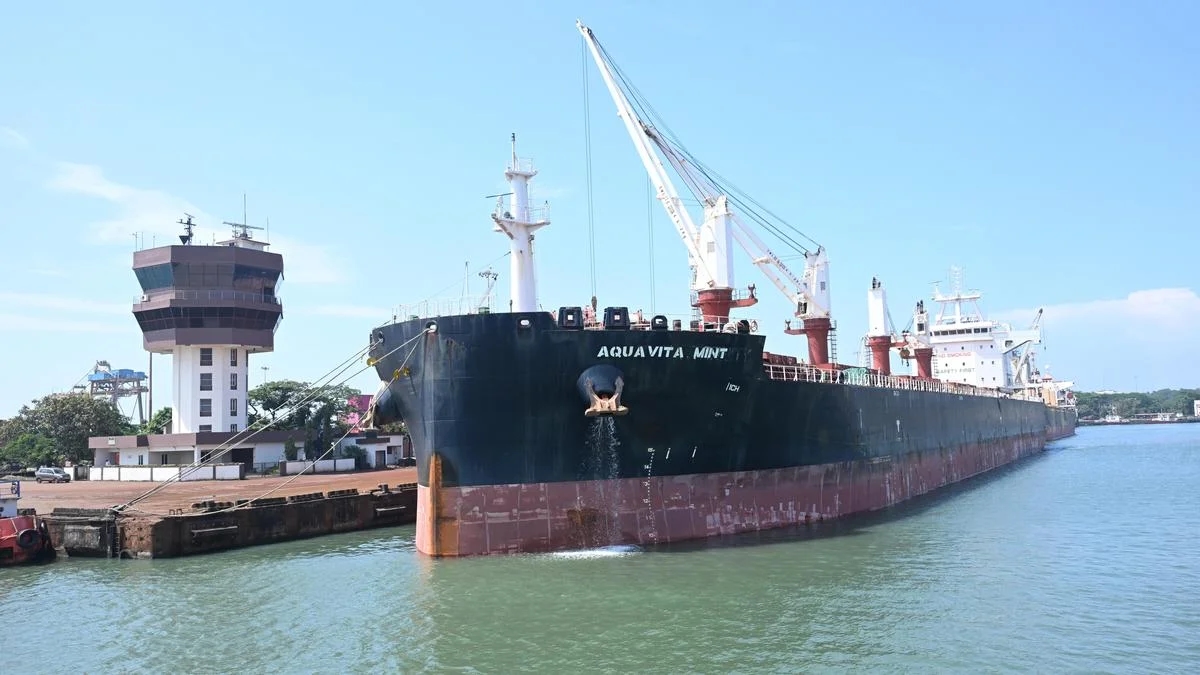


Mangaluru: The New Mangalore Port is set to witness a significant increase in liquefied petroleum gas (LPG) handling activity in the coming week, with total expected arrivals exceeding 72,700 tonnes. The development highlights the port’s growing importance as a key energy logistics hub on India’s western coast.
According to the New Mangalore Port Authority’s daily vessel position report, several LPG tankers are scheduled to berth, discharge cargo, and depart within a tightly coordinated timeframe. The operations are expected to support major oil and gas companies and strengthen fuel supply chains across southern India.
Pyxis Pioneer to lead weekly operations
The LPG tanker Pyxis Pioneer, sailing under the Singapore flag, is scheduled to arrive at Berth No. 13 at 6 a.m. on Sunday. With a gross tonnage of 47,236 tonnes, the vessel is carrying 16,714 tonnes of LPG. The shipment is designated for Aegis Logistics Ltd..
The tanker began its voyage from the Port of Nederland in Texas, United States, on February 14, indicating a long-haul international supply route. Upon arrival, discharge operations are expected to be completed within the day, allowing the vessel to sail early Monday morning. This rapid turnaround reflects the port’s operational efficiency and preparedness in handling bulk LPG consignments.
Apollo Ocean to bring additional cargo
Further boosting LPG volumes, the tanker Apollo Ocean is scheduled to call at the port on March 25. The vessel, sailing under the Vietnam flag and with a gross tonnage of 46,025 tonnes, will discharge 26,687 tonnes of LPG.
This cargo is earmarked for two major public sector oil companies — Indian Oil Corporation Ltd. and Bharat Petroleum Corporation Ltd.. The vessel is arriving from Vadinar Port in Jamnagar, Gujarat, which serves as a major petroleum handling hub.
Interestingly, another tanker, Shivalik, originally scheduled to deliver 26,000 tonnes of LPG to Mangaluru on March 18, offloaded its cargo at Vadinar instead. The LPG was subsequently transferred to Apollo Ocean, demonstrating logistical flexibility in managing supply routes and optimising vessel deployment.
Additional U.S. shipment expected
Adding to the week’s activity, sources indicate that another LPG tanker from the United States is expected to arrive at the port on March 29. This vessel will carry approximately 30,000 tonnes of LPG meant for Hindustan Petroleum Corporation Ltd. (HPCL).
The imported LPG will be handled at HPCL’s dedicated import facility in Mangaluru. From there, the gas will be distributed to bottling plants in the region and transported via the Mangaluru-Bengaluru LPG pipeline, ensuring steady supply to urban and semi-urban markets across Karnataka and beyond.
Strategic importance of LPG imports
The steady inflow of LPG shipments underlines the strategic importance of the New Mangalore Port in India’s energy infrastructure. With domestic consumption of LPG continuing to rise — driven by household demand and industrial use — ports like Mangaluru play a crucial role in bridging supply gaps through imports.
The coordination between international suppliers, shipping operators, and Indian oil companies also reflects the global nature of energy trade. Efficient port handling, storage infrastructure, and pipeline connectivity enable seamless distribution, minimising disruptions in fuel availability.
Moreover, the presence of multiple stakeholders, including private logistics firms and public sector enterprises, highlights the collaborative framework supporting India’s fuel supply chain.
Conclusion
The upcoming week is poised to be a busy period for the New Mangalore Port, with multiple LPG tankers arriving from both domestic and international locations. The handling of over 72,700 tonnes of LPG not only underscores the port’s operational capacity but also its critical role in ensuring energy security for the region.
As demand for cleaner cooking fuel continues to grow across India, such large-scale import operations will remain vital in maintaining consistent supply and supporting the country’s energy transition goals.